Practical Sales Training™ > How To Convert > Timed Checkout

Timed Checkout
That little countdown timer at checkout isn’t just for show. It’s the difference between “I’ll think about it” and “I need to decide right now.”
That’s a timed checkout. Instead of leaving a decision open-ended, it puts the buyer inside a clear window where they either act or lose the item.
This page covers what a timed checkout is, why it changes how buyers think, and how to use one fairly without it feeling like pressure for its own sake.
What Is A Timed Checkout?
A timed checkout is a buying environment that reserves items for a fixed period before releasing them back into general availability. During that window, the buyer knows they hold the product temporarily, but not indefinitely.
The timer doesn’t exist to rush anyone. Instead, it exists to make the moment feel real.
Rather than an open-ended decision the buyer can postpone forever, the window forces a choice. They either act, or they let it go.
Why Does A Timed Checkout Work?
Most buying hesitation isn’t caused by disagreement or a lack of interest. It’s caused by open time. So when there’s no consequence to waiting, the brain defaults to delay.
A timed checkout works by introducing a soft boundary. The product is available, but only for now. That boundary turns a passive thought into an active decision.
Psychologically, something important shifts here. The buyer stops asking “should I buy this?” and starts asking “do I want to lose this?”
Loss feels heavier than choice. Even when the product stays available later, the implied risk of missing out sharpens attention and increases follow through.
The timer doesn’t add pressure by force. Instead, it adds clarity through structure.
How Can You Use A Timed Checkout In Sales?
Turn The Checkout Into A Moment
By clearly showing that availability is temporary, you stop buyers drifting away under the illusion that they can always come back later. So the checkout becomes a real moment, rather than a bookmark for someday.
Let It Signal Genuine Demand
A timed checkout also reassures buyers that demand is real. When a hold appears on something, it tells the buyer the product carries value beyond just them. That subtle social proof helps justify the decision to act.
Keep The Timer Fair
The key here is balance. A timer that feels arbitrary or aggressive breaks trust fast. But a timer that feels natural and reasonable creates focus without anxiety. This works best when the buyer already wants the outcome, but just needs a nudge to stop waiting and decide.
The goal isn’t urgency for urgency’s sake. The goal is to stop good decisions dying in open time.
When A Timed Checkout Works Best
It works best when stock or availability is genuinely limited, so the timer reflects a real constraint rather than a manufactured one. Tickets, limited stock, and time-sensitive bookings all fit this naturally.
It also works well when a buyer has already shown clear intent, like adding something to a cart, since the timer then nudges someone who’s close to deciding rather than pressuring someone who isn’t ready at all.
When A Timed Checkout Becomes Dangerous
It backfires when the timer resets every time a buyer revisits the page, exposing it as fake urgency rather than a genuine hold. Once a buyer spots that trick, trust in everything else on the page drops too.
It also becomes risky if the time given is too short to make a fair decision, especially for a larger purchase. A rushed buyer who feels tricked is far more likely to abandon the cart and never return.
Common Timed Checkout Mistakes
Using A Fake Or Resetting Timer
A countdown that restarts every visit eventually gives itself away, and once buyers notice, they stop trusting it completely. Only use a timer tied to something genuinely real.
Setting The Window Too Short
A countdown that doesn’t leave enough time to think feels like pressure rather than structure. Match the length of the window to how big the decision actually is.
Applying It To Everything
A timer on every single product loses its meaning fast. Save it for moments where a real hold or limited stock genuinely justifies one.
Timed Checkout – An Example
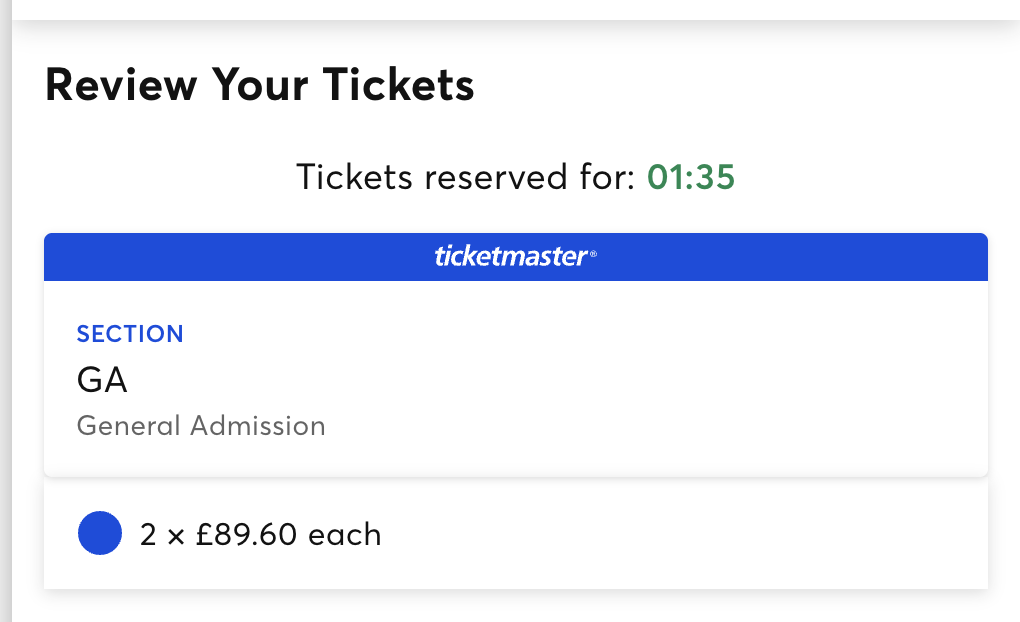
Ticketmaster and other ticketing sites use a timed checkout to hold seats during the buying process. The countdown adds a sense of urgency, but it also genuinely stops the same seat going to two different buyers.
A buyer sees the clock ticking down and knows the seats they’ve selected won’t wait forever. So they either complete the purchase, or release the hold for someone else in the queue behind them.
That’s a timed checkout doing double duty. It nudges the buyer to decide, while solving a real operational problem behind the scenes at the same time.
See also