Practical Sales Training™ > How To Convert > Automatic Renewal

Automatic Renewal
Every time a buyer has to re-decide, there’s a chance they stop. They might shop around, or a renewal date might slip past unnoticed. And the sale ends – not because they were unhappy, but because a gap appeared in the process.
Automatic Renewal closes that gap. Instead of asking the buyer to say yes again, the agreement simply runs on. The buyer only needs to act if they want to leave.
That one change – flipping the default from stop to go – has a big effect on retention. In fact, it costs nothing to build in.
What Is Automatic Renewal?
Automatic Renewal is when a purchase runs on unless the buyer stops it. So there’s no need to decide again, and no renewal form to fill in. The deal just continues.
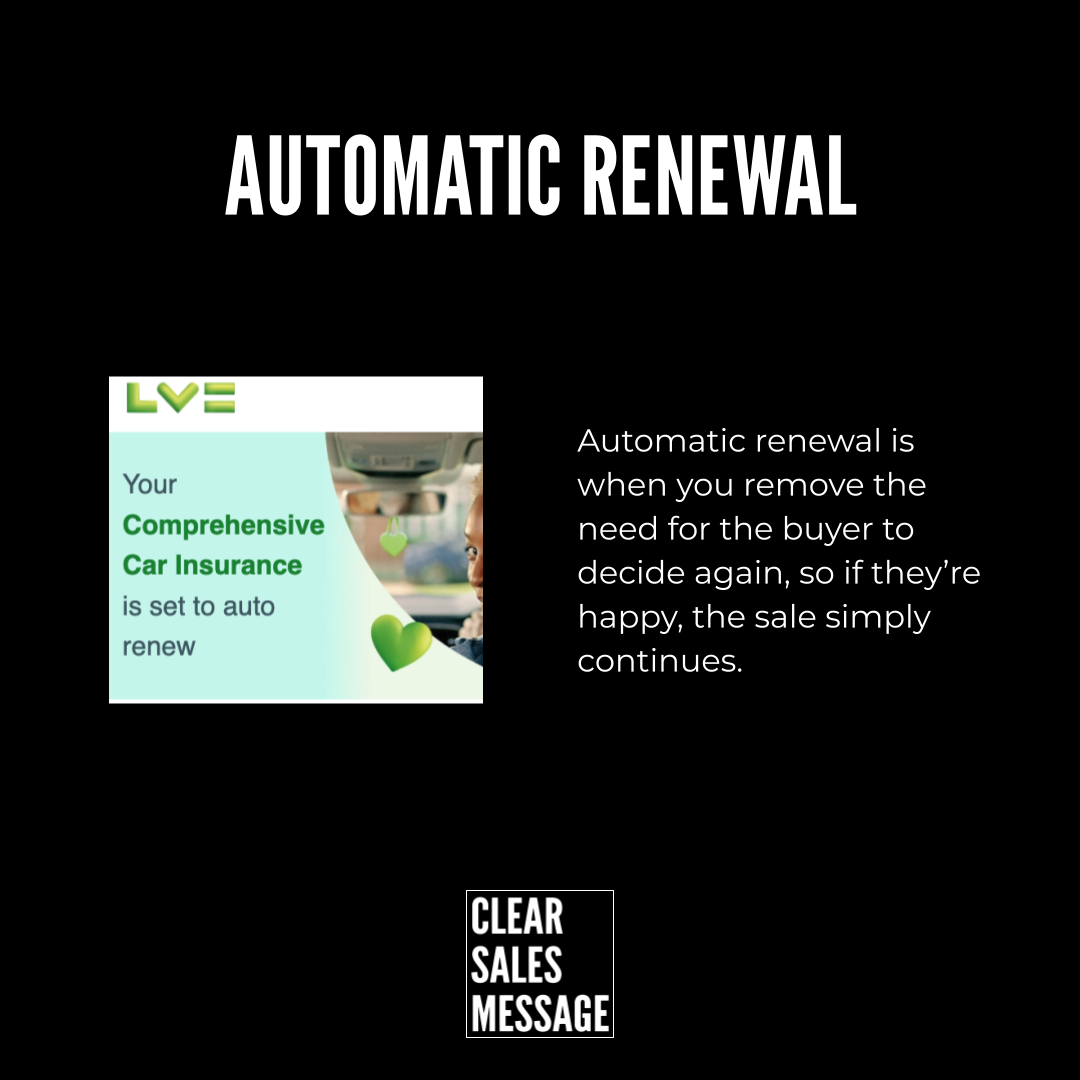
You see it everywhere – car insurance that renews each year, software that bills monthly, gym memberships that run until cancelled. In each case, the default is continuation, not a fresh decision.
From a conversion point of view, that matters a lot. Because every extra decision creates a chance for the sale to end. Automatic Renewal removes that second decision entirely – so if the buyer is happy, nothing gets in the way.
Why Does Automatic Renewal Work?
Research shows that people stick with default options because opting out takes effort. Staying put does not. So most people stay.
Source: Harvard Kennedy School Behavioural Insights Research
People rarely revisit decisions unless something goes wrong. So if the product works and cancelling takes effort, most buyers let things run. Automatic Renewal is built on that fact. It doesn’t force the sale – instead, it removes an unnecessary break in a relationship the buyer already chose.
Without it: purchase → period ends → buyer decides again → sale may stop. With it: purchase → service runs on → buyer only acts to cancel. However small that shift looks, it changes everything.
How Can You Use Automatic Renewal In Sales?
It works anywhere a product or service runs over time. The key is setting the agreement so it continues unless the buyer opts out – and being clear about that from the start.
Subscription services
Software tools, online groups, and membership sites almost always use Automatic Renewal. Once someone joins, the plan runs on without any action needed. As a result, retention is far higher than with manual repurchase models. Happy buyers don’t need a reason to stay – they just need the process to stay out of their way.
Service retainers
Consultants and agencies can set work up as rolling retainers that renew each month. This removes the need for fresh sign-off on a regular basis. The client keeps getting the service, and the supplier keeps the revenue – so both sides benefit from the continuity without any re-selling required.
Insurance and protection products
Insurance renews each year as standard. The buyer gets a notice, but cover runs on unless they cancel. This protects both sides from gaps. However, it also means the buyer never has to make a fresh decision to stay – and that default does a lot of quiet work.
Maintenance and support contracts
Products that need ongoing support are ideal for Automatic Renewal. The contract runs on, so the product stays covered. Because of that, the buyer avoids finding themselves without help when something goes wrong. And the supplier keeps the relationship without chasing a renewal.
Digital products and platforms
Domains, hosting, and SaaS tools almost all default to Automatic Renewal. This stops services cutting out unexpectedly. It also means revenue doesn’t drop off simply because a date got missed. In short, the relationship runs on by default – and that’s exactly the point.
When Automatic Renewal Works Best
It works best when the buyer uses the product often and would likely renew anyway if asked. In those cases, Automatic Renewal just removes friction – it doesn’t change the decision, it removes the need to make it again.
It also works well when leaving is easy. If the buyer can cancel without hassle, the only thing keeping them is whether they value the product. That’s a healthy place to be. So in that context, Automatic Renewal isn’t a trap – it’s a convenience that benefits both sides.
When Automatic Renewal Becomes Dangerous
It becomes a problem when buyers feel tricked. If the renewal terms weren’t clear at the point of sale, trust breaks fast. So be upfront – buyers need to know the default before they agree to it.
Regulation also matters. UK, EU, and other markets require clear disclosure and easy cancellation routes. Therefore, get the legal side right before relying on this as a retention tool.
And Automatic Renewal won’t save a bad product. If buyers are unhappy, making it hard to leave just delays the cancellation – and increases the anger when it finally happens. So the product itself has to be worth keeping.
Common Automatic Renewal Mistakes
Burying the renewal terms
Hiding the auto-renewal clause in small print creates problems. Buyers who feel misled cancel loudly – and often publicly. So be clear about the terms at the point of sale, because clarity builds trust. And trust is what keeps buyers from cancelling when the renewal notice lands.
Making cancellation too hard
Friction on the way out creates resentment. Buyers who have to phone, wait, or jump through hoops will remember it – and talk about it. As a result, an easy cancellation process actually protects the brand. It also cuts chargebacks, which cost far more than a clean cancellation ever would.
Not sending renewal reminders
A notice before the billing date is good practice – and in many markets it’s required by law. Buyers who get a heads-up can update payment details or flag a problem early. So a reminder that sparks a short chat is far better than a charge that sparks a complaint.
Relying on renewal instead of retention
Automatic Renewal keeps revenue on the books – but it doesn’t keep buyers engaged. If people only stay because leaving feels like effort, they’re not loyal, they’re just inert. Therefore, pair Automatic Renewal with real retention work. Check in, add value, and make the relationship worth keeping. Because a buyer who wants to stay is worth far more than one who just hasn’t got round to leaving.
Automatic Renewal – An Example
A small business owner signs up for an accounting tool in January. They use it often at first – then less so as the year goes on.
In October, a renewal notice arrives. They glance at it, think “yes, I still use that”, and do nothing. As a result, the plan renews, the supplier keeps the revenue, and the buyer keeps the access.

If the same buyer had been asked to repurchase actively, there’s a real chance they’d have paused. They might have looked at other options or simply switched. However, that wasn’t because they were unhappy – it’s because the decision prompt would have made them think about it.
Automatic Renewal meant that moment never came. The default did the job. And that’s exactly why so many businesses build it into every product they sell.
See also