Practical Sales Training™ > How People Work > State vs Trait

State vs Trait
One of the biggest mistakes businesses make is assuming buyers behave the same way all the time. They do not.
The same buyer can seem confident one day and cautious the next. Calm in the morning, stressed by the afternoon. Open in one meeting, defensive the moment someone senior walks in. Buyer behaviour shifts based on context, pressure, timing, and how they feel right now – not just who they are.
That is where State vs Trait becomes important in sales.
What Is State vs Trait?
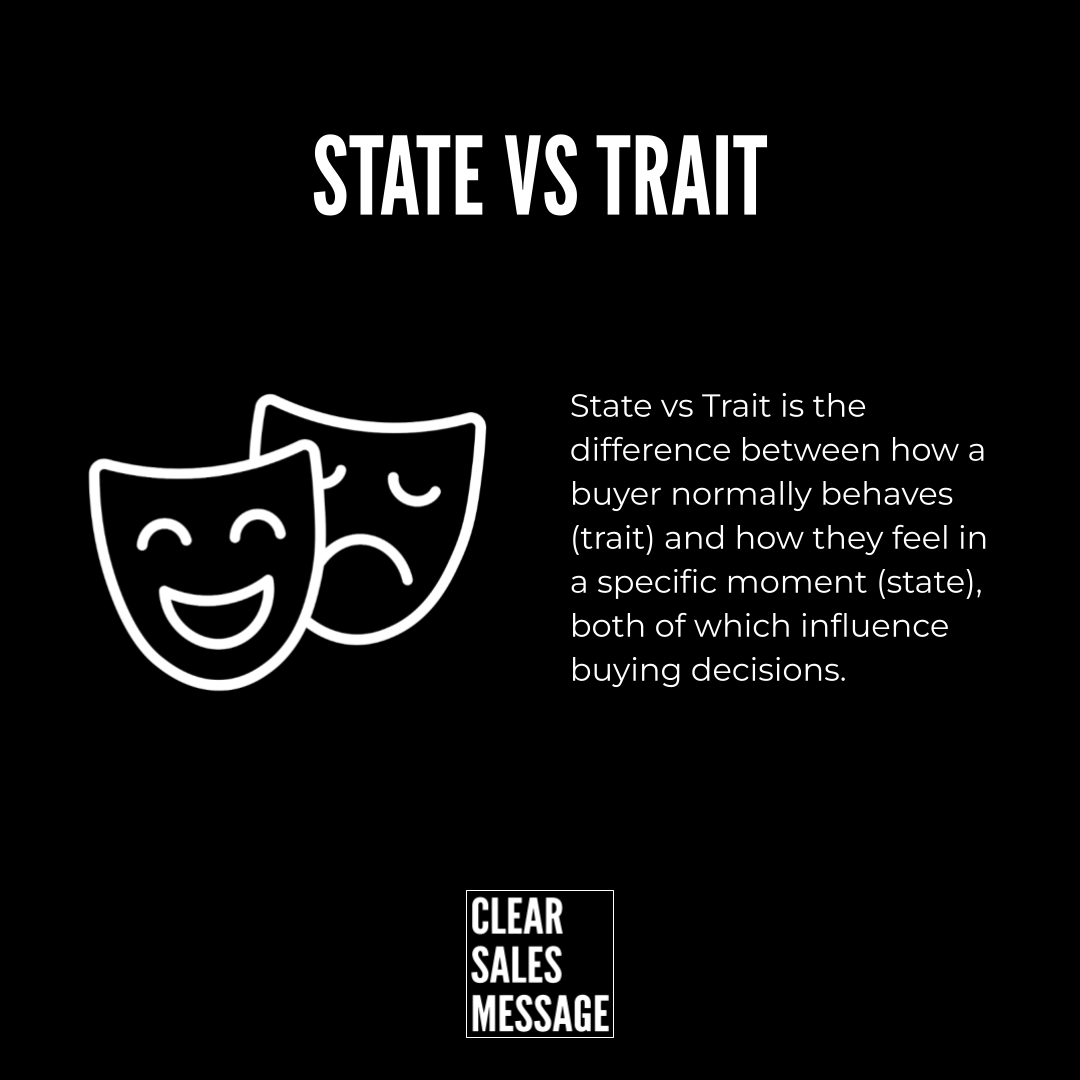
Trait is how someone tends to behave over time. For example, they may be naturally careful, bold, logical, or fast moving. These traits stay fairly stable.
State is different. It changes all the time based on what is going on around the person. A buyer who is normally bold may become very careful if budget pressure rises or a past supplier let them down. But a buyer who is normally slow to act may move fast if the cost of waiting starts to feel too high.
So buyers do not make decisions in a bubble. Their world affects their choices.
How Does State vs Trait Affect Buying Decisions?
Most sales processes are built on the idea that buyers behave in a steady, logical way from start to finish. But in reality, behaviour shifts all the time.
A buyer’s state can change because of stress, tiredness, internal pressure, or fear of making the wrong call. As a result, their tone, speed, and openness all change too. And most buyers never explain why. They just act differently.
This is why deals can seem to stall for no clear reason. Something has changed. But it is usually the buyer’s state, not their interest in buying.
How Can You Use State vs Trait In Sales?
The best sales people adapt to how the buyer feels right now rather than relying on broad guesses about their nature. That takes awareness and a willingness to read the room rather than just push the process forward.
Look for behaviour changes
A buyer who suddenly gets slower, quieter, or more guarded is often reacting to something in their world rather than changing their mind about you. So good sales chat picks up on those shifts and adjusts. The right response to a state change is usually very different to the right response to a trait.
Reduce emotional pressure
Many deals slow down because buyers feel unsafe, unsure, or under pressure. In practice, good sales work is often less about pushing harder and more about making the buyer feel calm and clear. Because people buy differently when they feel safe.
Make it easy to say yes
When a buyer is in a nervous or guarded state, the job is to reduce risk and increase clarity. For example, social proof, clear next steps, and simple language all help. So instead of adding more reasons to buy, remove the reasons to hesitate.
When State Matters More Than Trait
State becomes most powerful when the decision carries real weight. For example, high value B2B deals, time sensitive choices, internal change projects, and decisions where the buyer’s job could be on the line. The more pressure around the choice, the more the buyer’s current state drives their actions. So buyers who looked bold early on can become very cautious once the stakes feel real.
When Trait Still Matters
Traits still matter because some buyers naturally want more detail, more speed, or more reassurance than others. However, most businesses overestimate how steady those needs stay once pressure, fear, or politics enter the picture. State tends to override trait much faster than people expect.
Common State vs Trait Mistakes
The most common mistake is treating a buyer’s short term behaviour as a fixed part of who they are. That leads to wrong calls, wrong tone, and often unnecessary pressure at the wrong moment.
Assuming buyers are always like that
A buyer acting cautiously today may not be a naturally careful person. They may simply be under pressure right now. So experienced sales people tend to spot the difference faster. Instead of pushing harder, they adjust their approach and give the buyer room to breathe.
Ignoring the emotional context
Some sales people focus only on logic and ignore how the buyer feels. But even the most logical buyer is still affected by stress, fear, and social pressure – especially when the decision has real consequences. People do not stop being human just because they are in a business meeting.
State vs Trait – An Example
A buyer who normally moves fast suddenly goes quiet during final contract talks. A less experienced sales person assumes they have lost interest. But a more experienced one spots that the buyer may simply be in a cautious state – perhaps because of internal scrutiny, budget pressure, or career risk.
So instead of pushing, they focus on clarity, reassurance, and making the decision feel safe. As a result, the buyer gains confidence and the deal moves forward. Same buyer. Different state. Completely different outcome.
You can read more about the theory behind this here: State and Trait Theory
bsp;
See also