

Practical Sales Training™ > How People Work > Emotions Trump Logic

Emotions Trump Logic
Most salespeople lead with logic. They share the specs, the data, the ROI. And then they wonder why the buyer goes quiet.
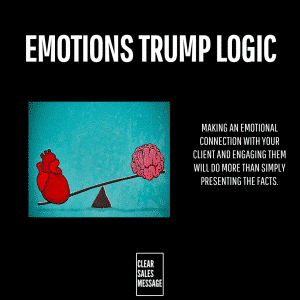
The reason is simple. People are not logical beings who sometimes feel things. They are emotional beings who sometimes use logic to justify decisions they have already made. Emotion comes first. Logic follows.
If you want to sell, you need to reach the emotional part of the decision first. The facts can back it up. But they rarely start the fire.
What Is Emotions Trump Logic?
Emotions Trump Logic says that how a buyer feels tends to matter more than what they know. A buyer might have all the facts they need. But if the emotional pull is not there, the deal often stalls.
This shows up in everyday buying. Someone buys a car they cannot quite afford because it feels right. A manager picks the supplier they like over the one who scored higher on paper. When a buyer says they need to think about it, the feeling was usually not strong enough yet.
Recognising this changes how you sell. Your job is not just to inform. It is to help your buyer feel the right thing at the right moment.
Why Does Emotions Trump Logic Work?
The brain runs two systems at once: a fast emotional one and a slow rational one. When we face a decision, the fast emotional system reacts first. The rational system often catches up later and builds a case for what the emotional system already wanted.
This means that if you only give a buyer facts, you are speaking to the slow system. You may win on logic and still lose the deal because the feeling was never there. But when you reach the emotional system first, the rational system works with you rather than against you.
It also explains why buyers make choices that look odd from the outside. This is not irrational behaviour. They are following a feeling that logic has not yet caught up with. Your job in sales is to help them feel the outcome before they have bought it.
How Can You Use Emotions Trump Logic In Sales?
Use visualisation
Ask your buyer to picture what life looks like after they have your product or service. Get them to think about the feeling, what has changed, and what they no longer face. This contrast between now and a better future is one of the most powerful things in a sales call. The clearer the picture, the stronger the pull.
Use the phrase “this means”
Businesses often sell features. Buyers buy benefits. To bridge the gap, use the phrase “this means.” A feature tells the buyer what the product does. “This means” tells them what it does for them. For example: the Clear Sales Message book is full of useful templates and tools. This means you can build a clearer message yourself without paying a consultant. One phrase shifts the whole conversation.
Sell the destination, not the journey
Buyers do not buy a process. They buy an outcome. So focus on where they are going rather than how your product works. The journey matters, but buyers really want to feel they will get to where they want to be. Show them that, and the emotional connection follows. See also: Sell The Destination.
Mirror the feeling you want them to have
Your tone, energy, and confidence shape how your buyer feels in the conversation. If you are flat and mechanical, they feel flat about your product. But if you are clear, warm, and sure of what you offer, that feeling transfers. Buyers take emotional cues from the person in front of them, so be aware of the signal you are sending.
When Emotions Trump Logic Works Best
This concept applies in almost every sale, because every buyer is human. But it matters most in high-value, high-stakes decisions where the buyer feels uncertain or exposed. The bigger the decision, the more the emotional layer needs attention. Logic alone will not get a nervous buyer over the line.
It also matters when your product is hard to differentiate on paper. If your specs look similar to a rival’s, emotion becomes the deciding factor. The buyer goes with the one who made them feel more confident, more understood, or more excited about the outcome.
In business-to-business sales, buyers often feel they must justify their choice with data. But even then, the emotional decision usually comes first. The data search starts after they have already leaned one way.
When Emotions Trump Logic Becomes Dangerous
There is a line between creating an emotional connection and pushing a buyer into a bad fit. If your product does not solve the buyer’s problem, no amount of emotional appeal will lead to a happy client. The goal is to help the right buyer feel the right thing, not to manipulate someone who is not a good match.
Emotion without substance also fails under scrutiny. A buyer may feel excited in a meeting but go cold when their finance director asks for the numbers. So pair the emotional hook with solid facts they can point to when they justify the decision inside their business.
Finally, be careful about leaning too hard on fear or pain as the emotional trigger. It works in the short term but can create buyer regret. Focus instead on excitement, confidence, and the pull of a better outcome.
Common Emotions Trump Logic Mistakes
Leading with features instead of feelings
Most pitches open with what the product does. But buyers need to feel why it matters before they care what it does. So lead with the outcome and the feeling it creates, then bring in the features to back it up. If you open with specs, you are asking the buyer to do the emotional work themselves. Most will not bother.
Ignoring the emotional temperature in the room
If a buyer seems flat, worried, or distracted, pushing more logic at them will not help. Check in first. Ask how they are feeling about the decision. Find out what is on their mind. A buyer who feels heard is far more open than one who feels they are just being sold to. Tune in before you turn it up.
Forgetting that B2B buyers have emotions too
Business buyers are still people. They worry about making the wrong call and want to look good in front of their team. How a supplier makes them feel matters just as much as the numbers. So do not assume that because the buying context is professional, emotion does not apply. It applies just as much, but sometimes it is harder to see.
Emotions Trump Logic – An Example
The order history that tells the truth
Take a look at your recent Amazon orders. You planned some of them. But how many came from a feeling? A late-night impulse, something that looked exciting, a purchase that felt like a reward.
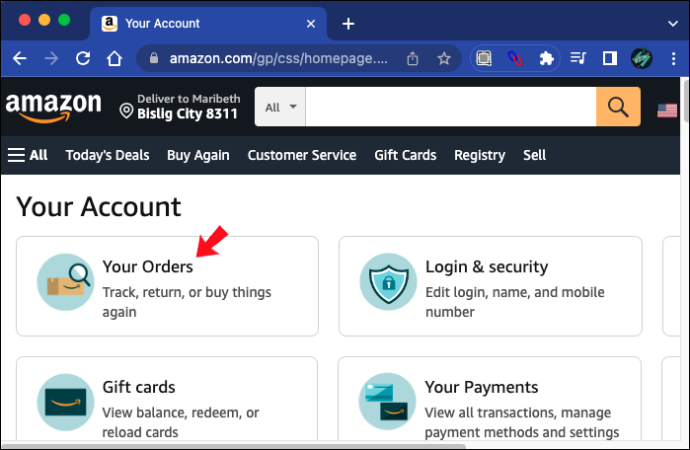
The arrow in that screenshot points straight to the evidence. Your order history is a record of decisions, and many of them had very little to do with logic. Emotion drove the click. Logic showed up later to justify it.
Your buyers work the same way. When you help them feel the outcome before they buy, you are working with the way decisions actually get made.
See Also