Practical Sales Training™ > How To Keep Your Clients Happy > Business Continuity
Business Continuity
Things go wrong. Systems crash, people get ill and suppliers let you down. Your clients know this. So what they really judge is what happens next.
That’s where business continuity comes in. It’s the quiet promise that you’ll keep going when others stall. And when you can show that promise clearly, clients relax. They stay longer, worry less and trust you with more.
What Is Business Continuity?
Business continuity means having the right people, processes and backup plans in place. Then you can keep delivering when something breaks. Think power cuts, cyber attacks, illness or a failed supplier. Either way, the client still gets what they paid for.
It also has a sales side. Your plan reassures buyers that they can rely on you. So it’s part of your service, as well as your safety net.
Here’s the bit most firms miss. Clients can’t see your plan unless you show it. So a great plan kept in a drawer does very little for trust.
Why Does Business Continuity Work?
Buyers fear disruption more than almost anything. A failed supplier can stop their sales and land them in trouble. So they look for partners who won’t leave them stranded. When you prove you’re one of those, you remove a big worry.
It also changes how clients feel during a crisis. If they know you have a plan, they stay calm. Instead of panicking, they wait for your update. As a result, a bad day becomes a moment that builds trust.
And clients remember how you handled trouble. Smooth days blur together. But the day you kept things running sticks. In fact, that story often turns into a referral.
How Can You Use Business Continuity?
Show The Plan In Plain English
Most continuity plans read like legal papers. So turn yours into a one page summary clients can follow. Say what could go wrong and what you’d do about it. Also name who takes over if a key person is out. Then buyers can picture the bad day and feel safe.
Remove Single Points Of Failure
Look for anything that stops everything if it breaks. For example, one person who knows the system or one supplier you can’t swap. Then build a second route for each one. Clients rarely ask about this. Yet it’s often the thing that saves the account.
Plan Your Messages Before You Need Them
In a crisis, silence feels like chaos. So write your client updates in advance. Decide who sends them, how often and through which channel. Even “we’re on it, next update at noon” calms people. As a result, clients feel looked after while you fix the problem.
Test It Before Real Life Does
A plan you’ve never tried is just a hope. So run a simple drill once or twice a year. Switch off a system and see what happens. Then fix the gaps you find. That way, the first real test isn’t in front of a client.
When Does Business Continuity Work Best?
Business continuity matters most when clients depend on you every day. Think software, logistics, IT support or anything that keeps their business running. If you stop, they stop. So the stronger your plan, the more they’ll pay to stay with you.
It also works well with larger buyers. They often have to check supplier risk before they sign. So a clear continuity plan can speed up their approval. In fact, it can be the thing that gets you through the door.
And it helps most right after a public outage elsewhere. When a rival or a big platform fails, clients start asking questions. That’s the perfect time to calmly show them your plan.
When Does Business Continuity Become Dangerous?
It becomes dangerous when you promise more than you can deliver. If you claim you’ll never go down, the first outage breaks that promise. And trust drops much faster than it grew. So promise a fast recovery and clear updates instead.
It also backfires when you lean on fear to sell. Scary stories can make buyers anxious and pushy. So keep the tone calm and matter of fact.
Finally, a plan can go stale. Teams change, suppliers change and systems change. So an old plan can give everyone false comfort. Review it at least once a year.
What Are The Common Mistakes With Business Continuity?
Keeping The Plan Secret
Many firms have a plan but never mention it. So clients assume there isn’t one. Instead, share a short version in proposals and onboarding. That way, it works for you before trouble ever starts.
Blaming The Supplier
When a supplier fails, it’s tempting to point the finger. But your client chose you. So they’ll hold you responsible either way. Own the problem, explain the fix and keep them updated.
Going Quiet In A Crisis
Some teams go silent while they fix the issue. They want to have the answer first. Yet every hour of silence makes clients imagine the worst. So send short updates often, even when there’s little news.
Relying On One Person
If one person holds all the knowledge, you have a hidden risk. They might leave, get ill or go on holiday at the wrong time. So write things down and train a backup. Then no single absence can stop the work.
Business Continuity – An Example
When Google Cloud Went Down
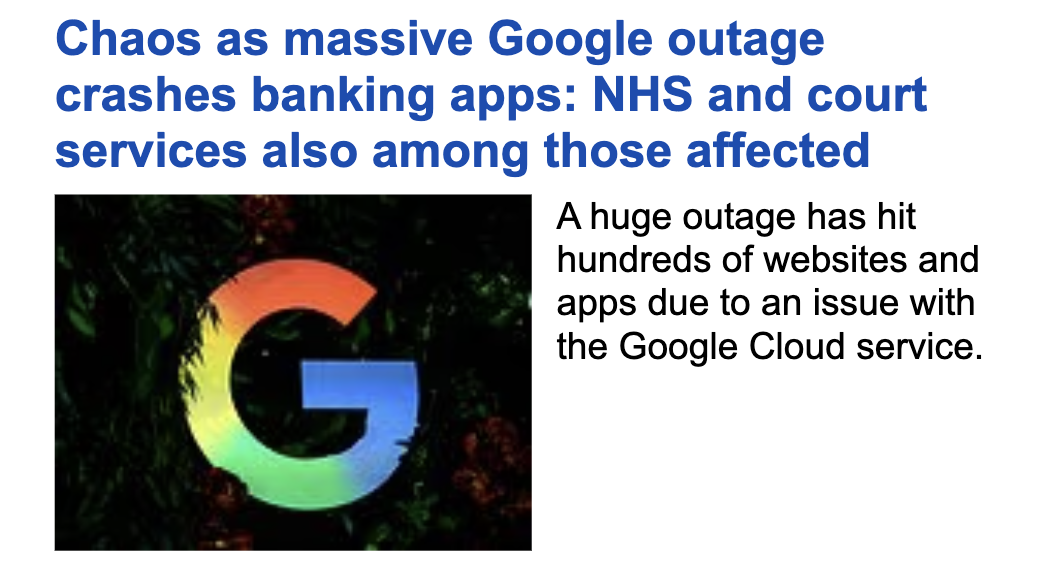
This one made the news. A problem with the Google Cloud service knocked hundreds of websites and apps offline. Banking apps went down, and NHS and court services felt it too. You can read the full report here.
Now think about it from the customer’s side. If your banking app stopped working, who would you blame? Most people would blame their bank straight away.
That’s the lesson. Your clients see you, so they’ll hold you to account for every link in your chain. Even the biggest platforms can fail. So the winners are the firms with a backup route. They also have a plan to talk clients through it.
So ask yourself a simple question. If your main supplier went down tomorrow, what would your clients see? And would it make them trust you more or less?
See Also