

Practical Sales Training™ > How To Get Attention > The Made-Up Word Effect
The Made-Up Word Effect
Normal words can’t capture some ideas. So brands invent new ones instead.
The Made-Up Word Effect means inventing a word and tying it to your offering.
What Is It
The Made-Up Word Effect means making up words or phrases for your offering. You’re not describing it. Instead, you’re branding it.
Why Does It Work
It works because of novelty. A new word grabs attention simply by not existing yet.
It also creates a sense of exclusivity. So people who know the phrase feel like they’re in on something.
A made-up word can carry ideas and feelings that ordinary language can’t quite reach.
How Can You Use It
Capture A Feeling, Then Build The Word
Think about the feelings or circumstances tied to using your product. So could you turn that feeling into a word of its own?
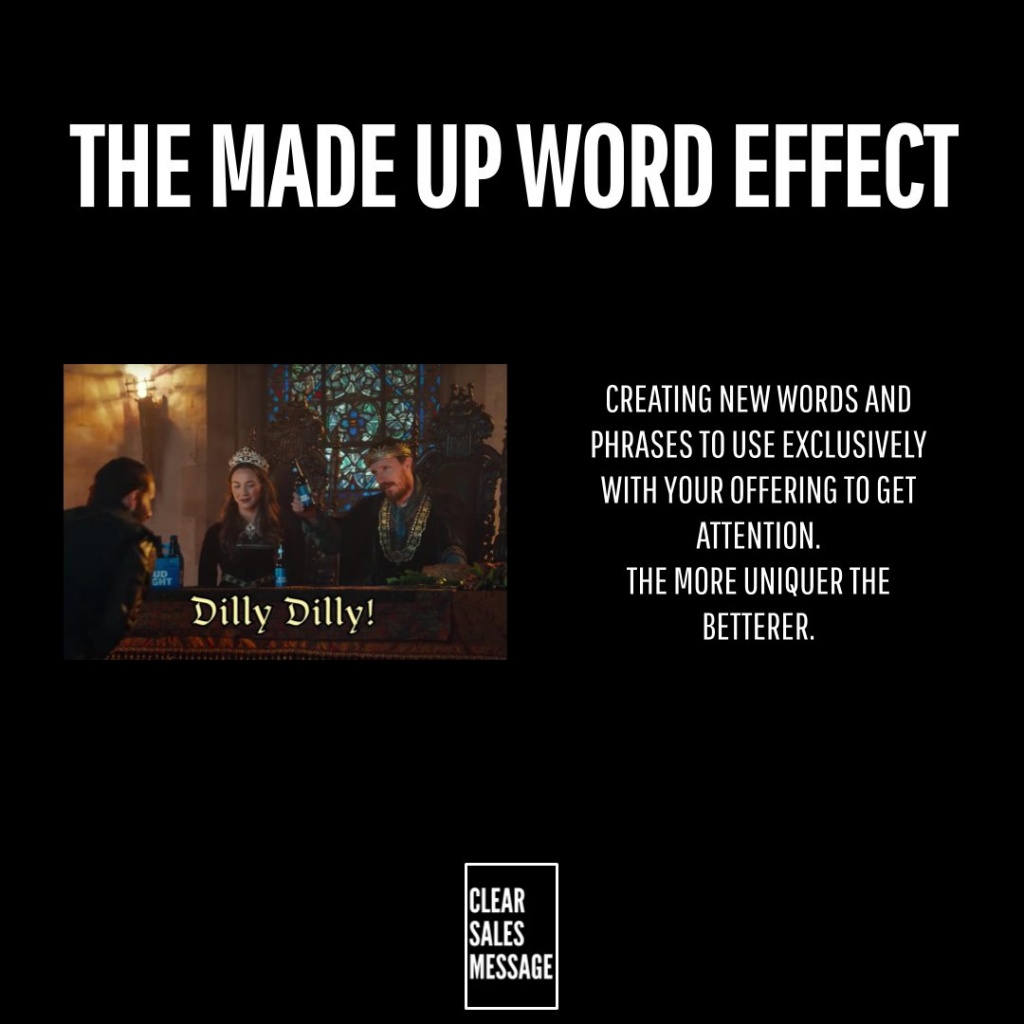
McDonald’s did it with “Peely Peely” for Monopoly. Budweiser did it with “Dilly Dilly.”
Keep It Short And Repeatable
So a made-up word only works if people can say it easily. They also need to want to repeat it. So keep it short, playful, and easy to remember.
When It Works Best
This works best for brands people already feel positive about. So a new word spreads faster when people already want to share it.
It also works well in campaigns built around fun or community. That suits it better than serious or high stakes offerings.
When It Becomes Dangerous
This backfires if the word feels forced. Or if it doesn’t connect to anything real about your brand. So a made-up word without meaning behind it just confuses people.
It also fails if you explain it too much. Part of the appeal is buyers working it out for themselves. Or they pick it up from others.
Common Mistakes
Inventing A Word With No Clear Meaning
A made-up word needs to connect to a real feeling. So it should tie back to your brand. Don’t invent language just for the sake of sounding different.
Overusing It Everywhere
Repeating the phrase in every piece of communication wears out its novelty fast. So let it breathe, and let buyers use it themselves.
The Made-Up Word Effect – An Example
Budweiser turned “Dilly Dilly” into a phrase people repeated everywhere. Most people didn’t even know what it meant.
So that’s part of why it worked. The phrase carried a feeling of fun and belonging. No normal slogan could quite match that.
See also
- The Rename Effect
- Family of names
- Named Behaviour
- 100+ ways to seize buyer attention
- 100+ ways to be more memorable