Practical Sales Training™ > Convert > The DIY Effect

The DIY Effect
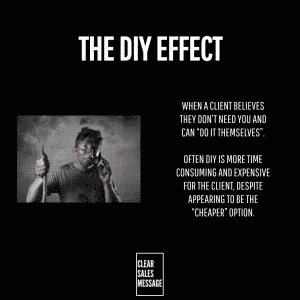
Every buyer has a voice in their head that says “I could just do this myself.” It sounds cheap. It sounds easy. Neither is usually true, but the voice is loud, and it’s the first objection you’re competing against before you’ve even started your pitch.
The DIY Effect is that moment of hesitation. It happens quietly, often before a buyer ever reaches out to you, so if you don’t address it directly, you never get the chance to change their mind.
Handled well, this isn’t a threat to your sale. It’s an opening. Once a buyer sees the real cost of doing it themselves, hiring you starts to look like the obvious choice instead of the expensive one.
What Is It
The DIY Effect happens when a buyer considers meeting their own need instead of hiring a professional. They weigh up doing it themselves against paying you to do it for them.
This happens more than most sellers realise, and it happens silently. Buyers rarely tell you they’re thinking about doing it themselves. They just quietly disappear, or they never reach out in the first place.
That’s what makes this effect worth understanding. If you never name it, you never get the chance to answer it.
Why Does It Work
It works because the buyer believes DIY is cheaper and easier. On paper, it looks that way. There’s no invoice, so it feels free from the start.
But that belief usually falls apart in practice. DIY often leads to delays and costly mistakes, simply because the buyer lacks the experience a professional has built up over years of doing the same job.
The buyer doesn’t see this cost upfront. They only see it later, once they’re three hours into a job that should have taken thirty minutes, or once they’ve bought the wrong materials twice. By then, the “free” option has already cost them time, money, or both.
How Can You Use It
Depending on what you offer, there are several real advantages a professional has over a DIY attempt. Use these in your messaging to reframe what “cheap” actually means, since most buyers have never thought it through properly.
Quality And Results
Professionals work to a higher standard because they have better equipment and materials. They can do things a beginner simply can’t, and that’s exactly why they’re professionals in the first place.
This gap in quality is often invisible until it’s too late. A DIY job can look fine on day one and start falling apart within a month, while a professional job holds up because it was built to a higher standard from the start.
Speed
Professionals tend to work faster too. They already know what to do, and they have the right tools ready to go, so there’s no time lost figuring things out as they go along.
A buyer doing it themselves is often learning on the job. That learning curve is where most of the wasted time actually happens.
Fewer Errors
A professional usually finishes the job without a hitch. DIY, on the other hand, tends to run into problems nobody saw coming, since experience is exactly what helps you spot issues before they happen.
The Real Cost
A professional might charge more upfront, but doing it yourself is never actually free. Your time has a value, materials cost money, and mistakes add up fast once you start counting them properly.
These costs just stay hidden, since nobody sends you an invoice for your own wasted afternoon or the material you bought twice because the first attempt went wrong. The bill still exists. It’s just invisible until you add it up.
Discounts And Connections
Professionals often get trade discounts the public can’t access. Those savings can reduce, or even wipe out, what a buyer ends up spending on their service compared to buying materials at full retail price themselves.
They also know other professionals and services a project might need. That network alone can save a buyer weeks of searching, phoning around, and guessing who’s actually reliable.
Tools And Legal Requirements
Professionals have access to tools and software most consumers simply don’t own, and wouldn’t want to pay for just to use once. Some jobs, like electrical or gas work, legally require a professional anyway, so DIY isn’t even an option there. That’s worth pointing out too, since it removes the debate entirely.
When It Works Best
This works best when your buyer is weighing up a real DIY alternative, not just comparing you to a competitor. Website builders, home projects and software tools are classic territory for this, since a buyer can genuinely picture attempting it themselves.
It’s also strongest when you can point to a specific, tangible cost of getting it wrong. Vague warnings don’t land, because they don’t give the buyer anything concrete to weigh against the price you’re asking. Specific costs do, since they turn an abstract risk into something real.
When It Becomes Dangerous
This backfires if you come across as dismissive of your buyer’s ability. Nobody likes being told they’re incapable, even when it’s partly true, and a message that feels condescending will lose them before you’ve made your actual point.
It also fails if your warnings feel exaggerated. If every DIY attempt sounds like a disaster waiting to happen, buyers stop believing you, and the whole argument loses its power. Overstate the risk once, and they’ll discount everything you say after it.
Common Mistakes
Just Saying “Don’t Do It Yourself”
A flat warning like this doesn’t persuade anyone. It just sounds defensive, like you’re protecting your own sale instead of genuinely helping them make a good decision.
Ignoring The Real Reason DIY Feels Appealing
Buyers choose DIY because it feels free and within their control. If you skip past that and jump straight to your pitch, you miss the chance to actually change their mind, since you never addressed the reason they were considering it in the first place.
The DIY Effect – An Example
Say you offer website design services. Instead of just saying “don’t do it yourself,” you use the DIY Effect to reframe the whole decision from the start.
You could say: “Sure, you could build your own website. But how much is your time worth? Most DIY sites take over 30 hours to finish and still look homemade. We build conversion focused websites in under a week, saving you time, stress and missed sales.”
This reframes the buyer’s belief that DIY is faster or cheaper. Instead, it highlights the hidden costs and missed opportunities, which makes the professional option the smarter choice, not just the more expensive one.
See Also