
Practical Sales Training™ > Attention > The Familiar Effect

The Familiar Effect
A new idea makes people cautious. A familiar one doesn’t. So the fastest way to earn attention is often to borrow something people already trust.
The Familiar Effect works because it feels safe before you’ve said a word.
What Is It
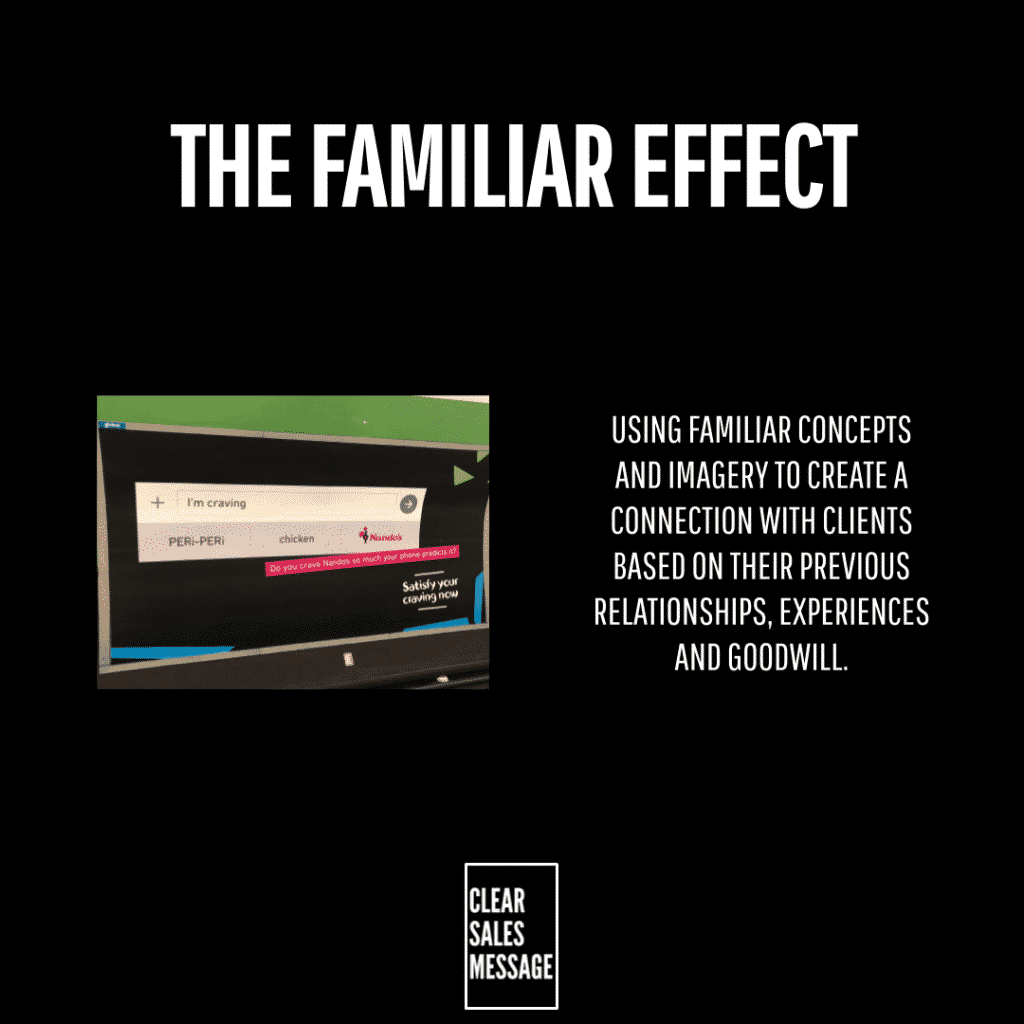
The Familiar Effect means using concepts, images, words or phrases your buyer already knows. Not new ideas. Recognisable ones.
Why Does It Work
It works because it borrows existing trust. Your buyer already has a relationship with the familiar thing, so you tap into that instead of building trust from zero.
It also shows empathy, since using something they already understand proves you’ve thought about their world, not just yours. That shortcut saves you time and effort you’d otherwise spend earning attention the hard way.
How Can You Use It
Start with context. Think about when and where your product actually gets used. Who uses it, and what result are they after?
Also consider complementary products or services already connected to what you sell. These often carry built in familiarity you can borrow directly.
Then think visually. The right visual cues combined into a recognisable schema can create an instant sense of familiarity, even before anyone reads a single word.
When It Works Best
This works best in crowded spaces, where standing out through novelty is hard. Familiarity cuts through differently, since it works with recognition instead of against it.
It’s also strong when your buyer is moving quickly and not actively looking to engage. A familiar shape or phrase can stop someone who wouldn’t otherwise pause at all.
When It Becomes Dangerous
This backfires if the familiar reference feels forced or unrelated to what you actually sell. A clever format with no real connection just confuses people instead of connecting with them.
It also fails if it borrows too closely from someone else’s actual brand or property. Familiarity should feel like a format, not a copy.
Common Mistakes
Choosing Familiarity With No Connection To The Offer
A familiar format only works if it links back to what you’re selling. Otherwise it’s just a clever visual with nothing behind it.
Overcomplicating The Reference
Familiarity works because it’s instant. If someone has to think hard to get the reference, you’ve lost the whole point of using it.
The Familiar Effect – An Example
A London cocktail bar uses a sign built to look exactly like an official street sign to grab attention outside its door.
Passersby recognise the format instantly, since it’s the same shape and style as signs they see every day. That familiarity earns a second glance before anyone even reads the words on it.
Once they do read it, the message lands even harder, because the format already did the work of stopping them first.

See Also