
Practical Sales Training™ > Connect > The Empathy Effect

The Empathy Effect
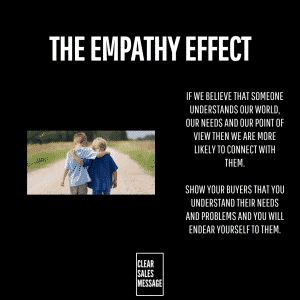
Buyers don’t buy from strangers who talk at them. They buy from people who seem to actually get it.
The Empathy Effect is simple. We feel connected to people who understand our situation. So the more you understand your buyer, the more connected they feel to you.
What Is It
The Empathy Effect says we feel closer to people who understand what we’re going through. It’s a basic human response, and it applies just as much in selling as anywhere else.
Why Does It Work
It works because empathy triggers connection. When a buyer feels understood, their guard drops a little. That shift matters, since trust is hard to build without it.
Show your buyer you genuinely get their situation, and you trigger that same connection. This raises your chances of making the sale, often before you’ve said anything about your actual offer.
How Can You Use It
Start by recognising your buyer’s real needs, problems and circumstances. Not the surface version. The actual one.
Then communicate about their feelings, hopes, dreams and fears directly. This shows understanding in a way that’s obvious, rather than implied. It proves you’ve paid attention, and that’s exactly what builds the connection in the first place.
When It Works Best
This works best when your buyer feels misunderstood elsewhere. If competitors talk in generic terms, naming their specific situation instantly sets you apart.
It’s also strong in emotionally loaded categories, where feelings genuinely shape the buying decision. Health, finance and family are classic examples, since the stakes feel personal.
When It Becomes Dangerous
This backfires if the empathy feels performative. Buyers can tell when understanding is genuine and when it’s just a technique borrowed for effect.
It also fails if you get the situation wrong. Guess at a buyer’s feelings incorrectly, and you look out of touch instead of understanding, which does more damage than saying nothing at all.
Common Mistakes
Staying Too Generic
Vague empathy sounds like every other brand. Speak to the specific fear or frustration your buyer actually has, not a broad version that could apply to anyone.
Using Empathy As A Sales Trick
If empathy only shows up right before a pitch, it reads as manipulation. Understanding needs to come first, and it needs to be real.
The Empathy Effect – An Example
Always, the sanitary product brand, ran adverts referencing “the gush,” a moment women on their period instantly recognise.
Using that specific, slightly bold term, paired with a knowing facial expression, sent a clear message. It said the brand understood exactly what its buyers deal with, without needing to spell it out further.
That kind of specificity does more than any generic tagline could. It proves understanding instead of just claiming it.

See Also