Practical Sales Training™ > How To Get Attention > Annual Survey

Annual Survey
What Is It
An Annual Survey is your own piece of original research, published once a year. You ask your market a set of questions, collect real answers, and publish the results as a report.
It isn’t a survey for fun. It’s a tool that puts your name next to real data other people want to reference.
Why Does It Work
People trust whoever holds the data. Once you publish real numbers about your market, journalists, competitors and buyers start treating you as the authority on the subject, not just another business selling into it.
It also works because it gives people a reason to mention you that has nothing to do with your product. Nobody links to your sales page. But plenty of people will link to genuinely useful data, and your brand rides along with every mention.
Running it every year adds a second layer. Buyers start expecting it, journalists start watching for it, and each new edition gets compared against the last. That anticipation is worth more than any single report on its own.
How Can You Use It
Ask Questions Your Market Actually Argues About
Skip the safe, obvious questions nobody debates. Pick two or three topics your industry already argues about, and ask your audience directly. Disagreement is what gets a survey shared, quoted and picked up, not polite agreement.
Keep The Core Questions Identical Every Year
Change your questions every year and you lose your most valuable asset, the trend line. Keep a fixed set of core questions running every single year, then add fresh ones on top. After three or four years, that consistent data becomes something nobody else can copy.
Give Journalists One Headline, Not A Whole Report
Nobody reads a forty page report on a deadline. Pull out your single most striking finding and lead with that number in your press release and social posts. Let the full report sit behind it for anyone who wants the detail.
When It Works Best
This works best in categories where opinion genuinely shifts over time, and where buyers, media or competitors have a real reason to check back each year. It also suits any market with an ongoing public debate you can attach real numbers to.
When It Becomes Dangerous
It becomes risky the moment your sample size or methodology can’t survive scrutiny. A weak survey used for a big PR push tends to get picked apart in public, and that damages credibility far more than never publishing one at all.
It’s also dangerous if you run it purely for attention with nothing underneath it. People remember being misled by a shaky statistic long after they’ve forgotten the headline that used it.
Common Mistakes
Running It Once And Calling It Annual
The word “annual” is doing a lot of work in this technique. A single report is just a report. The real value only shows up once you’ve published three or four years running, and people start expecting the next one.
Asking Questions Nobody Outside The Business Cares About
Internal curiosity and public interest are two different things. Before you finalise your questions, ask whether a journalist with no connection to your industry would actually want to know the answer.
Burying The Interesting Finding On Page Twelve
Most annual surveys have one genuinely surprising stat hidden deep in the report. If it’s not in your headline, your press release, or your first social post, almost nobody will ever find it.
Annual Survey – An Example
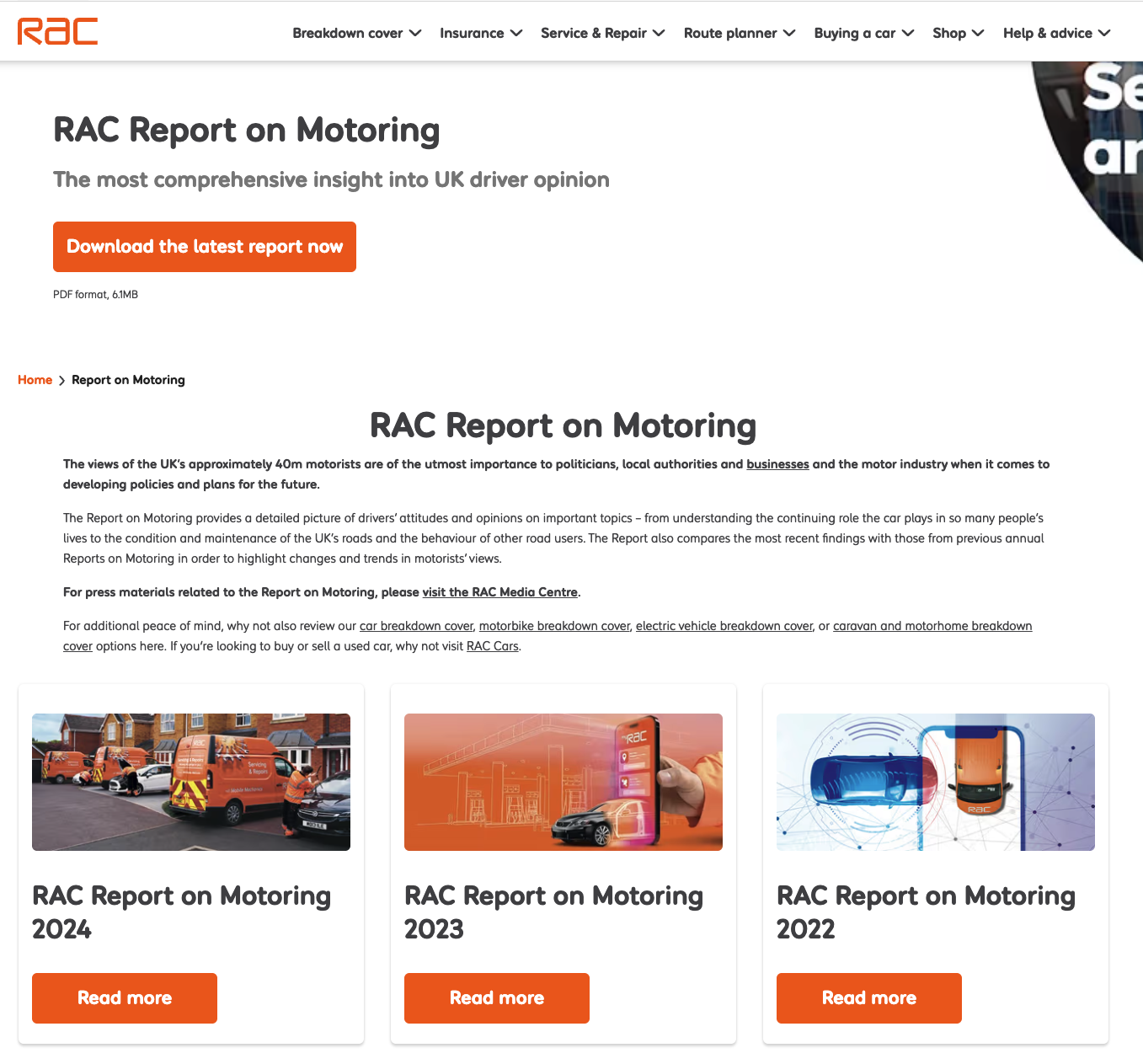
The RAC’s Report on Motoring is a strong example of this. Every year they survey a huge cross section of UK drivers on their opinions and habits behind the wheel, then publish the findings as a proper report, with a new edition released each year and older ones kept publicly available for comparison.
It positions the RAC as the go-to source on driver opinion in the UK, well beyond their core breakdown cover business. Journalists reference it, other brands quote it, and it gives the RAC a reason to be in the news that has nothing to do with selling breakdown cover.
See Also