Practical Sales Training™ > How To Lose The Sale > Arbitrary Numbers

Arbitrary Numbers
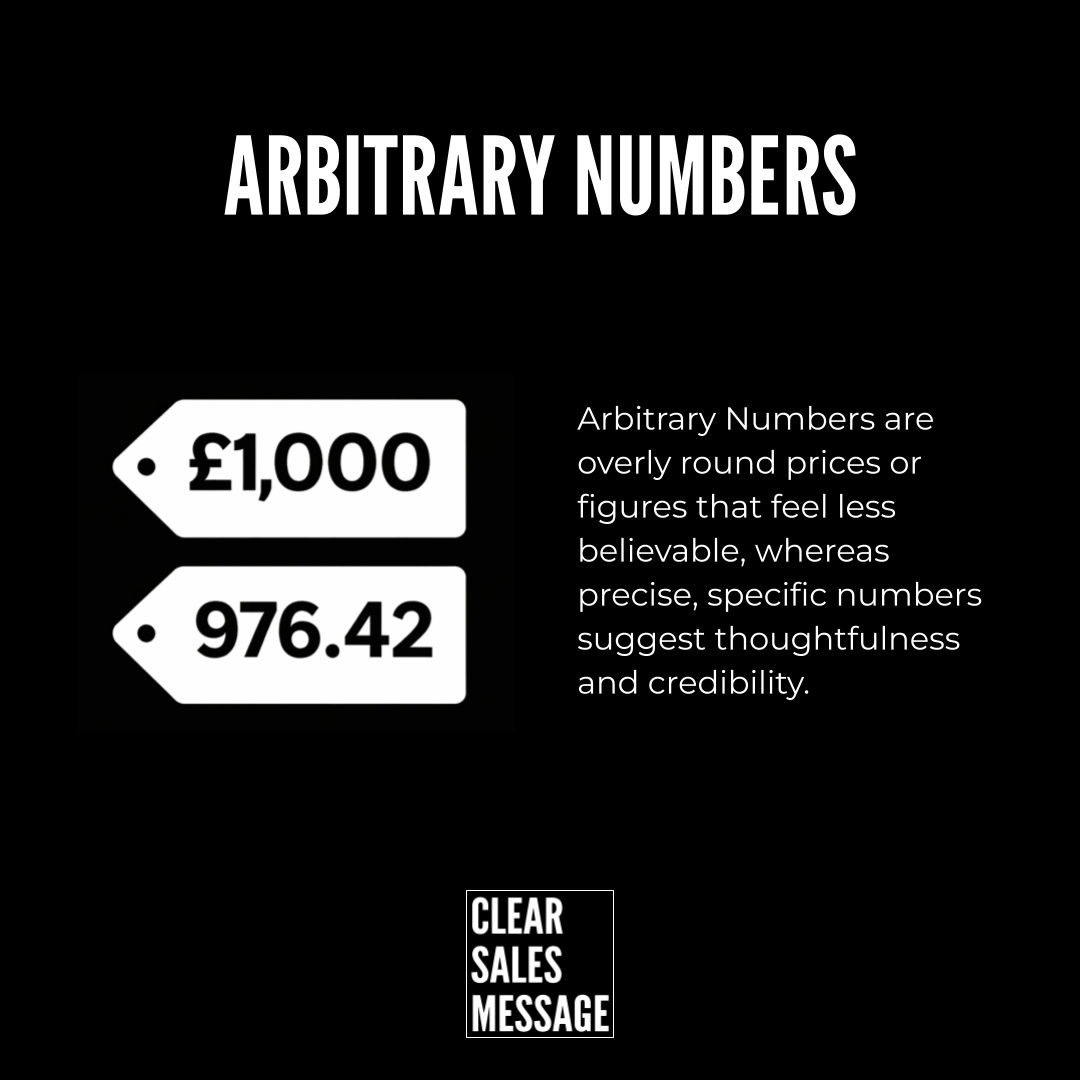
“Save around £10,000.” “Improves results by 50%.” Numbers like these sound confident on the surface, but most buyers have heard enough sales pitches to spot a guess dressed up as a fact.
That’s the problem with arbitrary numbers. They look like proof, but they don’t act like it. And once a buyer starts wondering where a figure came from, they stop listening to what it’s supposed to prove.
This page covers what arbitrary numbers are, why they quietly damage trust, and how to replace them with figures buyers actually believe.
What Are Arbitrary Numbers?
An arbitrary number is a figure that looks chosen for convenience rather than worked out from real evidence. It’s the £10,000 saving with no breakdown. The “50% better results” with no explanation of better than what, or compared to whom.
These numbers often turn up as suspiciously neat estimates. Round prices. Vague savings claims. Projected outcomes with nothing showing how they were calculated. They sound confident, but confidence isn’t the same as proof.
Buyers don’t just hear the number. They quietly ask whether it feels considered or whether it feels picked. So the moment a figure feels too neat, the doubt starts.
Why Do Arbitrary Numbers Lose The Sale?
People are constantly, instinctively judging whether information sounds precise or approximate. A specific number suggests real measurement, real analysis, or real experience behind it. A rounded one can feel like a placeholder, something dropped in because a number had to go there.
When a figure feels arbitrary, the buyer’s attention shifts. Instead of focusing on the benefit you’re describing, they start questioning the number itself. How was this worked out? What assumptions sit behind it? Has this been simplified to sound more persuasive than it really is?
This doubt rarely turns into an argument. Buyers don’t usually challenge you on it out loud. Instead, their confidence just quietly drops. The pitch feels a little less solid, and their enthusiasm to move forward fades with it.
Even a genuinely strong offer can lose its impact this way. Because if the numbers feel uncertain, the whole pitch feels uncertain too.
How Can You Avoid Arbitrary Numbers In Sales?
Show The Thinking Behind The Number
A figure becomes believable the moment a buyer can see how it was built. Explain the inputs, the range, or the assumption behind it, and the number stops feeling like a guess.
Use Real Data Wherever You Can
Past results, real averages, or a clearly defined scenario all carry more weight than an estimate plucked from thin air. A number tied to something that actually happened is far easier to trust.
Swap Round Numbers For Real Ones
£9,740 sounds calculated. £10,000 sounds like a guess, unless you explain it. Precision doesn’t need to be extreme, but it does need to feel intentional rather than convenient.
Match Your Certainty To Your Evidence
If the result varies, say so. A range or a typical outcome often feels more honest than one confident figure you can’t fully back up. So don’t be afraid to show the variation. It usually builds trust instead of costing it.
Tie The Number To The Buyer’s Own Situation
A generic statistic feels distant. A number that’s clearly built around the buyer’s own numbers feels relevant, and relevant numbers are the ones that actually land.
When Arbitrary Numbers Cause The Most Damage
They do the most damage early in a pitch, before any trust has been built. A buyer meeting you for the first time has nothing else to judge you on, so a vague or suspiciously round number becomes the first real signal of how careful you are with detail.
They also hurt more in competitive deals. If a rival backs their claim with a clear, specific figure and you offer a round one with no explanation, the comparison does the damage for them. You don’t even need to lose the argument. You just look less prepared.
When Precision Can Backfire Too
Precision isn’t a free pass either. A wildly specific number with zero explanation, something like “73.4% improvement,” can look just as suspicious as a round one if there’s nothing backing it up. Buyers aren’t just looking for exact digits. They’re looking for evidence that the number means something.
So don’t swap one kind of arbitrary number for another. A precise-sounding figure with no reasoning behind it is still a guess. It’s just a guess wearing a more convincing outfit.
Common Arbitrary Number Mistakes
Rounding For Convenience
Rounding a number to make it easier to say is fine internally, but on a buyer-facing claim it often costs more trust than it saves in simplicity.
Reusing The Same Stat For Every Buyer
A generic figure used in every pitch eventually sounds like a slogan instead of a fact. Buyers can tell when a number wasn’t built with them in mind.
Hiding The Method Behind The Number
If you can’t explain in one sentence how a figure was calculated, it probably needs more work before it goes in front of a buyer.
Arbitrary Numbers – An Example
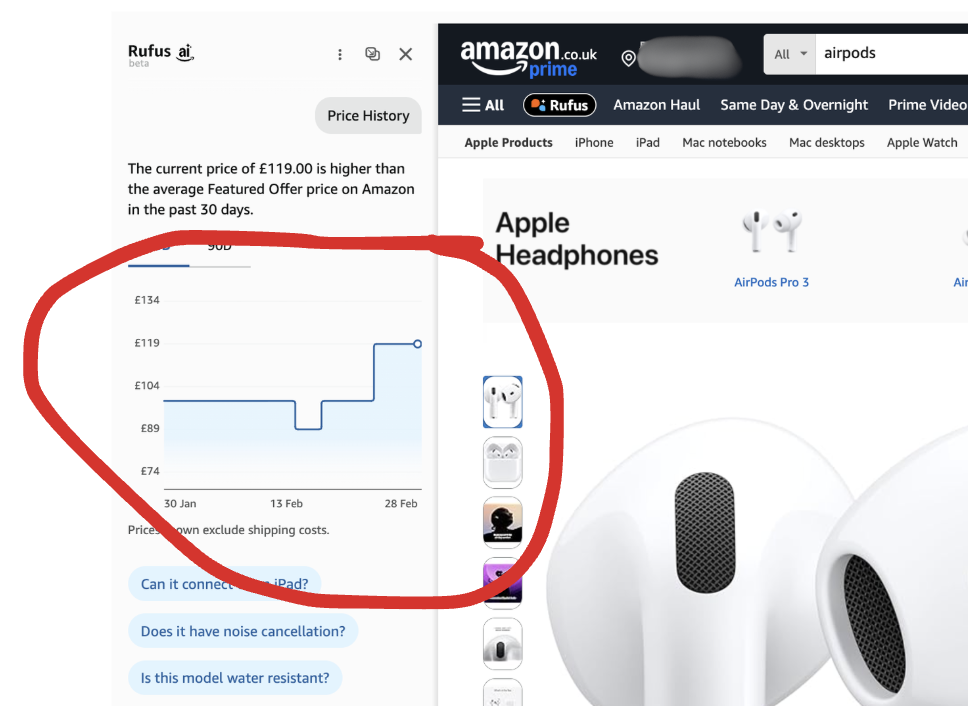
Amazon almost never prices anything in round numbers. Its price history tool shows exactly why. A pair of AirPods on the platform has been priced as low as £89 and as high as £119, never landing on a neat £90 or £120.
That oddness is the point. A price like £89 reads as the result of real pricing logic, demand, stock, competitor moves, rather than a number someone picked because it looked tidy. A flat £90 would actually feel less trustworthy, even though the difference is a single pound.
The lesson carries straight into sales. A price or a result that lands on an odd, specific figure signals there’s real thinking behind it. A neat round number, with nothing to explain it, signals the opposite.
See also: