Practical Sales Training™ > How To Convert > The Itemised Pricing Effect
The Itemised Pricing Effect
What Is It?
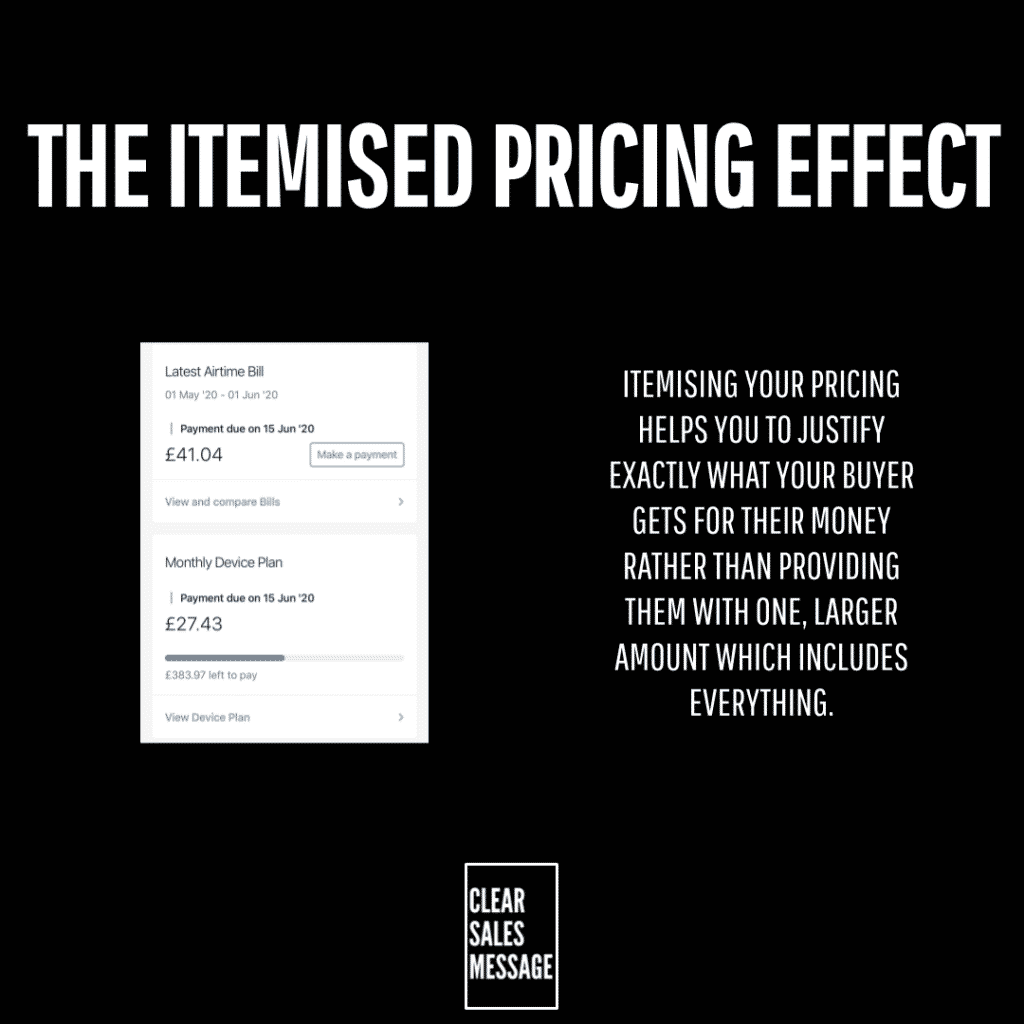
The Itemised Pricing Effect splits your price into parts. So instead of one big number, buyers see several small ones.
As a result, the price stops feeling like a mystery. Instead, it feels like a receipt.
Why Does It Work?
It works because buyers want to see what they get for their money. So a single price hides that, while a broken down price shows it clearly.
Itemising also reveals the effort behind the offer. Because of that, buyers see the time, the labour and the resource that goes into it.
This is similar to The Abundance Effect, where you list everything included without pricing each piece. Itemised pricing goes further still, since it prices every piece too.
How Can You Use It?
List Every Component
Break your offering into its real parts. So include labour, materials, time and any other resource that goes into it. The more specific the list, the stronger the effect becomes.
Price Each Part Separately
Attach a price to every line, not just the total. This way, buyers stop fixating on one big number. Instead, they see exactly where each pound goes.
Let The Total Justify Itself
Once buyers see the breakdown, the total makes sense on its own. So you don’t need to defend the price anymore, because the itemised list already does that job.
When It Works Best
This works best for higher priced offers, since buyers naturally want reassurance there. So projects, packages and bespoke services all suit this well.
It also works well when your offer includes several distinct stages. That way, pricing each one separately makes the whole thing feel more transparent.
When It Becomes Dangerous
The risk is itemising something simple. Because a basic offer with one clear deliverable doesn’t need ten line items.
Overcomplicating it can backfire too. So the price ends up feeling inflated instead of fair.
Padding the list is another trap. If buyers spot an invented line item, trust drops fast, and it rarely comes back easily.
Common Mistakes
Itemising A Simple Offer
A one part service doesn’t need a breakdown. So save this approach for offers with real complexity behind them.
Padding The List
Adding invented line items looks obvious fast. So only include parts that genuinely exist in your process.
Pricing Inconsistently
If the line items don’t add up to the total, buyers notice straight away. So check the maths carefully before anything goes near a buyer.
The Itemised Pricing Effect – An Example
The Web Design Breakdown
A web design agency sells a fixed price package at £2,500. Instead of listing it as one line called “Website Design,” they break it down like this:
- Strategy and Planning Session – £300
- Custom Homepage Design – £600
- Up to 5 Inner Pages – £750
- Mobile Optimisation – £250
- SEO Setup – £300
- 2 Rounds of Revisions – £200
- Launch and Handover – £100
Itemising the value justifies the total price. So buyers see exactly where their money goes, which makes price objections far less likely.
It also makes the offer feel structured and professional. Instead of a flat fee that invites questions, buyers get a clear plan they can actually follow.
See also