Practical Sales Training™ > How To Convert > Capped Pricing

What is capped pricing?
Capped pricing is a pricing approach where the total amount a customer will ever pay is limited to a clearly defined maximum.
No matter what happens, costs cannot exceed that cap.
This removes fear, uncertainty, and “what if” thinking for the buyer, because they know the absolute worst-case cost before they commit.
From an SEO perspective, capped pricing is often searched alongside terms like predictable pricing, cost certainty, fixed maximum cost, and risk-free pricing models.
At its core, capped pricing answers one simple buyer question:
“What’s the most this could ever cost me?”
How does capped pricing work?
Capped pricing works by setting a maximum ceiling on fees, even if usage, time, or scope increases.
Typically, it looks like this:
• A base price is agreed
• Usage, activity, or support can flex
• A hard upper limit is defined
• Once the cap is reached, costs stop increasing
This means the supplier absorbs the risk beyond the cap, not the buyer.
For buyers, this creates cost certainty.
For sellers, it builds trust and reduces resistance at the decision point.
Importantly, capped pricing doesn’t mean “cheap” pricing.
It means controlled, predictable, and defensible pricing.
How can you use capped pricing?
Capped pricing is especially powerful when:
• Buyers fear runaway costs
• Budgets need approval or sign-off
• Decision risk is high
• The buyer has been burned before
• The value is clear but the outcome feels uncertain
You can use capped pricing in several practical ways:
1. Services
Offer a capped monthly or project fee so clients know the maximum exposure, even if work expands.
2. SaaS or subscriptions
Allow usage to scale but cap the total monthly or annual charge to remove growth anxiety.
3. Consulting or retainers
Cap total fees while offering flexibility on hours, access, or scope.
4. Enterprise or procurement sales
Use capped pricing to speed up approvals by removing financial ambiguity.
When positioned correctly, capped pricing doesn’t just reduce objections.
It reframes the decision as safe.
Why capped pricing works psychologically
Buyers don’t avoid buying because of price.
They avoid buying because of uncertain consequences.
Capped pricing works because it:
• Reduces perceived risk
• Prevents regret
• Makes comparison easier
• Signals confidence from the seller
• Shifts focus back to value
In simple terms, it stops the buyer asking:
“What if this spirals?”
And allows them to ask:
“Is this worth it?”
That’s a much easier question to answer.
When capped pricing may not be right
Capped pricing isn’t suitable for every situation.
It’s less effective when:
• Scope is completely undefined
• Value is unclear or unproven
• Delivery costs are uncontrollable
• Buyers want unlimited flexibility without trade-offs
In those cases, capped pricing should be paired with clear boundaries, fair usage rules, or tiered caps.
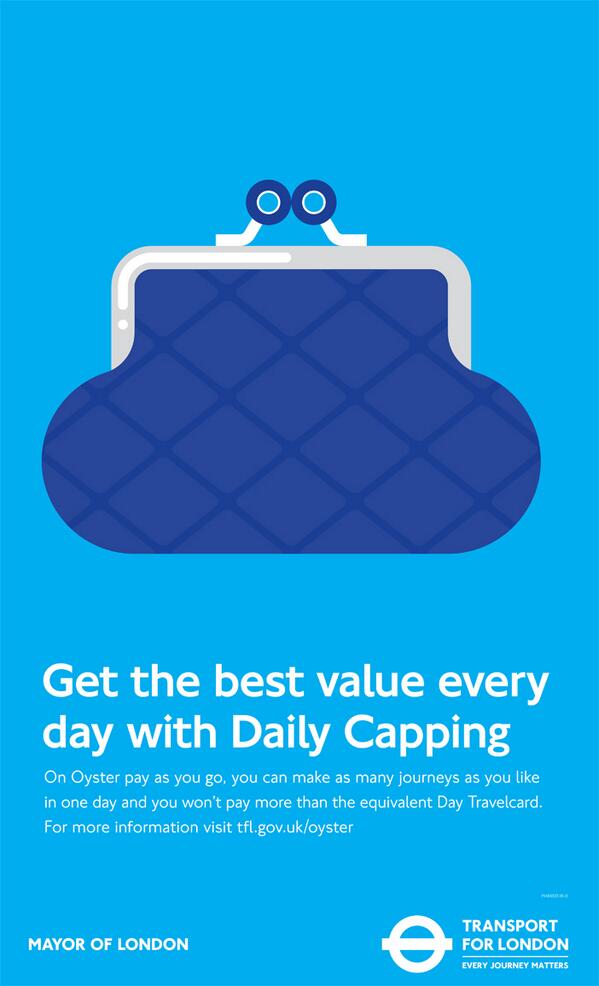
Example
TFL in the UK cap fares on their buses and trains:
See also