Practical Sales Training™ > How To Convert > Case Study

Case Study
Most buyers don’t just take your word for it. They want proof. They want to see that someone like them used what you sell, took the steps you’re describing, and got a real result at the end of it.
That’s exactly what a case study does. It takes your claims off the page and puts them into a story. And because it’s a story about a real person with a real problem, it lands in a way that a bullet point list of features never will.
So if you’re struggling to convert interested buyers into paying ones, a well-built case study is often the thing that tips the balance. Because it answers the question every buyer is quietly asking: has this actually worked for someone like me?
What Is A Case Study?
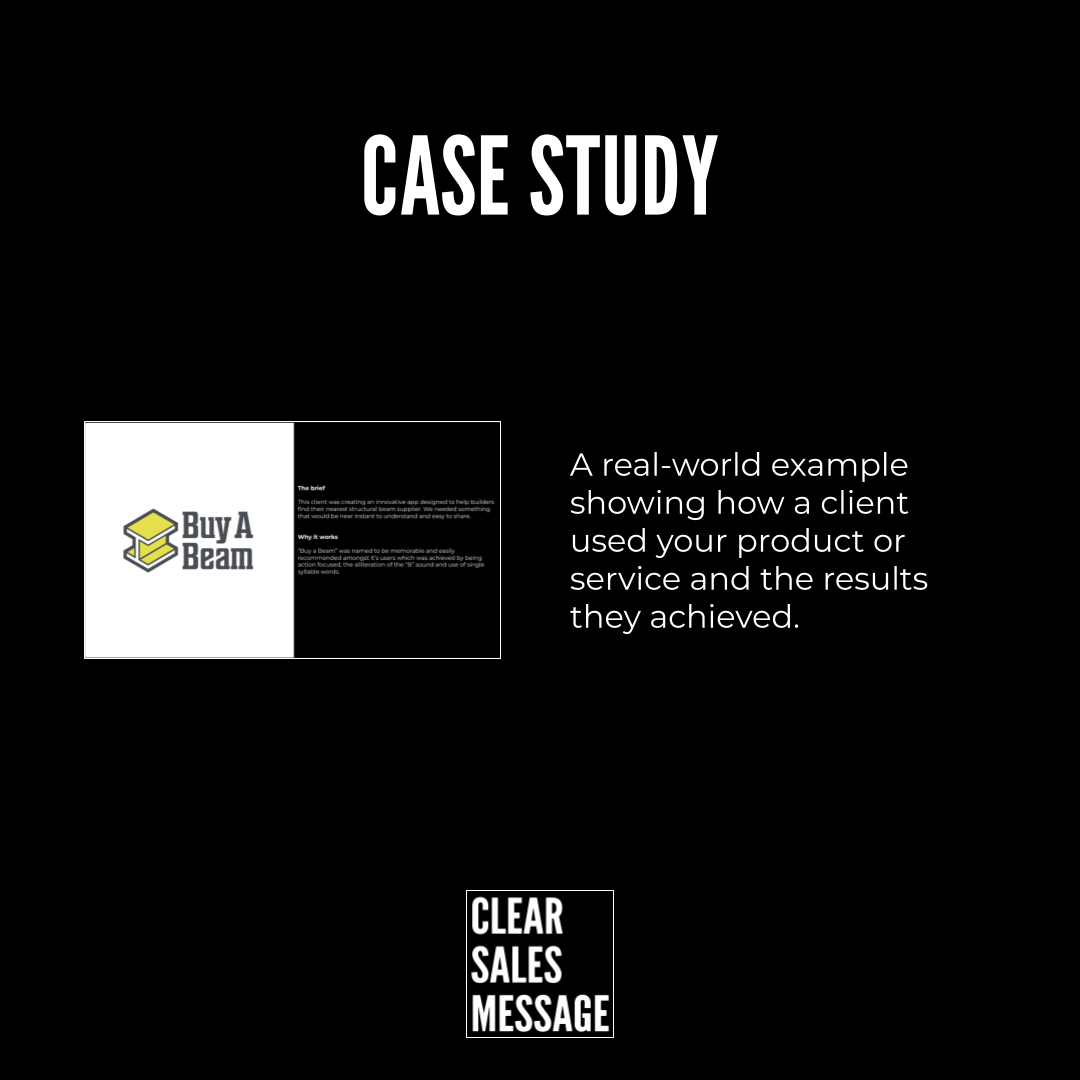
A case study is a real-world example that shows how a specific client used your product or service and the results they got from it. It covers the brief, the approach, and the outcome. It’s not a testimonial – it’s a story with structure.
However, the best case studies go further than just showing results. They show the situation the buyer was in before, what changed, and why. That before-and-after structure is what makes them so useful. Because a buyer reading it can map their own situation onto it and think: that could be me.
In fact, case studies work across almost every format. Written pages, PDF downloads, short videos, slides in a presentation. The format changes. But the core idea stays the same: real client, real problem, real result.
Why Does A Case Study Work?
Because buyers trust other buyers more than they trust sellers. That’s not a criticism – it’s just how buying works. A seller has a reason to make things sound good. A previous client has no such reason. So when a past client tells the story, it carries more weight.
Case studies also reduce risk in the buyer’s mind. A hesitant buyer is often thinking: what if this doesn’t work for me? But when they read a case study featuring someone in a similar situation, that fear shrinks. They can see that it worked. They can see how. And as a result, the decision feels safer.
Similarly, a case study makes your process feel real. It’s not just a set of promises on a sales page. It’s evidence that you have done this before, that you know what you’re doing, and that people have come out the other side with something to show for it.
Therefore, case studies don’t just inform buyers – they move them. They turn interest into intent. And intent into action.
How Can You Use A Case Study In Sales?
A case study isn’t just a document you post on your website and forget about. It’s a sales tool. So use it at every stage of the buying process.
Use it to open conversations
A case study featuring a buyer in a similar situation to your prospect is a great reason to get in touch. Instead of a cold pitch, you’re sharing something useful. “We helped a business just like yours do X – here’s how.” Because it’s relevant and specific, it gets read.
Use it to handle doubt
When a buyer says “I’m not sure this will work for us,” a case study is the cleanest response. You’re not arguing the point. Instead, you’re showing them that it already has worked – for someone with the same concern. That’s far more persuasive than any counter-argument.
Include it in proposals
A proposal that shows your price without showing your proof is missing a key piece. So include a relevant case study alongside the scope of work. It shows the buyer what their investment looks like in practice. As a result, the decision becomes much easier to make.
Add it to your follow-up sequence
If a buyer goes quiet after a good conversation, a case study is a natural reason to follow up. “Thought this might be useful given what we discussed.” It keeps you present. But it also adds value rather than just chasing for a decision.
When A Case Study Works Best
Case studies work best when the client in the story closely matches the buyer reading it. The more similar the situation, the more powerful the effect. So build a library of case studies that covers different sectors, sizes, and problems – not just one generic example.
They also work well for complex or high-value sales. The bigger the decision, the more proof a buyer needs. Therefore, for anything with a long sales cycle or a large price tag, a detailed case study does heavy lifting that no brochure ever could.
Similarly, case studies are most effective when the result is specific. “We helped them grow” is weak. “We helped them cut their sales cycle from 90 days to 34 days” is strong. Because specific results feel real in a way that vague ones don’t.
When A Case Study Becomes Dangerous
A case study becomes a problem when it’s too vague to be useful. If the client is unnamed, the problem is generic, and the result is unmeasured, it adds almost no value. Buyers can tell when a case study has been polished into meaninglessness. So if you can’t include real detail, the case study may do more harm than good.
It can also backfire when the example is too far from the buyer’s world. A case study about a large corporate won’t reassure a small business owner. In fact, it might make them feel like you don’t understand their situation at all. So match the case study to the audience as closely as you can.
However, the biggest danger is using outdated case studies. A result from five years ago in a very different market may not feel relevant today. Therefore, refresh your case studies regularly – because stale proof is almost as bad as no proof.
Common Case Study Mistakes
Making it about you instead of the client
Many case studies spend most of their words describing what the business did. But the buyer reading it is most interested in the client’s experience. So centre the story on the client – their problem, their journey, their result. Your role is the supporting act, not the star.
Leaving out the before
A result only lands when you know what came before it. If the case study jumps straight to the outcome, the reader has no frame of reference. However, when you describe the problem clearly first, the result feels earned. Because contrast is what creates impact.
Using weak results
If your result is “the client was happy with the outcome,” that’s not a result – it’s a feeling. Buyers want numbers, timeframes, and changes they can picture. So push your clients for specifics when you gather the story. Even a rough figure is better than nothing.
Not having enough of them
One case study is better than none. But a single example limits how many buyers you can reach. Therefore, build the habit of creating a case study after every successful project. Because over time, a strong library of varied case studies becomes one of your most valuable sales assets.
Case Study – An Example
A sales training company wants to win more corporate clients. Their website describes what they do and lists the topics they cover. But enquiries are slow to convert. Prospects seem interested but hesitant.
So they build three case studies. Each one features a different type of client – a small sales team, a mid-sized business, and a larger firm. Each case study covers the problem the client had, what the training involved, and the specific result they saw. One client cut their average sales cycle by 40%. Another saw their close rate rise from 22% to 35% in three months.
As a result, conversion improves. Not because the offer changed – but because hesitant buyers now have proof. They can see that it worked. They can see for who. And they can see the kind of result they might expect. That’s what a case study does. It turns a claim into evidence. And evidence is what closes deals.
See also:
- 180+ ways to improve conversion
- 100+ ways to Take action
- 80+ ways to get buyers to trust
- Social Proof
- Systems Proof