

Practical Sales Training™ > How To Keep Your Clients Happy > Client Offboarding

Client Offboarding
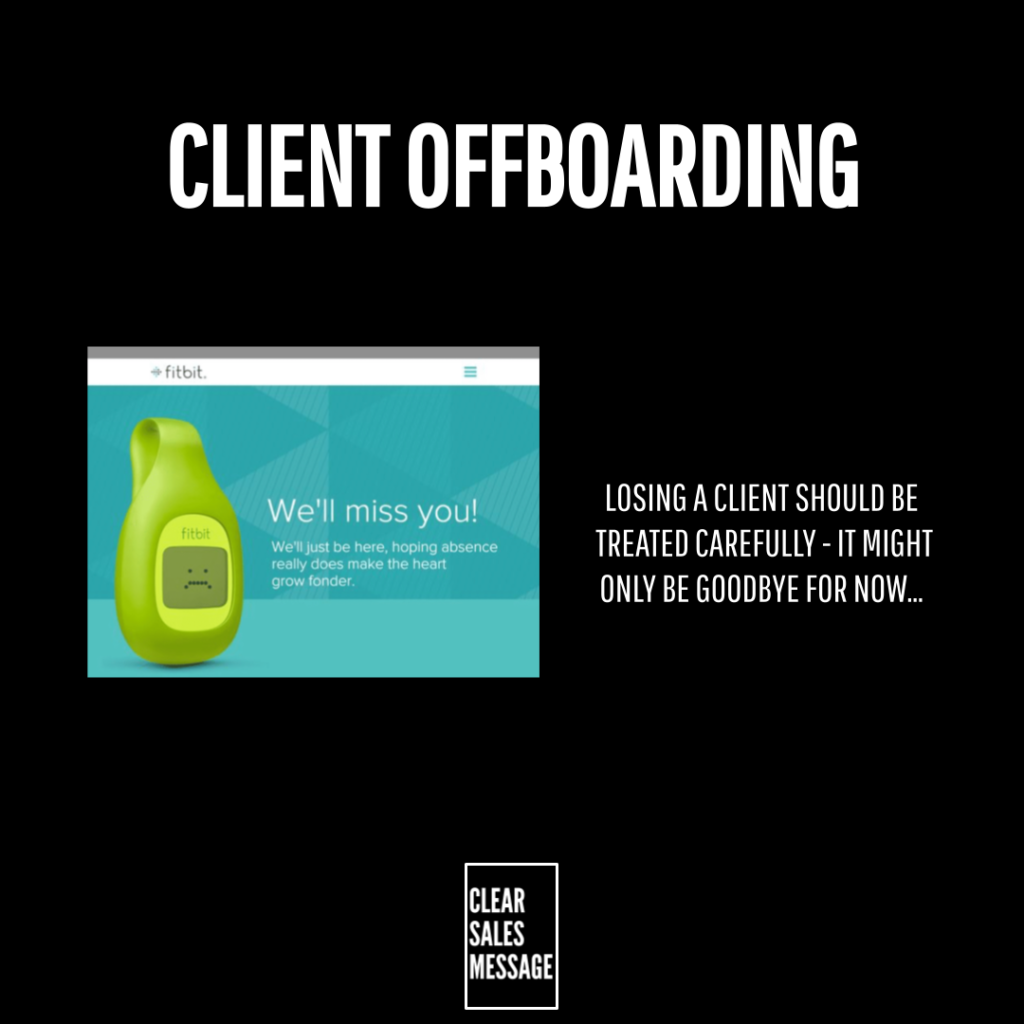
Every business loses clients. It’s not a failure. It’s just the nature of how things work. People move on, budgets change, needs shift. What matters is what happens next.
Most businesses focus all their care on bringing clients in. Very few think about how they say goodbye. But that final moment, handled well, can leave a lasting impression that keeps the door open, protects your reputation, and sometimes even brings people back.
Client offboarding is the process of ending the relationship with care. It’s the other side of onboarding, and it deserves just as much thought.
What Is Client Offboarding?
Client offboarding is what happens when a client leaves. They cancel a membership, unsubscribe from your list, request a refund, or simply stop buying. Offboarding is the deliberate way you handle that moment, rather than just letting it happen without acknowledgement.
Done well, it’s a structured, warm, and professional close to the relationship. It thanks the client for their time, gives you a chance to learn something useful, and sends them off feeling good about the experience they had with you.
Most businesses skip this entirely. So the ones that do it stand out, because a graceful exit is rare and therefore memorable.
Why Does Client Offboarding Work?
It works because the end of a relationship shapes how the whole thing is remembered. People don’t always recall every detail of a long engagement. However, they nearly always remember how it ended. A poor exit can overshadow years of good work.
There’s also a commercial case for it. A client who leaves on good terms is far more likely to come back, refer others, or leave a positive review. One who feels ignored or dismissed is far more likely to do the opposite. So the way you say goodbye has a direct impact on future revenue.
Similarly, offboarding gives you honest feedback at the moment it’s most available. A client who has just decided to leave has a clear reason. That reason is valuable information, and asking for it shows maturity rather than defensiveness.
How Can You Use Client Offboarding In Sales?
Think about all the points at which you lose people. Unsubscribes, cancellations, refund requests, contract endings. Each one is an offboarding moment. Whatever the situation, there are three things worth communicating, either individually or together:
- Thank you for being a customer.
- How can we learn from this?
- We wish you well for the future.
You don’t have to say all three every time. But each one adds something. Together, they leave the client feeling respected rather than discarded.
Automate it where you can
For email unsubscribes or membership cancellations, a well-written automated message does the job. It doesn’t need to be long. A short, warm note that acknowledges the departure and wishes them well takes seconds to set up and makes a real difference.
Ask one simple question
The offboarding moment is your best chance to find out why someone left. So ask. Keep it to one question and make it easy to answer. The feedback you get is often more useful than anything you’d hear from a client who stays.
Leave a door open
Let departing clients know they’re welcome back. A simple line that says the door is always open costs nothing. But it plants a seed, and some of those clients will return when the timing is right.
Match the tone to the relationship
A long-term client who has spent significantly with you deserves a personal call or handwritten note, not just an automated email. Scale your offboarding to the depth of the relationship. The more they gave you, the more care the exit deserves.
When Client Offboarding Works Best
Offboarding works best when it’s planned in advance, not scrambled together after a client has already gone. Build the process before you need it, so every departure gets handled consistently and well.
It’s also most effective when the reason for leaving is known. If a client cancels because of budget, that’s very different from one who leaves due to dissatisfaction. Knowing the reason lets you tailor the offboarding message and decide whether any further action is worth taking.
For subscription businesses, SaaS products, and membership models, offboarding is especially powerful. Because the moment of cancellation is a clear trigger point, and a well-timed response at that moment can sometimes save the relationship entirely.
When Client Offboarding Becomes Dangerous
Offboarding becomes counterproductive when it feels like a retention tactic rather than a genuine goodbye. If the message is clearly designed to guilt the client into staying, it damages trust. So keep it warm and sincere, not desperate.
Making the exit process difficult also backfires badly. Hiding the cancel button, requiring a phone call to unsubscribe, or sending multiple “are you sure?” prompts frustrates people. They leave anyway, but now they leave angry. And angry ex-clients talk.
Similarly, doing nothing is its own kind of message. A client who cancels and hears nothing in return is left feeling like they never mattered. Therefore, even a brief acknowledgement is better than silence.
Common Client Offboarding Mistakes
Treating it as a failure rather than a process
Losing a client feels bad, but letting that feeling drive the offboarding response is a mistake. Handle it professionally regardless of how you feel about the departure. The client will notice, and so will anyone they talk to afterwards.
Skipping the feedback step
Most businesses miss the chance to ask why. But a departing client will often tell you things a retained one never would. That information helps you improve, so don’t waste the opportunity by staying quiet.
Using a cold or corporate tone
A robotic offboarding message is almost as bad as none at all. Write it like a human being saying goodbye, not like a legal disclaimer. Warmth at the exit is what people remember.
Not having a process at all
If there’s no offboarding process in place, every departure gets handled differently, or not at all. Build the process once and make sure everyone on the team knows it. Consistency here matters as much as it does at onboarding.
Client Offboarding – An Example
Uninstalling the Momentum extension on Chrome takes you to this page:

Rather than a cold confirmation screen, Momentum uses the uninstall page to thank the user, ask for feedback, and leave a warm impression. As a result, even people who leave feel good about the brand. That’s client offboarding done well.
See Also