
Practical Sales Training™ > How To Keep Your Clients Happy > The Onboarding Effect

The Onboarding Effect
What Is It
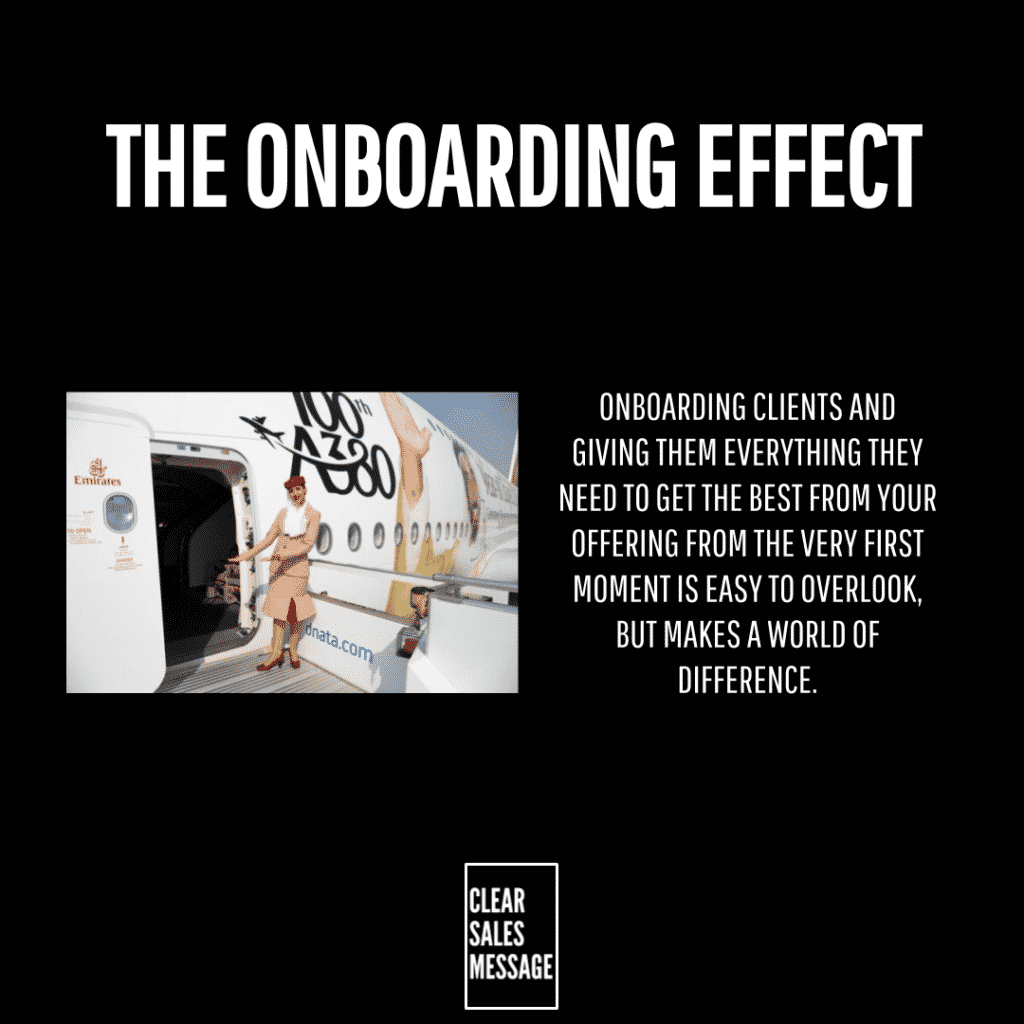
The Onboarding Effect means giving clients everything they need from the moment they buy. So the experience feels complete, not just the sale.
Why Does It Work
Many offers feel complicated or unfamiliar right after purchase. So a strong onboarding process reassures the client they made the right call.
Attention often disappears the second money changes hands. So showing up right after the sale sets you apart immediately.
How Can You Use It
Build A Proper Onboarding Sequence
Add a live call or short video sequence for every new client. So no question or obstacle gets left unanswered.
Cover The Right Ground
A strong onboarding process usually covers a few key things.
- Welcome and introduction to the company, team, systems, and software.
- Project overview, covering goals, milestones, timelines, and deliverables.
- Communication channels, including where to get help and how quickly you’ll respond.
- Reporting and updates, setting KPIs and how progress gets tracked.
- Access to resources and tools clients can use to self serve.
- Billing and payment, confirming terms and dates upfront.
- If things go wrong, confirming your emergency action plan should things go off track.
Keep Supporting Them Afterward
Onboarding isn’t the finish line. So think about the resources and support a client needs long after the sale.
When It Works Best
This works best right after the purchase. The client is still deciding if they made the right choice. It also matters most for complex offers, since confusion costs trust fast.
When It Becomes Dangerous
Skipping onboarding costs you more than it seems. So clients quietly struggle, then quietly leave.
It also backfires if onboarding feels like an afterthought. So treat it as part of the product, not an extra step.
Common Mistakes
Sending A Receipt And Nothing Else
A receipt confirms a purchase, not a relationship. So the silence right after feels like a letdown.
Overloading The Client On Day One
Too much information at once overwhelms a new client. So spread the onboarding out, instead of dumping it all in one email.
The Onboarding Effect – An Example
A Software Company Builds A Structured Sequence
A software company doesn’t just send a receipt after purchase. Instead, they trigger a full onboarding sequence.
- Welcome email, with login details and a personal thank you from the founder.
- Quick start video series, guiding users through key features in under 10 minutes.
- Live onboarding call invite, an optional call to ask questions and set up their account properly.
- 30 day check in email, asking how it’s going and if they need help.
- Resource hub access, preloaded with FAQs, templates, and best practices.
Every step reassures the client that support continues well past the sale. So the relationship starts strong, and stays that way.
See also