Practical Sales Training™ > How To Convert > Completion Cue
Completion Cue
What Is It
A completion cue is any signal that shows something as unfinished. Think of a progress bar stuck at 80%, a checklist with two boxes still empty, or a profile that reads “90% complete.” Your brain doesn’t like open loops, so it pushes you to close them.
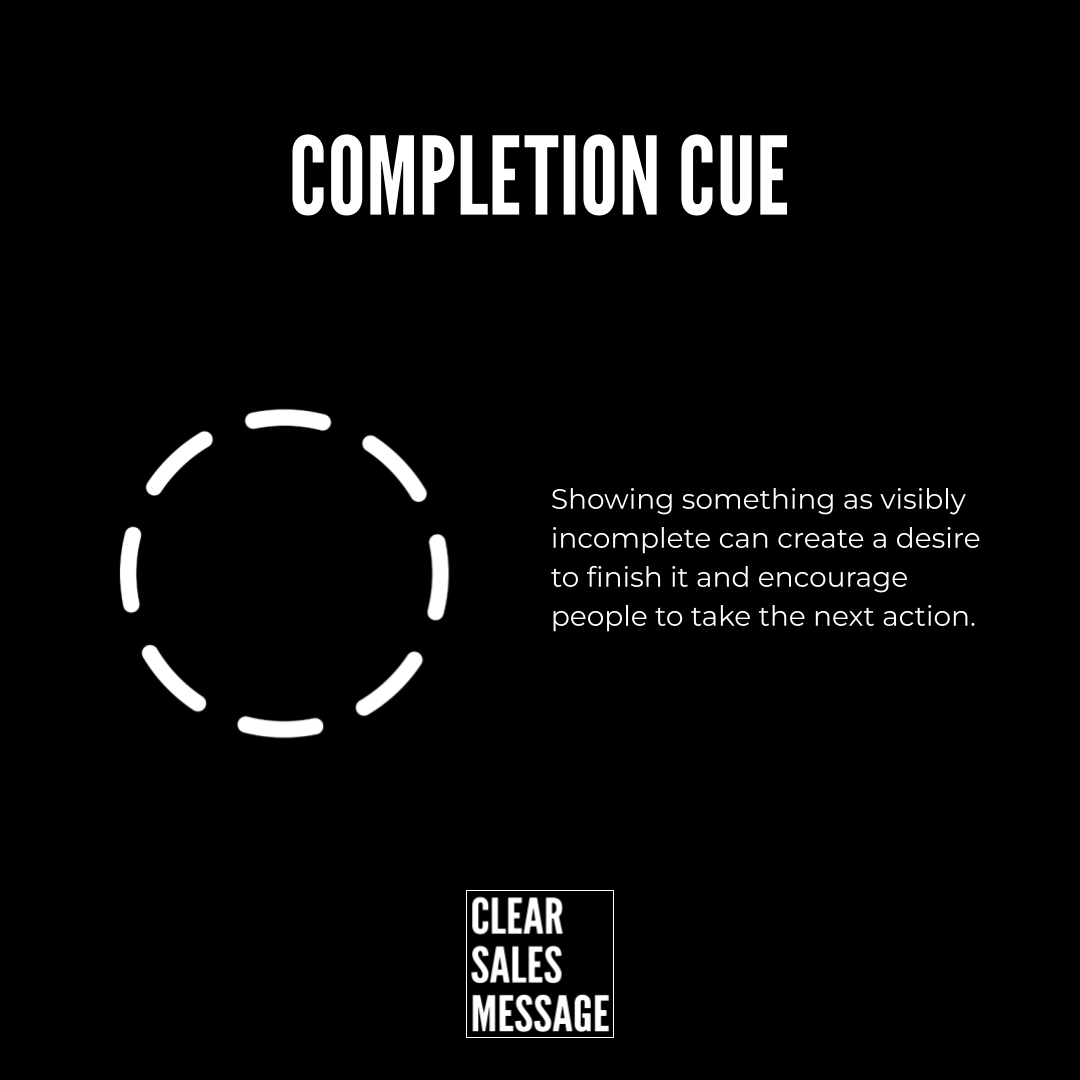
You’ll spot this everywhere once you know what to look for. LinkedIn marks your profile “incomplete” until you add a photo, and Duolingo shows your streak with a gap in it. Even a dotted circle instead of a solid tick can do the same job.
Why Does It Work
This taps into something psychologists call the Zeigarnik effect. Unfinished tasks stick in your memory harder than finished ones. Your mind keeps replaying them until you deal with them. That’s why an open task list bothers you more than a closed one.
A completion cue borrows that discomfort. It shows you the gap between where you are and where you could be. That gap feels uncomfortable. So you act to close it, even if closing it wasn’t on your to-do list five minutes ago.
How Can You Use It
Show How Far They’ve Already Come
Don’t just tell someone what to do next. Show them how far they’ve come already. A progress bar at 70% pulls harder than a blank form ever will, and people are more likely to finish something they’ve already started.
Leave One Visible Gap
Give people one clear thing left to do instead of ten. A single missing step feels solvable. Ten missing steps feel like work. Pick the smallest gap that moves them toward the outcome you want.
Use Visual Shorthand
You don’t always need words. A dotted line, a greyed-out badge, or an empty circle can say “almost there” faster than a sentence can. Visual gaps get processed quicker than text, and they nag at people in the background while they do something else.
When It Works Best
Completion cues work best in processes people have already started. Onboarding flows, sign-up forms, profile pages, and loyalty programmes are natural fits. The buyer has already invested time, so the pull to finish feels natural rather than forced.
When It Becomes Dangerous
A completion cue turns nasty when there’s no real reason behind it. Show someone an empty progress bar just to manipulate them, and they’ll notice. Trust drops fast when people feel played instead of guided.
It also backfires when the “gap” never actually closes. A profile stuck at “90% complete” no matter what you add just trains people to ignore it.
Common Mistakes
Making The Gap Too Big
If the unfinished part looks like a mountain, people give up instead of climbing it. Keep the visible gap small enough to feel doable in under a minute.
No Payoff For Closing It
A completion cue needs a real reason behind it. If finishing the loop gives the buyer nothing, all you’ve built is irritation with a nice design around it.
Reusing The Same Cue Everywhere
Once someone spots the trick, it stops working on them. Rotate how you show incompleteness so it keeps feeling like new information instead of a pattern people learn to ignore.
Completion Cue – An Example
Instagram’s Verification Badge
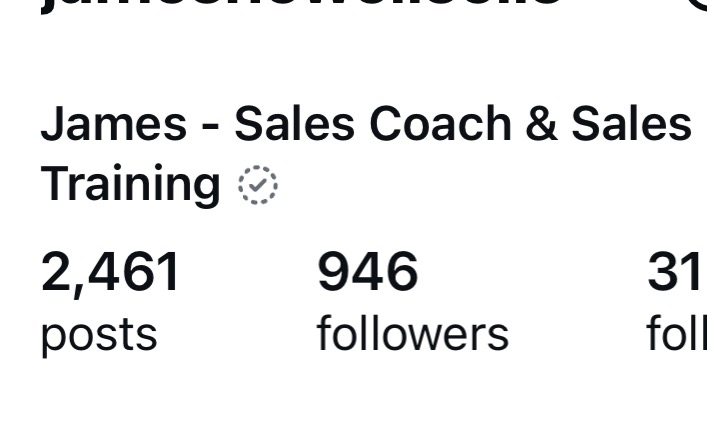
Instagram uses a version of this on business accounts. Instead of a solid blue tick, some profiles show a dotted circle where the tick should be. That dotted outline looks unfinished on purpose. It tells the account owner they’re close, but not finished yet.
That small visual gap creates pressure that a paragraph of sales copy couldn’t manage on its own. The owner sees the incomplete badge every time they check their own profile. Eventually, most pay to turn that dotted outline into a solid one. The screenshot below shows exactly that: a dotted circle sitting next to the account name instead of a solid tick.
See Also