Practical Sales Training™ > How To Lose The Sale> Drip Pricing

What Is Drip Pricing?
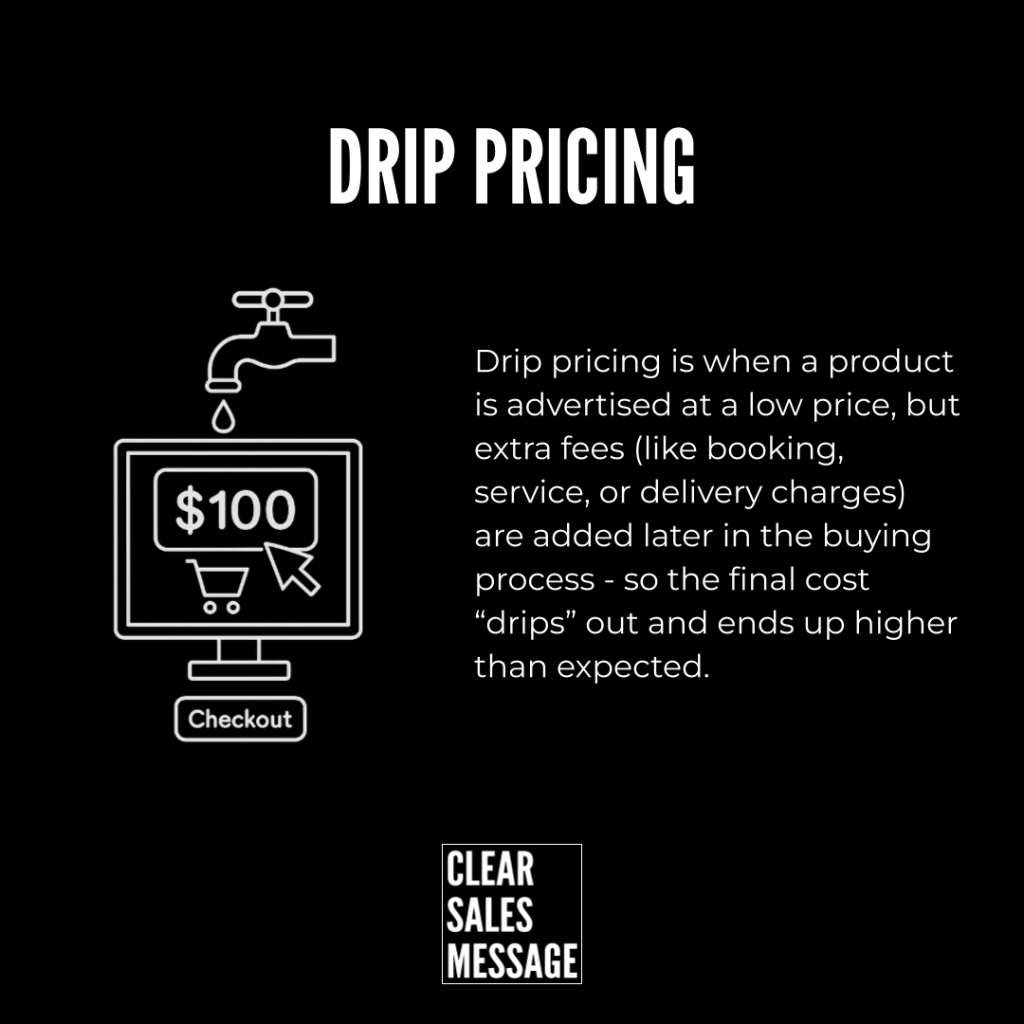
Drip pricing is a pricing tactic where the full cost of a product or service is revealed bit by bit throughout the buying journey, rather than being shown upfront. Initially, the customer sees an attractive base price, but as they progress toward checkout, extra fees, taxes, or charges are added.
This approach can make a price look cheaper at first glance, but the final cost is often much higher than expected.
How Does Drip Pricing Work?
Drip pricing works by gradually introducing additional costs at different stages of the purchasing process. For example:
-
A customer sees a low advertised price.
-
As they select options or proceed through the checkout, mandatory fees are added.
-
The final price, often revealed only at the payment stage, is significantly higher than the starting point.
This tactic can increase initial engagement, but it often leads to disappointment when customers feel misled or taken advantage of.
How Can Drip Pricing Deter People from Buying from You?
Drip pricing can do more harm than good. While it may generate clicks or interest in the short term, it often causes long-term damage to trust and conversion. Here’s how:
-
It reduces trust in your brand. If the price keeps increasing, people feel misled.
-
It increases cart abandonment. Many customers abandon purchases when the final price is higher than expected.
-
It creates a negative buying experience. Frustrated customers are less likely to return.
-
It damages your reputation. Hidden fees are one of the most common complaints in online reviews.
Modern customers expect honesty. If your pricing feels deceptive, they are likely to leave and never come back.
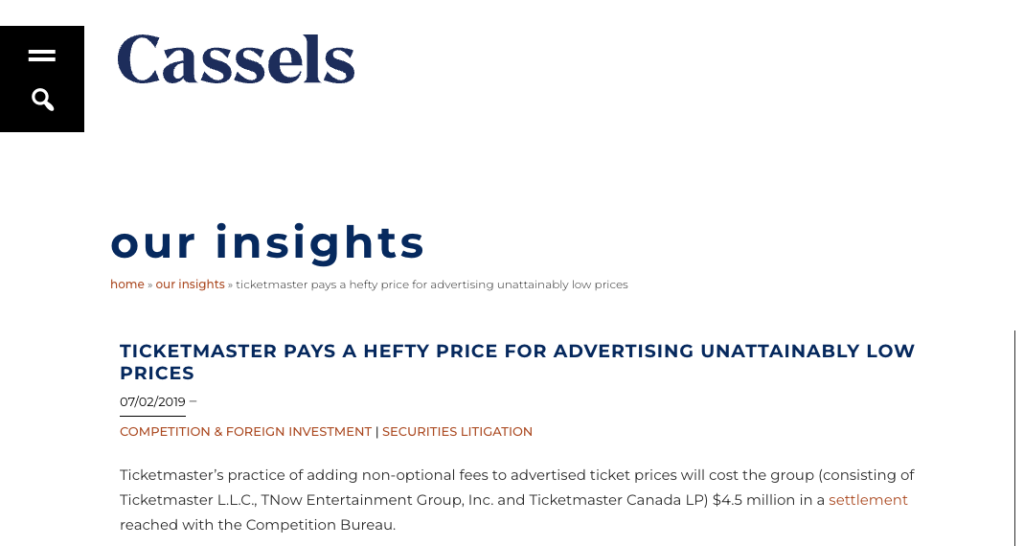
Example: Ticketmaster concert tickets
You see a concert ticket listed for £50, but by the time you reach the checkout, extra fees like “service charge,” “handling fee,” and “delivery charge” are added—bringing the total closer to £70.
See also