Practical Sales Training™ > How to connect with your buyer > Engagement Bait

Engagement Bait
Social platforms reward content that gets fast, strong reactions. The more people engage, the more the algorithm shows your post to others. Engagement Bait exploits that mechanic on purpose.
Instead of waiting for your content to earn a reaction, you engineer one. A deliberate mistake, a strange background detail, a question people feel compelled to answer – these all trigger the same algorithmic response as genuinely great content.
Used well, it gives your message far more reach than it would get on merit alone. Used badly, it makes your brand feel hollow. So the difference between good and bad Engagement Bait comes down to what you do with the attention once you have it.
What Is Engagement Bait?
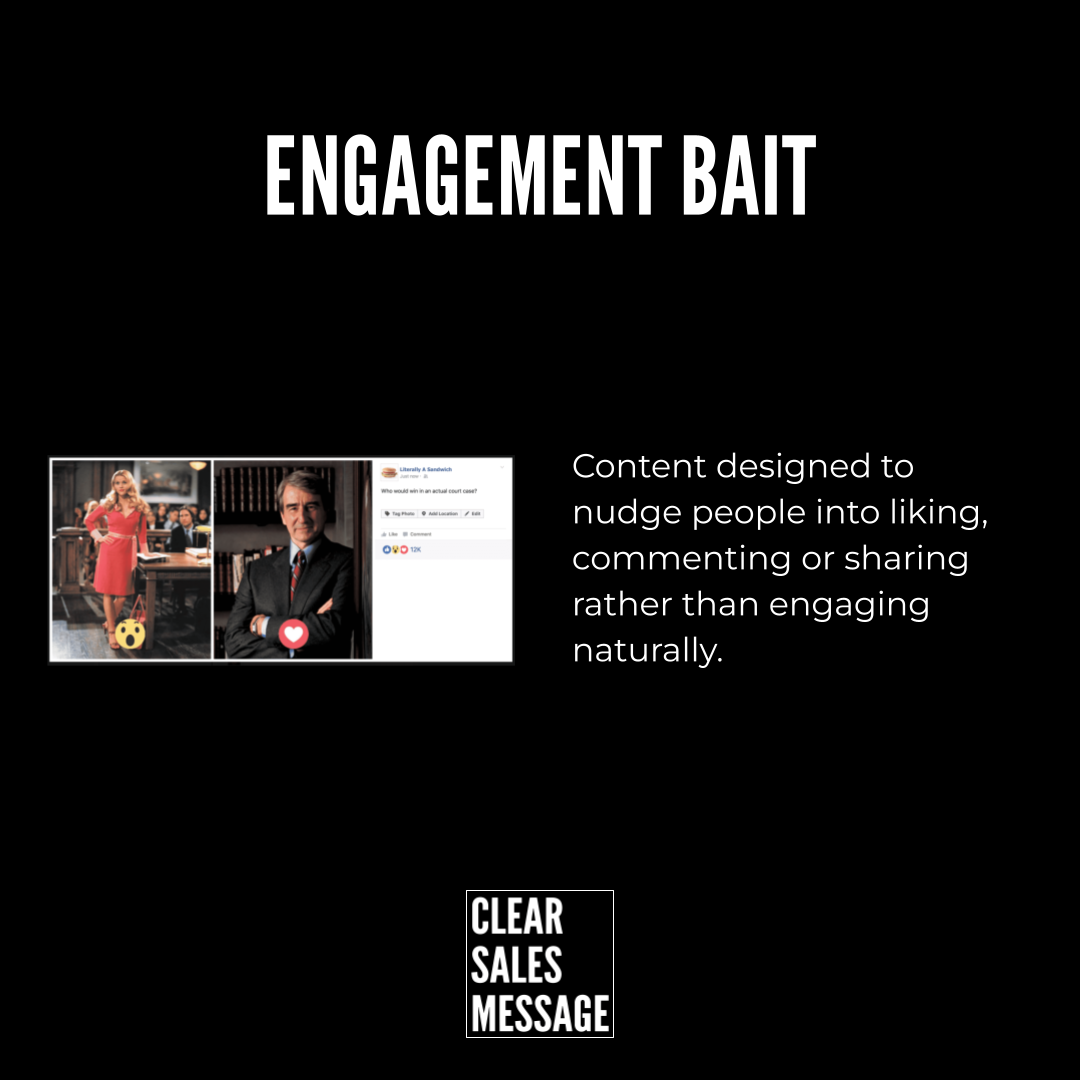
Engagement Bait is content designed to trigger interaction rather than genuine interest. It uses irritation, curiosity, or the urge to correct someone so that people feel compelled to respond – even when they would normally scroll past.
It shows up in many forms. A sum done wrong on screen. A random object in the background. A bold claim that invites pushback. Information shared so fast that people have to rewatch. Each one is engineered to produce a reaction, because reactions drive reach.
The key distinction is intent. Engagement Bait does not rely on the content being good. Instead, it relies on the content being impossible to ignore.
Why Does Engagement Bait Work?
Platforms like TikTok, Instagram, and LinkedIn measure engagement as a signal of quality. When a post gets fast likes, comments, or shares, the algorithm treats it as worth showing to more people. Engagement Bait triggers those signals on purpose, so the algorithm responds as if the content earned them.
There is also a psychology element. People are wired to correct mistakes, resolve curiosity, and finish incomplete things. When a post triggers one of those urges, the reaction happens before the viewer has consciously decided to engage. The emotion fires first, and the interaction follows.
As a result, Engagement Bait often outperforms genuinely useful content in the short term – because it bypasses the rational filter and hits the instinctive one instead.
How Can You Use Engagement Bait In Sales?
Make a deliberate mistake
Say something incorrect on screen – wrong maths, a wrong fact, a wrong date. People who know the answer will rush to correct you in the comments. That comment activity signals strong engagement to the algorithm, so your reach increases fast. The trick is to make the mistake obvious enough to spot but subtle enough to feel accidental.
Add a random background detail
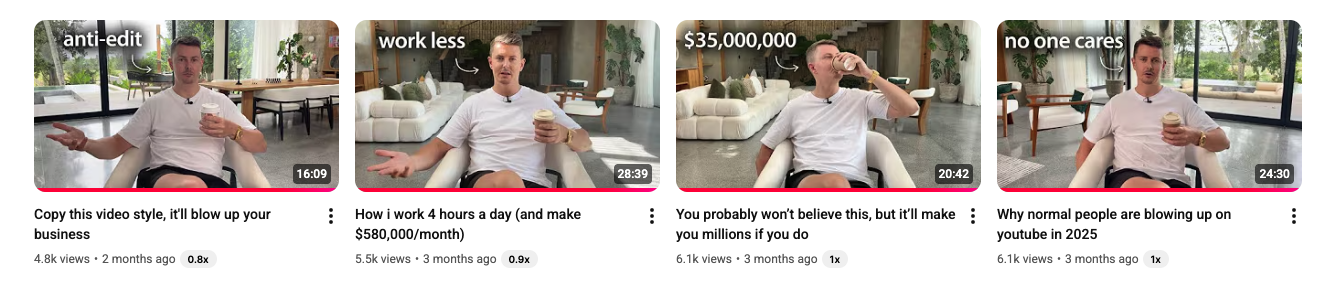
A strange object in the background of a video – an unusual cup, a curious item on a shelf, something that does not quite fit – draws the eye and generates comments. William Brown does this consistently with a coffee cup in his YouTube videos. Viewers notice it, ask about it, and the comment thread grows without him having to prompt it.
Share information too fast
Rapid-fire content that moves faster than the viewer can keep up forces rewatches. Each rewatch counts as engagement and tells the platform the content is worth watching again. So deliberately packing in more than one viewing can absorb is a simple way to boost watch time.
Reference something without naming it
Talk about a tool, app, or product that solves a problem but do not name it. People who want to know what it is will comment to ask. That demand in the comments also signals interest to others who see the post, because social proof makes the mystery feel more worth resolving.
Forget the link on purpose
Say “link in the comments” or “check the description” but leave it out. When people comment to ask for it, add it and join the conversation. The comment activity boosts the post, and the follow-up interaction builds a thread that keeps the content circulating longer.
Use a bold or divisive claim
A statement that people either strongly agree or strongly disagree with generates comments from both sides. However, make sure the claim is genuinely connected to your message – because a controversial statement that has nothing to do with what you sell just creates noise with no commercial value.
When Engagement Bait Works Best
It works best when you are trying to grow an audience on a platform where organic reach is limited. Early engagement signals give the algorithm a reason to push your content further, so Engagement Bait can act as a spark that gets a post in front of people who would never have found it otherwise.
It is also effective when you have something genuinely useful to show – but the content alone is not grabbing attention quickly enough. In that case, Engagement Bait earns the first few seconds of attention, and the real value does the rest.
Similarly, it works well when used sparingly alongside strong content. One piece of Engagement Bait in a feed full of genuine value feels like a clever move. A feed that is nothing but bait starts to feel exhausting, and audiences disengage.
When Engagement Bait Becomes Dangerous
The biggest risk is attracting the wrong audience. When people engage because they were tricked rather than because they are interested, the followers you gain are unlikely to buy. Reach without relevance is noise, not growth.
There is also a brand perception risk. If your audience starts to notice the pattern – the recurring deliberate mistake, the planted object, the missing link – they begin to feel manipulated. That feeling erodes the trust you need for them to eventually say yes to something.
Platform penalties are a real danger too. Some platforms, LinkedIn in particular, actively suppress content that asks for likes, comments, or shares. So certain forms of Engagement Bait can actually reduce reach rather than boost it when used in the wrong place.
Common Engagement Bait Mistakes
Bait with no substance behind it
If the trick gets attention but there is nothing worthwhile underneath it, the viewer leaves with nothing. Engagement Bait should always point toward real value – a useful idea, a strong offer, a reason to follow. Without that, you are just burning goodwill for a short-term metric.
Overusing the same trick
The first time someone notices the coffee cup, they comment. By the tenth video, it is just background furniture. So rotate your Engagement Bait tactics and keep them feeling fresh, because a predictable trick stops working the moment the audience sees it coming.
Ignoring the comments it generates
Engagement Bait creates a conversation. But if you do not join that conversation, the opportunity disappears. Replying to comments, answering questions, and acknowledging corrections all extend the life of the post and build a relationship with the people who engaged. That follow-through is where the real value lives.
Engagement Bait – An Example
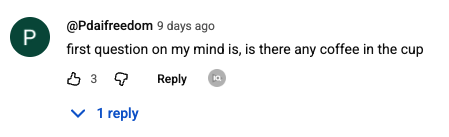
William Brown is a great example of this technique done well. He consistently holds a coffee cup in his YouTube videos – a small, slightly odd detail that viewers notice and comment on. The comment asking “is there any coffee in the cup?” has appeared across multiple videos. That thread keeps the comment count high, which tells the algorithm the content is worth promoting. Because his videos also contain genuine value, the bait brings people in and the content keeps them.
See Also