Practical Sales Training™ > How To Convert > Exchange Rate Pricing
Exchange Rate Pricing
“What does that actually cost me?” That question stops a lot of international buyers before they ever reach checkout.
Exchange rate pricing answers it before they even have to ask. The price doesn’t change. It’s just shown in a way they instantly understand.
What Is Exchange Rate Pricing?
Exchange rate pricing shows a fixed price in a buyer’s local currency, using live exchange rates, so they instantly understand what it really costs without converting it themselves.
The price itself doesn’t change based on location. Nobody pays differently because of where they live. You simply show what the price looks like in their own currency, using the current exchange rate.
It’s all about clarity, not complexity.
Why Does It Work?
A core price stays fixed in one base currency, say GBP. When a buyer visits the page, they see the original price, a live exchange rate estimate for their own currency, and a clear note that they’ll still be charged in the base currency.
For example: £297 GBP, shown alongside approx. $375 USD, €345 EUR, or $565 AUD. The price never changes. Only the displayed estimate updates to reflect real-time exchange rates.
The buyer knows exactly what they’re paying, avoids surprises when checking their statement, and feels confident about the cost in their own terms, rather than doing mental maths at checkout.
How Can You Use Exchange Rate Pricing?
If you’re selling globally, especially digital products, subscriptions, or services, exchange rate pricing removes confusion and helps buyers act faster. It works across almost any website or checkout tool, and it helps international buyers feel seen and supported.
It reduces objections and hesitation too, since it answers the unspoken question every international buyer is quietly asking: “What does that actually cost me?” Whether you sell in one currency or many, this simple addition makes your offer feel global, without changing your actual pricing strategy at all.
When It Works Best
This technique works best for any business selling to an international audience, especially digital products and subscriptions where the buyer’s location has no bearing on delivery cost. It also performs well on higher-priced offers, since currency uncertainty grows more significant the more expensive something is.
It’s especially useful for first-time visitors from a new market, since converting the price for them removes one of the very first barriers to trust.
When It Becomes Dangerous
This becomes a problem if the displayed estimate isn’t clearly labelled as an estimate. A buyer who assumes the converted figure is their exact final charge can feel misled if their statement shows a slightly different amount due to exchange rate movement.
It also risks confusion if the conversion rate shown is outdated. A stale rate displayed as current damages the exact trust this technique is meant to build.
Common Mistakes
Not Labelling The Estimate Clearly
A converted price with no disclaimer can read as a guaranteed final charge. Always make clear that the base currency is what’s actually billed.
Letting The Rate Go Stale
An exchange rate that hasn’t updated in weeks undermines the whole point of showing one. Refresh the rate regularly, or the estimate becomes actively misleading.
Overcomplicating The Display
Showing five currencies at once clutters the page rather than clarifying it. Detect the buyer’s likely currency and show that one clearly, with others available if needed.
Exchange Rate Pricing – An Example
Showing The Equivalent Alongside The Fixed Price
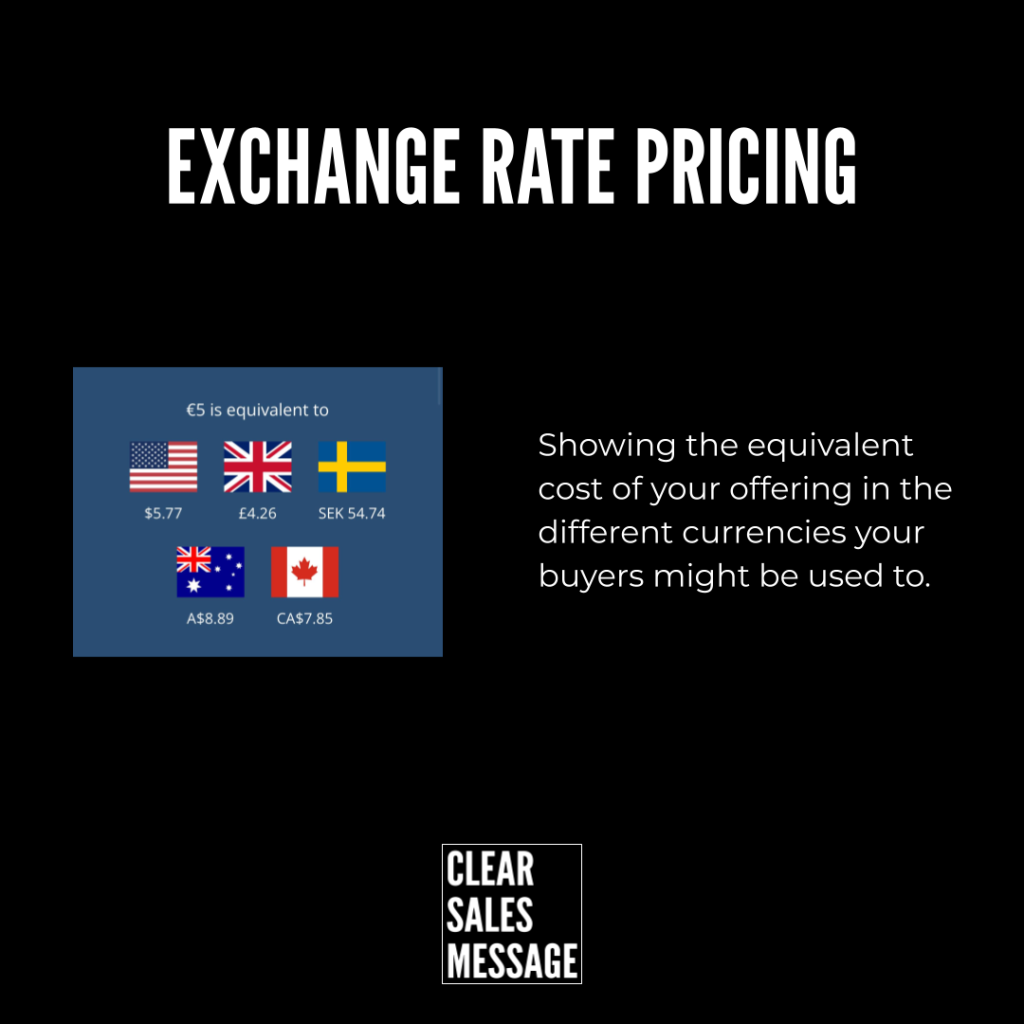
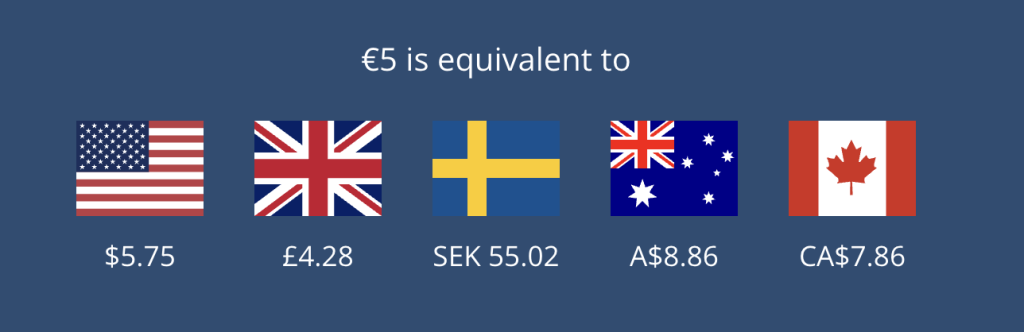
Mullvad shows the local currency equivalent alongside their flat-rate pricing. A visitor from outside their base currency sees exactly what they’ll pay in terms they understand, without needing to open a separate currency converter to check.
See Also