

Practical Sales Training™ > How To Get Attention > The Price Per Use Effect
The Price Per Use Effect
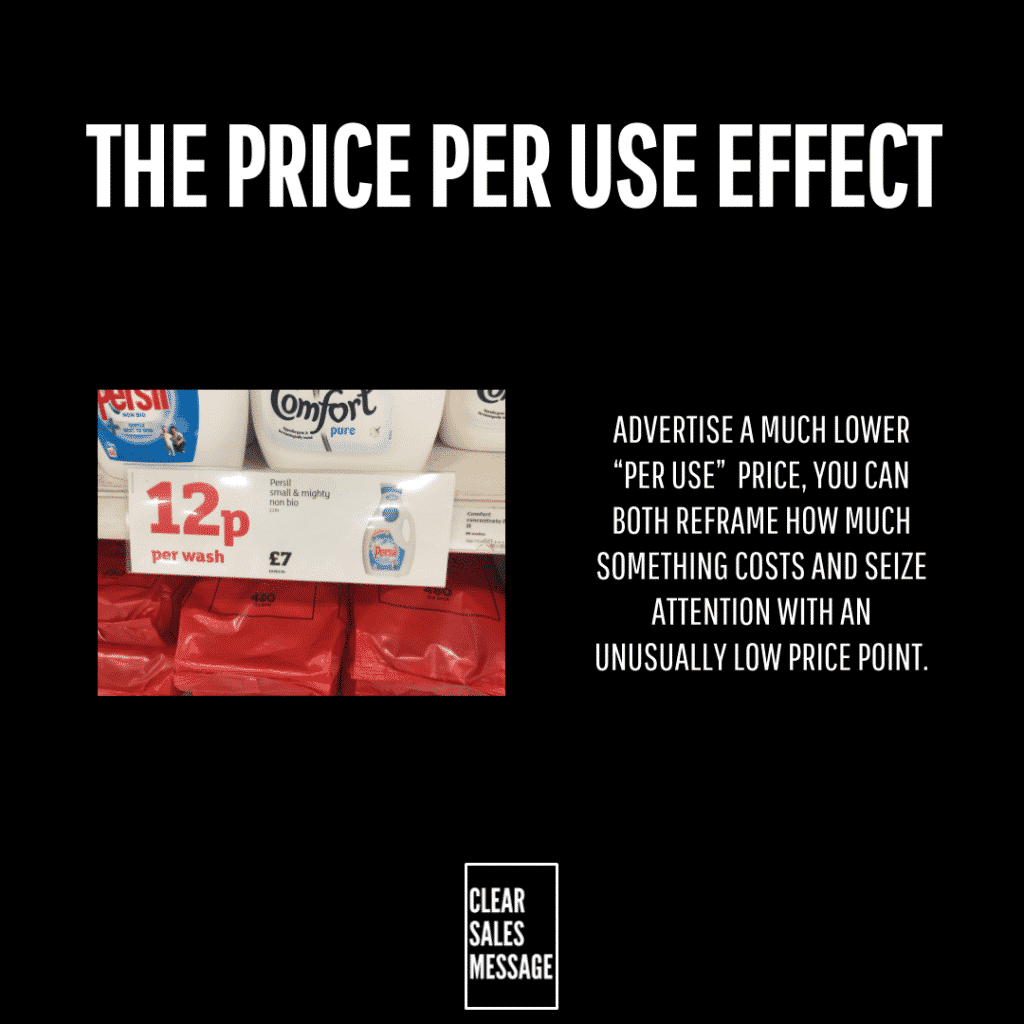
A £900 price tag stops people before they’ve even considered what they’re getting. The Price Per Use Effect changes what number they see first.
You’re not changing the price. Just which number represents it.
What Is It
The Price Per Use Effect means reframing your price. You show what it costs per use, not the total upfront.
Why Does It Work
It works because a smaller number grabs attention first. So buyers see £1.20 before they ever process £900.
It also gives buyers something more useful than a headline price. A number tied to daily use maps onto their actual life. It feels concrete, rather than abstract.
How Can You Use It
Choose The Denominator That Does The Persuading
It isn’t the only option, and it’s rarely the most persuasive one by default. Price per day, per week, per page, or per employee can all work instead. So it depends on how your buyer actually uses the thing.
So test a few denominators before picking one. The right unit isn’t the smallest number in isolation. It’s the smallest number that also matches how the buyer imagines using it.
Anchor It Against Something They Already Spend Without Thinking
£1.20 a day means more next to a coffee or a bus fare. So borrow a comparison the buyer already accepts spending on. Don’t leave the small number to stand alone.
When It Works Best
This works best right after a buyer reacts to the headline price. Deploying it too early can plant doubt about a cost they hadn’t questioned yet.
It also works best for offers used often and predictably. So the maths only holds up if the buyer genuinely uses it that regularly.
When It Becomes Dangerous
This backfires if the usage assumption doesn’t hold up under questioning. Say a buyer doubts they’ll really use it 750 times. So the small number then stops feeling honest. It starts feeling like a trick.
It also risks a credibility gap if you never mention the total price. So some buyers will do the maths back into a lump sum themselves. They feel misled if you hid that number, rather than simply reframing it.
Common Mistakes
Picking A Denominator That’s Technically True But Doesn’t Land
A price per use figure only works if the buyer believes it. So they need to believe the usage pattern behind the number. Quoting daily use to someone who’ll actually use it twice a month undermines everything. So the usage pattern needs to be genuinely believable.
Leading With The Small Number Before Anyone’s Objected
Reaching for price per use too early can look defensive. It can seem like you expected an objection before anyone raised one. So hold it back until sticker shock actually shows up. Then use it to answer that moment.
The Price Per Use Effect – An Example
A £900 office chair sounds expensive. Until you point out it’s used five days a week, for three years.
That’s 750 uses. So that makes the real cost just £1.20 a day. Enough to sit comfortably and avoid back pain.
So now it feels like a smart investment.
See also
- Value Based Pricing
- The Itemised Pricing Effect
- 100+ ways to seize buyer attention
- 100+ ways to differentiate