Practical Sales Training™ > How To Get Attention > False Interaction Cue

What is it
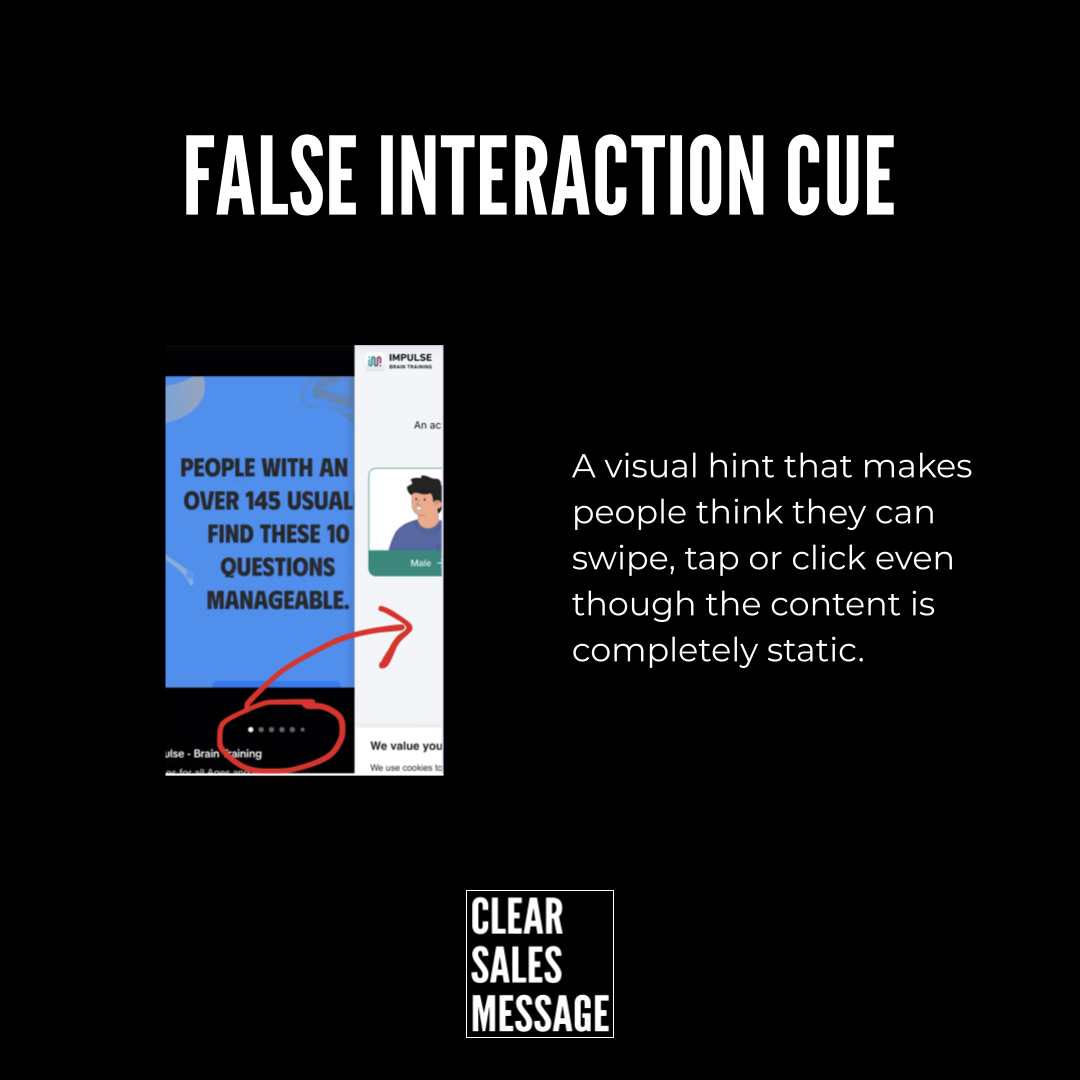
A False Interaction Cue is a small visual hint that makes people think they can swipe, tap or click even when the post is completely static. It uses familiar interface signals like arrows, dots or cut off text to trigger automatic behaviour. People see the cue and their brain reacts before they have even thought about it. They swipe or tap because it feels like there is more content waiting for them.
How does it work
It works by borrowing the same visual patterns people experience every day on their phones. Carousel dots suggest more slides. A play button suggests a video. A cropped sentence suggests a hidden message. These patterns are learned through repetition. When you recreate them in a static post, the user responds in the same way. They interact even though nothing actually happens. This moment of micro behaviour creates a stop in the scroll, enough attention to land your message and a stronger chance they will absorb the point you are making.
How can you use it
You can use False Interaction Cues to slow the scroll and increase the attention your posts receive. Add carousel dots to a single image to trigger a swipe. Add a right arrow to make people expect another panel. Add a cropped sentence to make people click see more. Add a play button on a still image when you want the viewer to tap. These cues increase engagement because they feel natural and instinctive. They pull people into the content before they realise what has happened. When used sparingly and with purpose, they become a simple way to boost visibility and ensure your message is actually seen.
Example
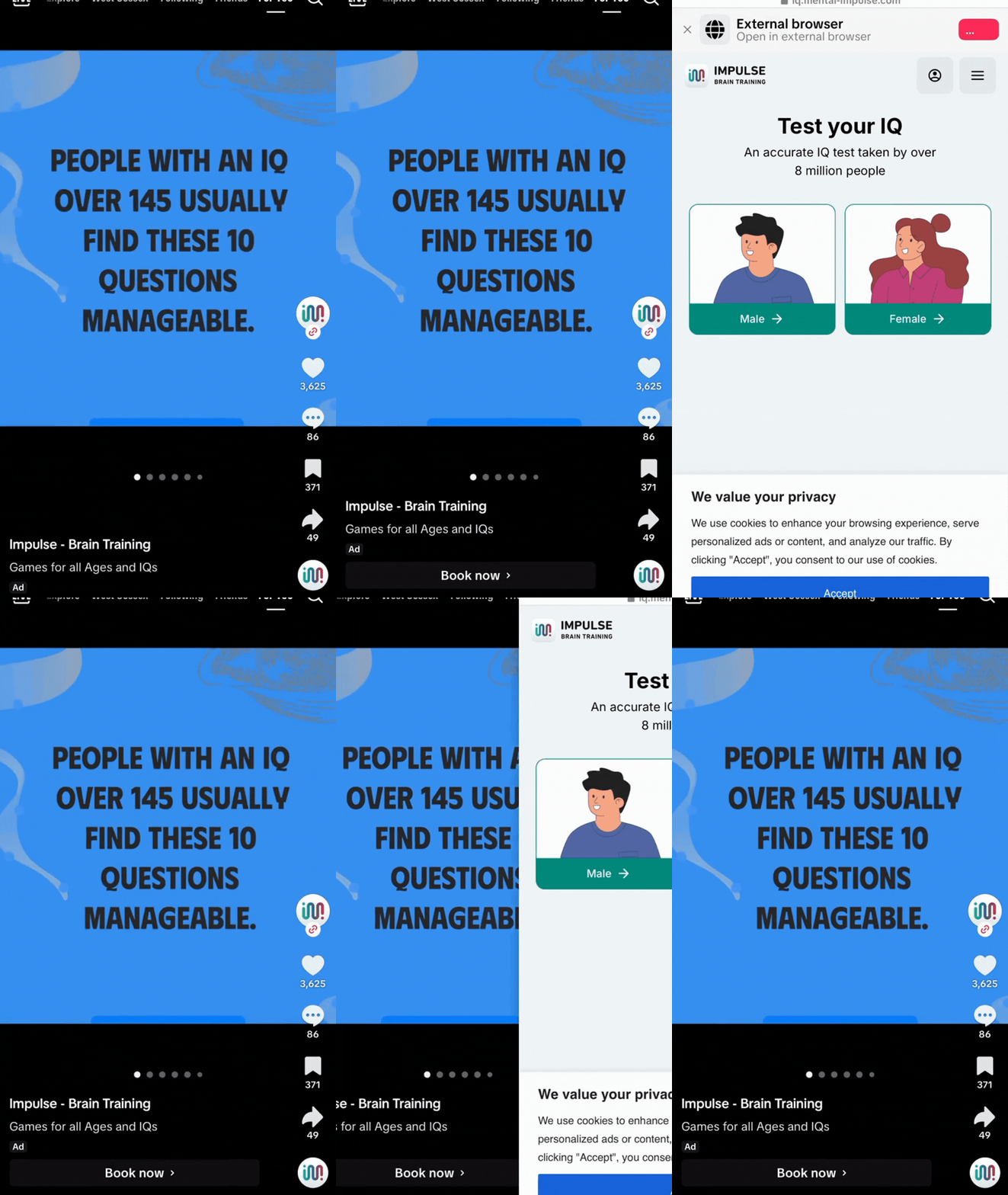
This advert has pagination dots- making you think it’s a carousel, when, in fact, sliding it on TiKTok is akin to clicking the advert…
See also