Practical Sales Training™ > How To Convert > Free/Paid Progression
Free/Paid Progression
Most businesses offer two options: free or paid. But there is a third path that many miss. What if your buyer could choose how they get there?
Free/Paid Progression lets buyers move toward your product at their own pace. So some will put in the time, while others will pay to skip ahead. Both are valid, and both lead to the same destination: becoming a customer.
This is not just a pricing trick. In fact, it is a fundamental shift in how you think about the buyer journey. Because when someone invests time to earn access, they are already committed before they spend a penny.
What Is Free/Paid Progression?
Free/Paid Progression is a model where buyers can unlock access to something valuable in one of two ways: by engaging and putting in effort over time, or by paying to get there straight away.
The classic example is gaming. Players can grind through quests to unlock a character, or they can simply buy it. Both paths lead to the same reward. However, the journey looks very different, and so does the relationship the buyer builds with the product along the way.
Outside gaming, this model shows up in loyalty schemes, SaaS tiers, content platforms, and professional communities. The mechanics change, but the principle stays the same. In each case, effort and money are interchangeable currencies, and buyers get to pick which one they spend.
Why Does Free/Paid Progression Work?
Buyers are at different stages of trust when they first encounter you. So some are ready to buy straight away, while many are not. Free/Paid Progression meets both groups where they are, because neither feels forced into a corner.
When someone earns access through effort, something powerful happens. They build a sense of ownership. Because they have worked for it, they value it more. As a result, the investment of time creates commitment, and committed buyers become loyal customers.
For the buyer who pays to skip ahead, the appeal is different but just as real. They are not lazy. They are busy. Paying is their way of saying the outcome matters enough to get there faster. So both types of buyer are telling you something useful about how they think, and your model respects both.
How Can You Use Free/Paid Progression In Sales?
The model works across more industries than most people expect. The key is identifying what your buyers most want to access, and then creating two clear routes to get there: one that costs time, and one that costs money.
Here are three practical ways to apply it.
Build an Engagement Track
Design a series of actions that move buyers closer to the reward. For example, this could be completing modules, attending events, referring others, or hitting usage milestones. Each step builds familiarity with your product and, as a result, raises the cost of switching away. By the time they reach the reward, they are already deeply engaged. That is a much stronger position than someone who simply handed over their card details.
Make the Paid Skip Feel Fair
The paid option only works if buyers feel it is a reasonable exchange. Otherwise, the free path starts to feel pointless. Be clear about what they are paying for: time, convenience, or instant access to something valuable. Frame it as a choice, not an upsell. Because if buyers feel pressured, the trust breaks down fast.
Use It to Qualify Buyers
Which path a buyer chooses tells you a lot. For example, someone who completes every step of your engagement track is likely a high-intent, high-loyalty customer. Someone who pays to skip is likely time-poor and value-focused. So use that information to shape how you follow up and what you offer next. The model does not just convert buyers. It segments them too.
When Free/Paid Progression Works Best
This model works best when the reward at the end is genuinely desirable and when the engagement track is enjoyable enough that buyers do not resent the journey. It suits subscription products, membership communities, and apps with repeat usage. It also works well when your buyer base is mixed, because some people have more time than money and others have more money than time. In both cases, the model gives everyone a fair route in.
When Free/Paid Progression Becomes Dangerous
The model falls apart when the free path feels rigged. If buyers sense the engagement track is too long or designed to frustrate them into paying, they will not just leave the track. They will leave your brand. Similarly, if the paid option is priced too high relative to the effort needed to earn access for free, it signals poor value. As a result, trust erodes fast. The model must feel like a genuine choice, because otherwise it stops working entirely.
Common Free/Paid Progression Mistakes
The concept is simple, but execution trips people up in two very common ways.
Making the Free Path Too Hard
If earning access takes months of effort, most buyers will not bother. So the free path needs to feel achievable within a timeframe that maintains momentum. Think of it as a challenge, not a test of endurance. If buyers drop off early, the engagement track is probably too long or the milestones are not rewarding enough along the way.
Hiding the Paid Option
Some businesses worry that showing a paid shortcut will put buyers off the free path. In practice, however, the opposite is often true. Knowing the paid option exists actually validates the free path, because it signals that what they are working toward has real value. Hiding the paid route removes that signal and can make the whole model feel less credible.
Free/Paid Progression – An Example
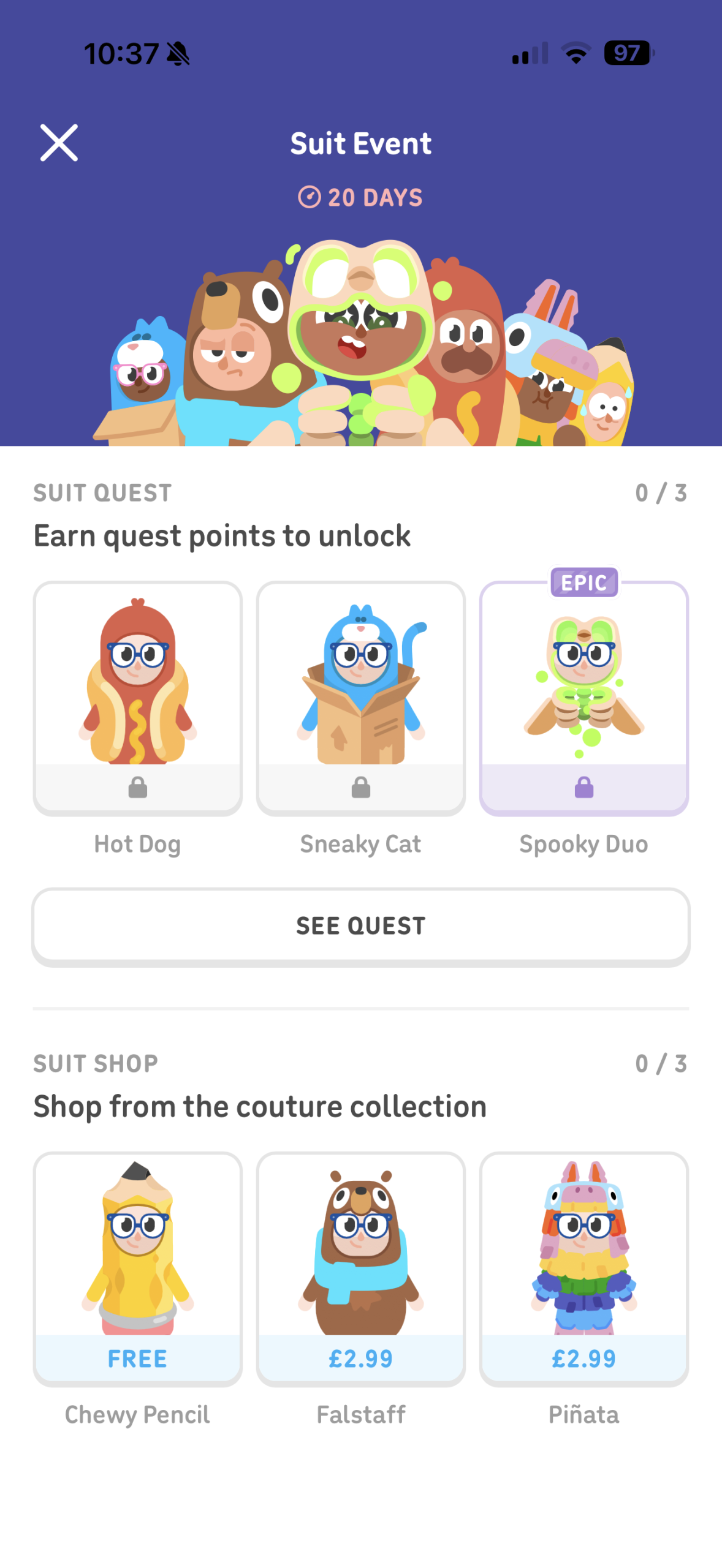
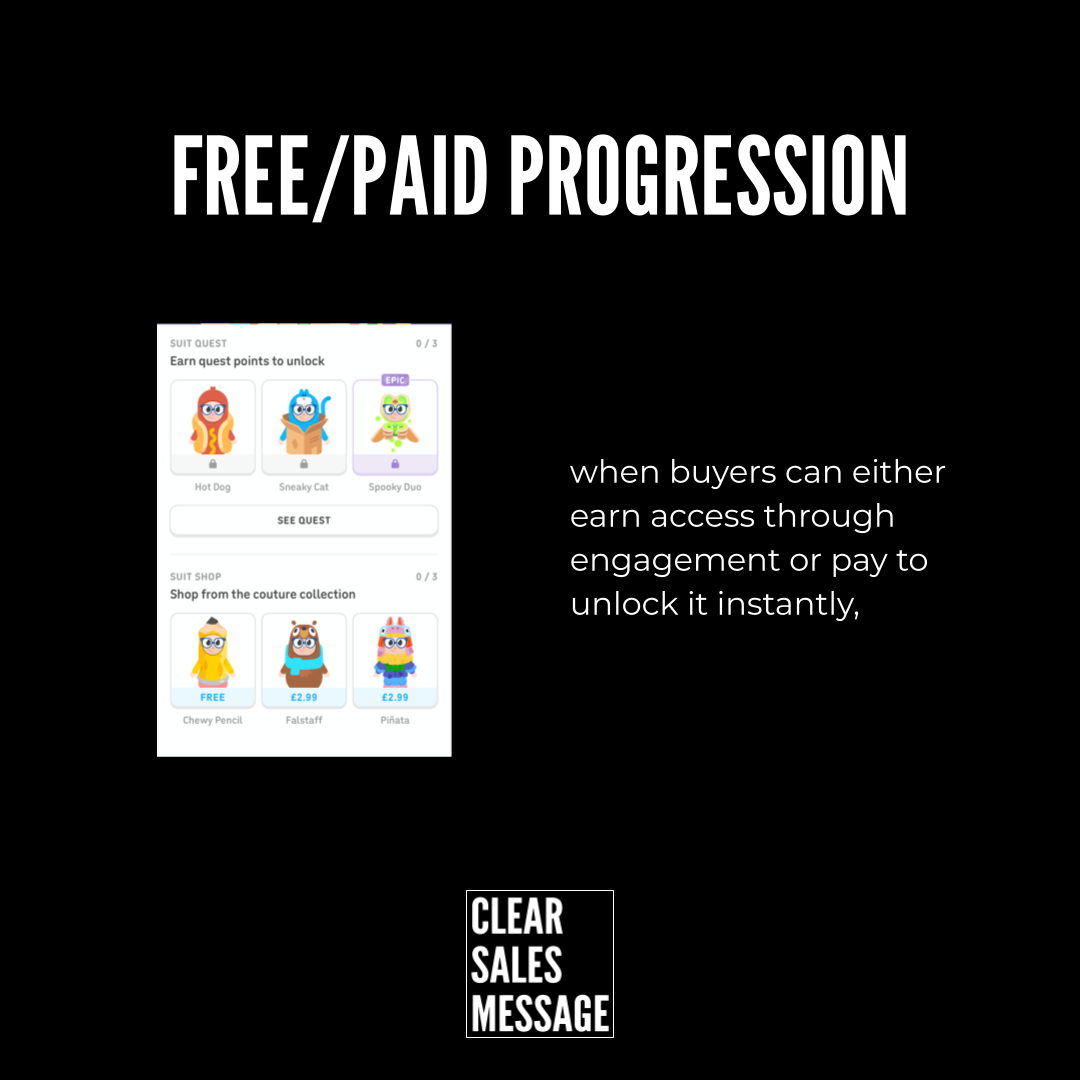
Duolingo introduced “skins” for their avatars which you could unlock by achieving things in the Duolingo app, or you can just go straight ahead and buy one.
See also