
Practical Sales Training™ > How To Get Attention > Freemium

Freemium
The hardest part of any sale is getting someone to trust you enough to hand over money. Freemium solves that problem by letting them experience what you offer before they commit. Instead of asking for a leap of faith, you give them a taste and let the product do the talking.
It works in software, in food, in services, and in almost any category where the value is best felt rather than described. When a buyer has already used your product and seen results, the step to paying feels natural. Because they are not buying something unknown. They are buying more of something they already like.
Freemium is also one of the most powerful ways to build a relationship at scale. You reach far more people with a free offer than you ever could with a paid one. And when those people are ready to buy, you are already the familiar choice.
What Is Freemium?
Freemium is where you offer a free sample or free version of your product or service. The goal is to give buyers a real experience of the value on offer so they feel ready to pay for the full thing.
It is different from a trial period, which has a set end date. A freemium model can run forever. The free version has limits, and the paid version removes them. So the buyer upgrades when they hit those limits and realise they want more.
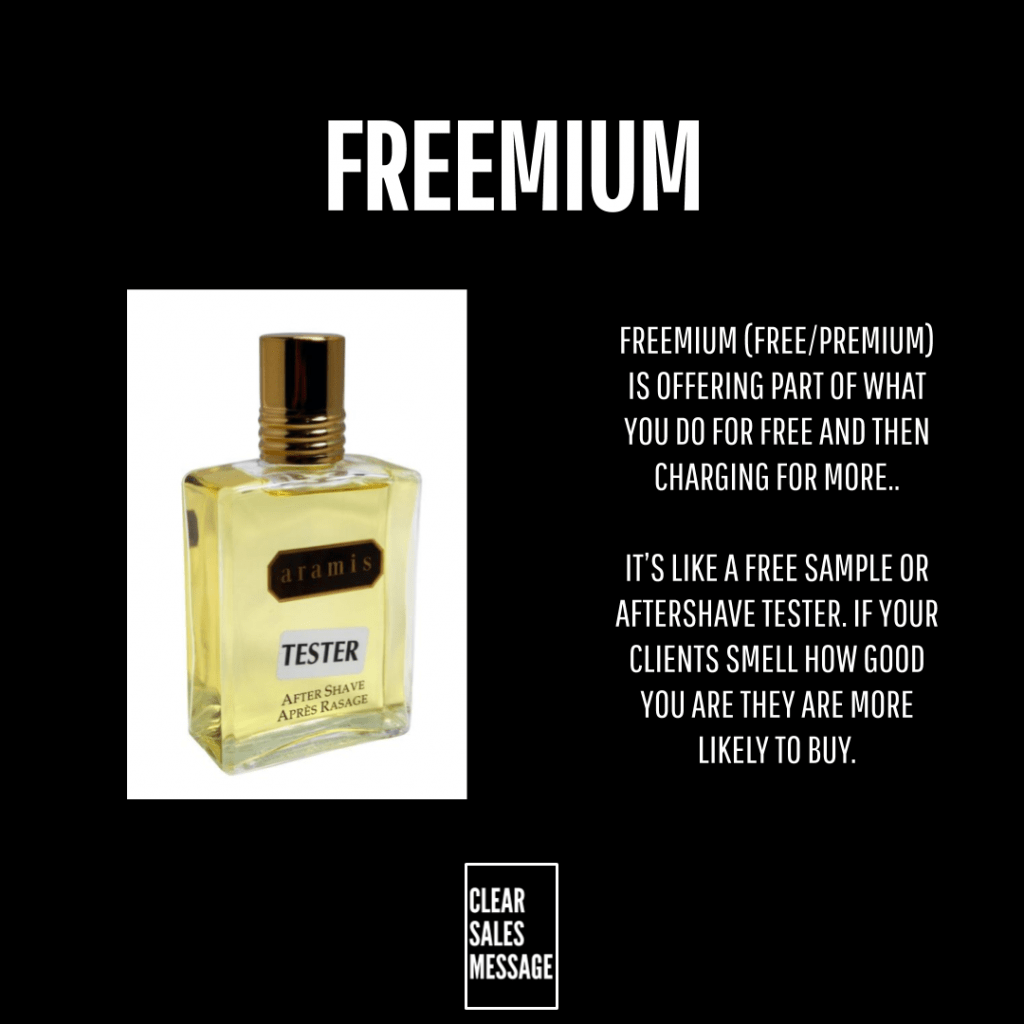
Think of it like an aftershave tester at a department store. You don’t buy the bottle blind. You try it first. When it smells right, the purchase feels obvious. Freemium works in exactly the same way.
Why Does Freemium Work?
It works because it removes the risk of buying. When a buyer has nothing to lose by trying, the barrier to starting drops to zero. They engage with your product, build a habit around it, and start to see what it can do for them. By the time you ask them to pay, they are already sold.
Freemium also triggers Reciprocity. When you give something of real value for free, people feel a pull to give something back. Paying for the full version is an easy way to act on that feeling. So the generosity of the free offer creates a natural move towards the paid one.
It also builds Propinquity. The more time a buyer spends with your product, the more familiar and trusted it becomes. Familiarity drives preference. When it comes to choosing between a tool they know and one they don’t, most buyers will stick with what they know. Because comfort and trust matter as much as features.
How Can You Use Freemium In Sales?
The key is to give away enough to show the value but not so much that there is no reason to upgrade. The free version should be genuinely useful. But the paid version should feel like a clear step up.
Offer a Forever-Free Version With Limits
For software and digital services, a forever-free plan with feature or usage limits is the most common freemium model. The buyer uses the free version until they outgrow it. When they hit the ceiling, upgrading feels like a natural next step rather than a sales pitch. Because the need to upgrade comes from them, not from you.
Give Away Physical Samples
For product businesses, free samples do the same job. A small sachet, a taster size, or a single use of your product lets the buyer form an opinion based on experience. When the product is good, that experience sells it. Consider where your buyers are and how you can get a sample into their hands at low cost.
Offer a Free Version of Your Service
For service businesses, a free resource, a free tool, or a free first session can act as freemium. The goal is to give the buyer a taste of how you work and what results look like. However, be careful not to give away so much that there is nothing left to sell. Show the what, but save the how for paying clients.
Use Content as Freemium
Guides, videos, templates, and tools all work as freemium when they deliver real value. They attract buyers who are already interested, build trust, and create a bond before any sales conversation begins. When those buyers are ready to spend, you are the first name they think of. So free content is not just marketing. It is the start of the sale.
When Freemium Works Best
Freemium works best when the product sells itself once someone tries it. If the experience of using it creates a clear desire for more, the model works well. But if the free version does not give the buyer enough to form a real opinion, it just feels hollow.
It also works best when the cost of giving something away is low. Digital products, samples, and content all have a low cost per unit. So the maths work. For high-cost services, you need to think carefully about what you can offer for free without it eating into your margins.
Also, freemium is most effective when the upgrade path is clear and easy. If a buyer has to jump through hoops to pay, many won’t bother. Make the move from free to paid as smooth as possible. One click, one conversation, one simple step.
When Freemium Becomes Dangerous
The biggest risk is attracting too many Freebie Hunters. These are people who take everything you offer for free and never convert. When your freemium model pulls in too many of them, the cost of supporting free users can outweigh the revenue from paid ones.
There is also a positioning risk. When you give away too much for too long, buyers start to expect everything for free. That makes it harder to charge what you are worth. So the free offer needs a clear ceiling. Buyers should always know what free gets them and what paid unlocks.
However, the most common danger is a weak upgrade trigger. If the free version is so complete that buyers never feel the need to pay, the model fails. The limits on the free version need to be real and felt at the right moment.
Common Freemium Mistakes
Giving Away Too Much
One common mistake is making the free version so generous that buyers have no reason to upgrade. Freemium should create desire, not satisfy it. So think carefully about where the limits sit. The free version should solve enough to impress, but leave enough unsolved to create a pull towards the paid plan.
Making the Upgrade Path Unclear
Another mistake is not making it obvious what the paid version offers or how to get it. If a buyer hits the limit of the free version but can’t easily see what upgrading gets them, they may just stop using the product rather than paying. Make the benefits of upgrading clear, specific, and easy to act on at every point where the free version runs out.
Not Tracking Conversion From Free to Paid
A third mistake is running a freemium model without watching the numbers. If you don’t track how many free users convert to paid, you can’t tell whether the model is working or just generating cost. Set a target conversion rate and check it regularly. When free users are not converting, something in the experience or the upgrade path needs to change.
Freemium – An Example
A project management software company offers a “Free Plan” that lets small teams run up to five projects with ten users. Startups begin using the free version and build their whole workflow around it. As they grow and need more features, such as integrations and reporting, they upgrade to the paid plan. They don’t shop around. They already trust the tool and know how it works, so the choice is easy.
At the same time, a premium coffee brand gives away free sachets at train stations. Commuters try the coffee on their way to work. When it tastes good, many of them buy the full product online later that day. The sample did the selling. No pitch needed.
In both cases, the free offer removed the risk and made buyers feel already invested. Because of that, the step to paying felt small, not big.
See Also