Practical Sales Training™ > Wordplay > Kaomoji

What is it?
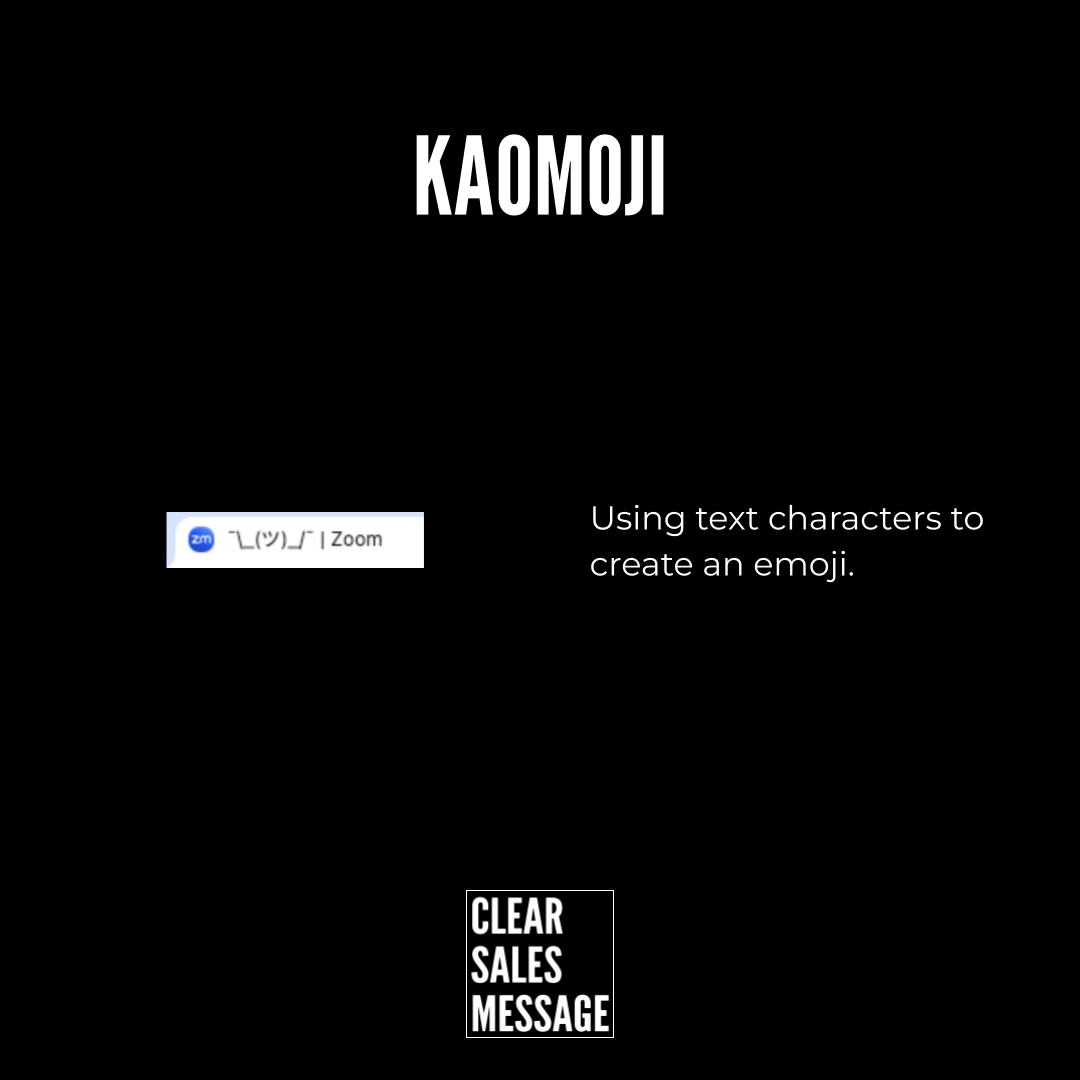
Kaomoji are Japanese-style emoticons made from text characters to show facial expressions and emotions. Unlike simple emojis 🙂, kaomoji are more detailed and often use a mix of punctuation, symbols, and letters to create unique expressions.
Examples of kaomoji include:
-
Happy: (^▽^)
-
Sad: (╯︵╰,)
-
Excited: \(^▽^)/
-
Winking: (^_~)
Kaomoji are widely used online, in social media, and in messaging because they are playful, expressive, and eye-catching.
How does it work?
Kaomoji work because they break the visual pattern of plain text. When someone sees a string of symbols that form a face, their attention is drawn immediately.
They are effective because:
-
They add personality: Kaomoji show tone and emotion in a way text alone cannot
-
They stand out: A kaomoji disrupts the monotony of words on a page or screen
-
They increase engagement: Playful elements make messages more shareable and memorable
-
They cross language barriers: Facial expressions are universally understood even when words are not
This makes kaomoji a tool for grabbing attention and building emotional connection in communication.
How can you use it?
You can use kaomoji to add emphasis, humour, or personality in your content and sales messaging.
-
Social posts: Insert kaomoji at the start or end of captions to boost visibility in feeds
-
Email marketing: Use sparingly in subject lines or headers to stand out in crowded inboxes
-
Community engagement: Add kaomoji in chat groups or forums to make interactions more human
-
Branding: Create a set of signature kaomoji that align with your brand personality
Tips for success:
-
Do not overuse them. One or two kaomoji are more impactful than a long string
-
Choose expressions that match your message so they feel natural, not forced
-
Test them in different channels to see where they resonate most with your audience
The principle is simple. Kaomoji turn plain text into an emotional signal that captures attention.