
Practical Sales Training™ > How To Get Attention > The Meme Effect
The Meme Effect
What Is It
Memes are the language of the internet. They connect with an audience in a way most other posts simply can’t manage.
Despite this, plenty of businesses stay wary of using them. Humour carries real risk, and a joke that lands badly can damage a brand far faster than it built it.
That risk is real, but so is the reward. Used well, a meme can say more in one image than an entire paragraph of careful copy ever could.
Why Does It Work
It works because it appeals to how humans actually communicate. A meme is short form content that catches attention with a strong visual first.
Then it converts that attention into engagement, because the meme itself usually contains something relatable. That relatable element is doing all the heavy lifting.
It’s the relatable part that makes people take action, feel understood, or share it with a friend. That’s exactly where the real power lies.
How Can You Use It
Find The Right Alignment
Anyone can add text and an image together to make something meme shaped. That alone won’t make it funny enough to connect with your audience.
The real magic comes from aligning the meme’s subject matter with your business and your potential buyer. It also needs a genuinely relatable feeling or situation behind it. Miss that alignment, and the joke falls flat no matter how polished it looks.
Use The Right Tools
You don’t need design skills to get started. A meme generator lets you take classic templates and add your own spin. You can also browse other people’s examples for inspiration.
When It Works Best
It works best on social platforms where humour and shareability already drive attention naturally. Timely, culturally relevant moments give a meme the biggest possible reach.
It also shines when your audience already shares a specific frustration or in joke. Tap into that shared feeling, and the meme practically shares itself.
When It Becomes Dangerous
A meme becomes dangerous the moment it contains swearing or extreme viewpoints. It’s equally risky if the joke targets anyone other than yourself. Humour helps business. Being offensive damages it fast.
This exact risk is why so many businesses shy away from memes entirely. A single badly judged post can undo months of careful brand building in a single afternoon.
Common Mistakes
Chasing Trends Too Late
A meme format that felt fresh last month can feel stale and cringeworthy today. Move quickly, or skip a trend entirely once it’s already fading.
Forcing The Business Angle
Bolting your product onto a popular template, without any real connection, reads as desperate rather than clever. The alignment has to feel natural, not forced.
Skipping A Second Opinion
Humour lands differently depending on who reads it. Always get a second person to check a meme before it goes out. What feels obviously funny to you might land very differently elsewhere.
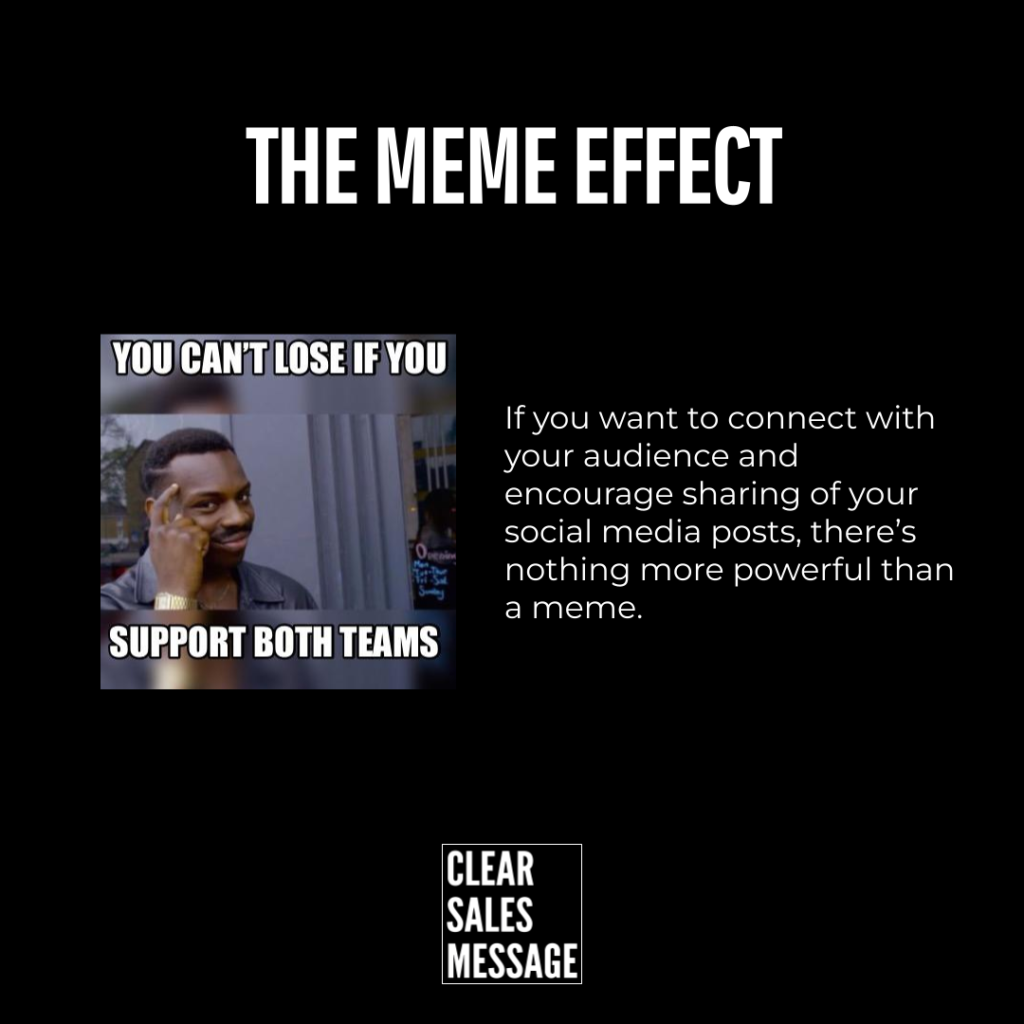
The Meme Effect – An Example
Saying More Than An Advert Ever Could
Plenty of brands have used memes successfully, both in print and online. A well judged meme is far more relatable and memorable than an advert that simply says “buy our crisps.”
That’s exactly the point. The meme does the connecting, while a plain advert only ever does the telling.

See also