Practical Sales Training™ > How To Keep Your Clients Happy > Lack of Use Messaging

Lack of Use Messaging: Bring Customers Back Before You Lose Them
What is Lack of Use Messaging?
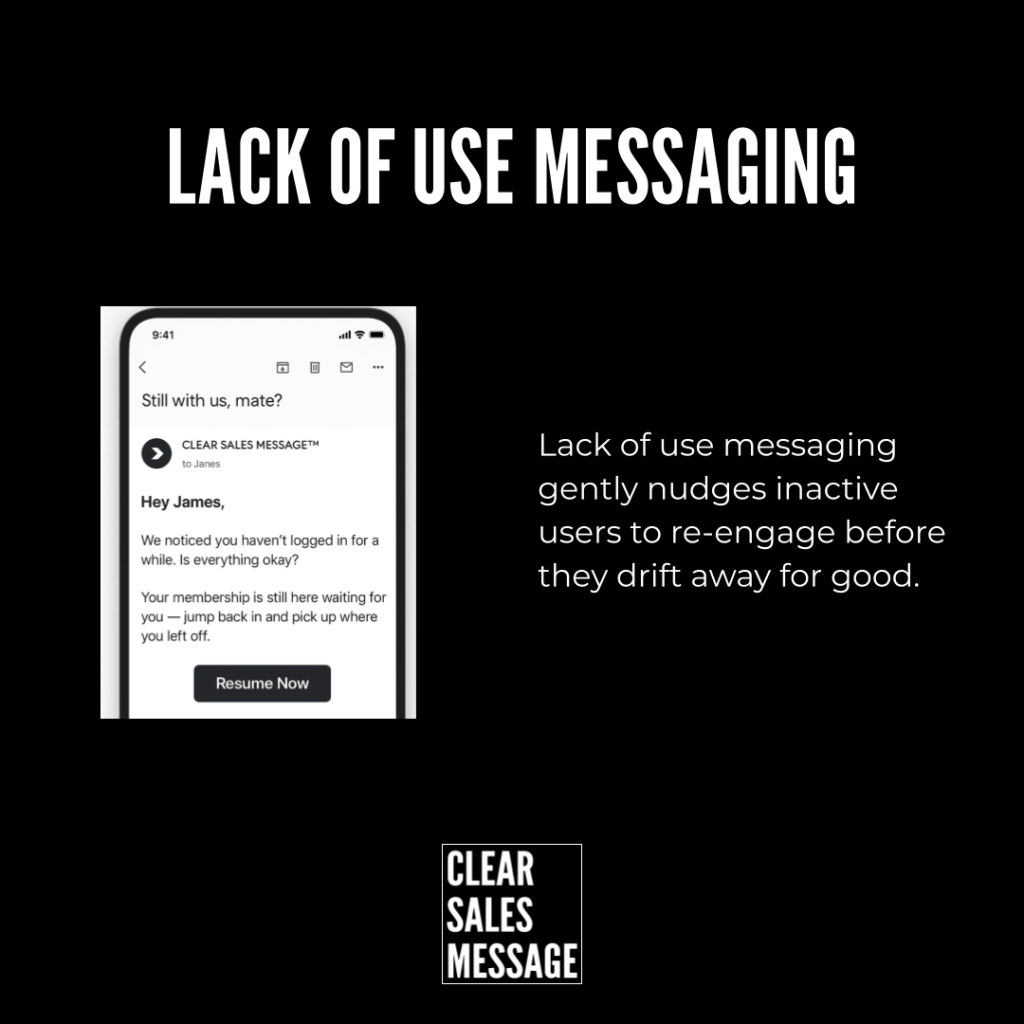
Lack of use messaging is a proactive communication strategy designed to re-engage users or customers who haven’t interacted with your product, service, or brand for a while. It acknowledges their absence and gives them a reason to come back before they forget you altogether.
This is not a hard sell. It’s a soft nudge that says:
“We’ve noticed you’ve been quiet – and we’d love to see you again.”
Whether they haven’t logged in, made a purchase, booked a session, or opened an email, this type of message helps you catch slipping engagement early.
How Does Lack of Use Messaging Work?
Lack of use messaging works by using timely, personalised communication triggered by inactivity.
The goal is to:
-
Recognise the silence
People appreciate when you notice. Acknowledging they haven’t been around makes the message feel personal, not generic. -
Remind them of the value
Reaffirm what they’re missing by not using your service. This might be results, convenience, offers, or outcomes they originally wanted. -
Reduce the friction to return
Give them a clear path to come back. That could be a button to log in, a short summary of what’s new, or a simple next step. -
Rebuild the connection
Show that you’re not chasing them to sell — you’re reminding them of what’s still available to them.
These messages are typically sent through:
-
Email sequences
-
SMS reminders
-
Push notifications
-
Direct messages
-
In-app alerts (for active but disengaged users)
They’re often automated, but the best ones still feel like they came from a human who noticed something.
How Can You Use Lack of Use Messaging?
You can apply lack of use messaging across almost any industry or platform. Common scenarios include:
-
A customer who hasn’t made a repeat purchase
-
A user who hasn’t logged in for 14, 30, or 60 days
-
A member who hasn’t attended a session or used a feature
-
A lead who went quiet after showing early interest
Here’s how to do it well:
Use gentle language
Avoid guilt or pressure. Keep the tone friendly and understanding.
Include a clear reason to return
This could be something new, something personalised, or something limited.
Remind them of their original intent
Bring them back to the reason they signed up, joined, or bought in the first place.
Make it easy
Include one clear action they can take. A single button. A one-line summary. A simple path back.
Example Lack of Use Message
Subject: Still thinking about [Feature/Result]?
Body:
Hi [First Name],
It looks like you haven’t used [Product/Service] in a little while.
We just wanted to check in. Whether life got busy or things slipped your mind, we’re here when you’re ready.
A lot has changed since your last visit — and some of it could be just what you need.
[See What’s New]
Why Lack of Use Messaging Matters
Because silence often leads to churn.
And people rarely leave because they’re unhappy – they leave because they forget why they started.
Lack of use messaging helps you:
-
Reconnect before it’s too late
-
Reduce inactive users
-
Increase repeat usage or sales
-
Show customers they’re not just a number
It’s not just about reactivation. It’s about showing that you care enough to reach out.
Final Thought
Lack of use messaging is a simple way to say:
“We noticed. We remember. And we’d love to help you get back on track.”
Used well, it prevents churn, boosts engagement, and reinforces trust – all without a hard sell.
If you want help building your re-engagement sequence, get in touch. Better communication leads to better conversion.
Example
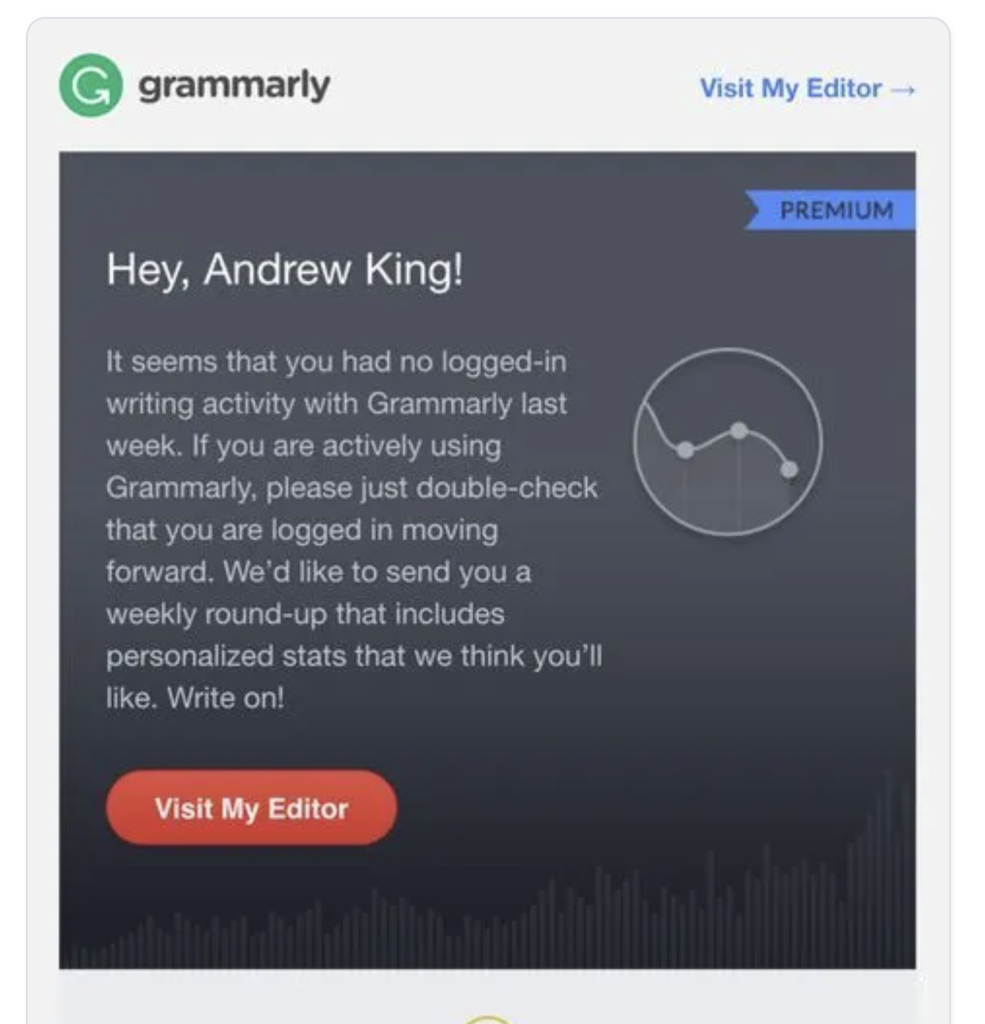
Grammarly are good at ensuring people sufficiently use their service:
See also
- Behavioural Messaging
- Consumption Notification
- 40+ ways to keep your buyer happy
- 100+ ways to get your buyer to take action