Practical Sales Training™ > How To Lose The Sale > Name Meaning

Name Meaning
Many businesses fall in love with a name that makes perfect sense to them but creates confusion for everyone else. The problem is that buyers never hear the backstory. They do not know about the brainstorm, the founder logic, or the meaning behind the choice. They just see the word and try to work out what it means.
If the meaning is not clear, buyers either create their own version of it or simply move on. So the name that felt inspired internally becomes a barrier externally – and the business has to work twice as hard to explain itself.
In short, your name is doing either work for you or work against you. And most businesses have no idea which one it is.
What Is Name Meaning?
Name Meaning is how clear, obvious, and easy to grasp a business name feels to someone who has never heard it before. It is the gap between what the name says and what the buyer understands from it.
Some names close that gap instantly. PayPal, Booking.com, Compare The Market, and British Airways all give buyers a strong immediate sense of what the business does. As a result, buyers process them quickly and remember them easily.
Other names create a gap. They are abstract, invented, or coded in a way that means nothing to an outsider. That does not automatically make them bad names. However, it does mean the rest of the business communication has to work harder to fill in what the name leaves blank.
How Does Name Meaning Work?
Buyers are always trying to reduce mental effort. So when a name communicates what a business does, they can process it fast. They understand it, store it, and repeat it without having to think too hard.
But when a name is abstract or hard to place, buyers hit a small moment of friction. They have to pause and figure it out. And in that pause, some of them give up – especially if there are other options nearby that are easier to understand.
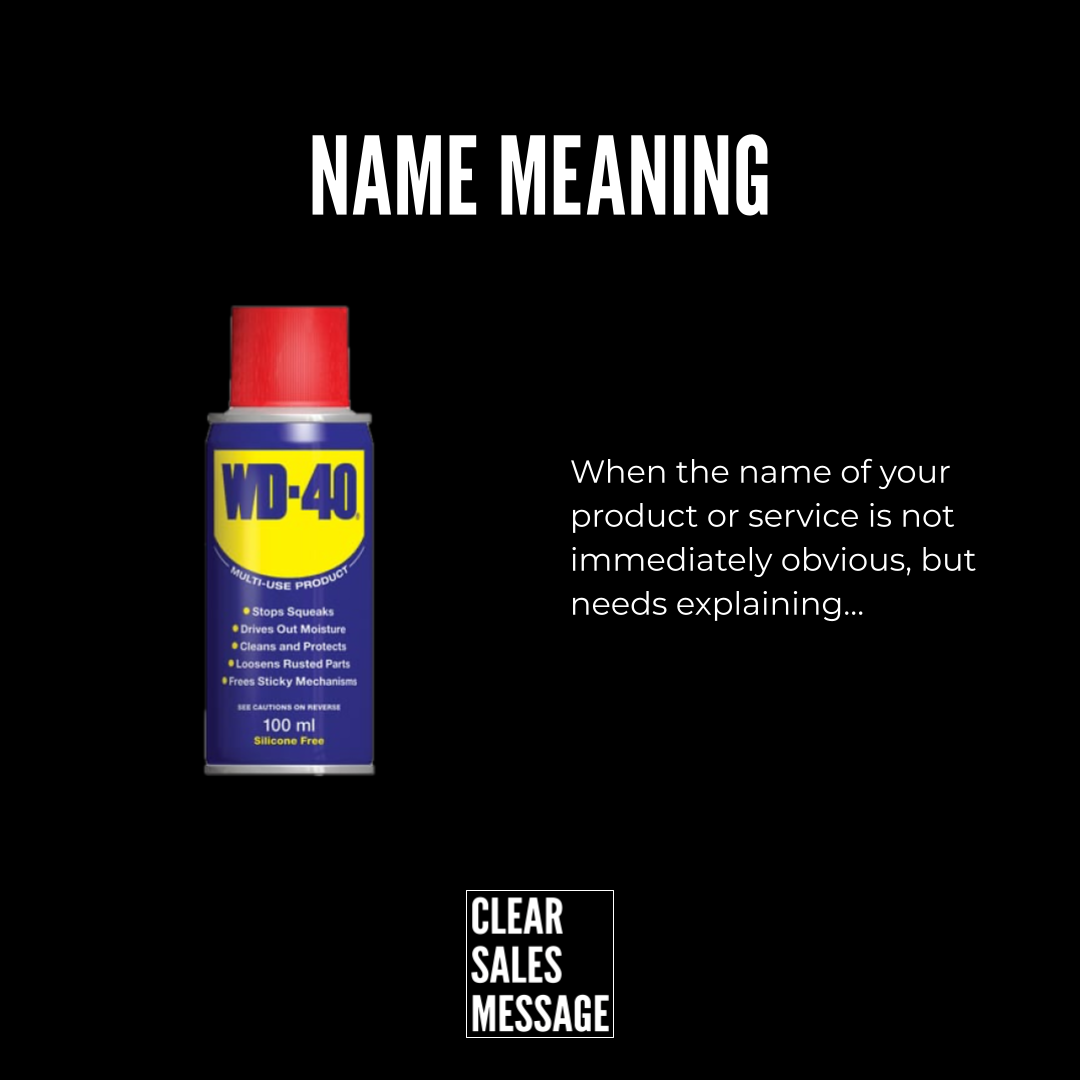
WD-40 is a good example of this. The name itself tells you nothing about the product. So the brand has spent decades building meaning around it through packaging, demos, and sheer repetition. It works now – but only because the company put in enormous effort to make the name familiar. Most small businesses do not have that kind of resource to draw on.
How Can You Improve Name Meaning?
The goal is not to make every name completely literal. Instead, the goal is to reduce confusion and make it easier for buyers to understand, remember, and repeat what you do.
Make the category easy to understand
If your name is abstract or unusual, the words around it need to do extra work. A clear tagline, a plain description, and obvious positioning copy can all fill the gap. So think of the name and the message as a team. The less clear the name is on its own, the more the surrounding copy needs to explain it quickly and simply.
Test the name outside the business
Most naming decisions happen inside a bubble where everyone already knows what the name means. So the real test is to ask someone with no connection to the business. Show them the name and ask what they think the company does. Their answer – or their confusion – tells you more than any internal discussion ever will.
Check if buyers can repeat it easily
A name that buyers struggle to say, spell, or remember creates a referral problem. Because if someone wants to recommend you but cannot recall your name with confidence, the referral often stalls. So test not just whether the name makes sense, but whether it sticks. Because a name that buyers can pass on easily is worth far more than one they have to look up every time.
When Name Meaning Matters Most
Name Meaning matters most when buyers encounter your business for the first time with no prior context. In those moments, the name is often the first thing they have to go on. So if it gives them nothing useful, the first impression starts with a question mark rather than a clear signal.
It also matters a great deal for businesses that rely on referrals, search, or word of mouth. Because in all of those channels, the name has to travel on its own – without you there to explain it. If buyers cannot work it out from the name alone, some of them will not bother to find out more.
Similarly, it is especially important for startups and new businesses. An established brand can carry an unclear name because familiarity fills the gap over time. But a new business has no familiarity to fall back on. So the name needs to do more work from day one.
When Abstract Names Can Still Work
Abstract and invented names can absolutely succeed. However, they tend to work because the business puts in serious effort to build meaning around them over time. Google, Spotify, Skype, and Kodak all started with names that told you nothing. But each of them invested heavily in making those names familiar through repetition, strong branding, and consistent experience.
That process takes time, money, and discipline. So for businesses that have those resources, an abstract name is a viable choice. But for businesses that are still growing and building awareness, a name that helps buyers understand what you do is a real commercial advantage – because it reduces the amount of explaining you have to do every single time.
When Name Meaning Becomes Dangerous
The risk is highest when a confusing name combines with vague messaging. If your name does not explain what you do and your tagline does not either, buyers are left with nothing to hold onto. As a result, they tend to move on rather than dig deeper to find out more.
It also becomes a problem in competitive markets. If a rival has a clearer name and a buyer has to choose between you quickly, the clearer name wins by default. Not because the product is better, but because it is easier to understand and therefore easier to trust.
Also, a confusing name can quietly damage confidence over time. If buyers regularly have to ask what you do, or if you find yourself explaining your name in every meeting, that is a sign the name is creating friction that does not need to be there.
Common Name Meaning Mistakes
Choosing cleverness over clarity
Clever names feel good internally because they carry meaning for the people who came up with them. But buyers are not in on the joke yet. They see the surface, not the story. So a name that feels creative inside the business often just feels confusing outside it. Clarity wins more sales than cleverness does.
Assuming buyers understand the reference
Many business names use abbreviations, founder references, or symbolic logic that makes total sense to the people who created them. However, buyers never see the explanation unless someone actively tells them. So if the name only makes sense with context, it is already asking buyers to do extra work before the relationship has even started.
Fixing the name without fixing the message
Sometimes businesses change their name but keep all the same vague messaging around it. In those cases, the new name does not fix the problem – because the problem was never just the name. Instead, it was the whole communication. So when you review your name, review everything around it too.
Ignoring the referral test
One of the most useful things you can do with a name is ask a happy client to recommend you to someone. Then listen to how they describe you. If they stumble over the name, mispronounce it, or skip it entirely and describe what you do instead, that tells you something important. Because a name that buyers cannot comfortably pass on is limiting your growth in a way that is easy to miss.
Name Meaning – An Example
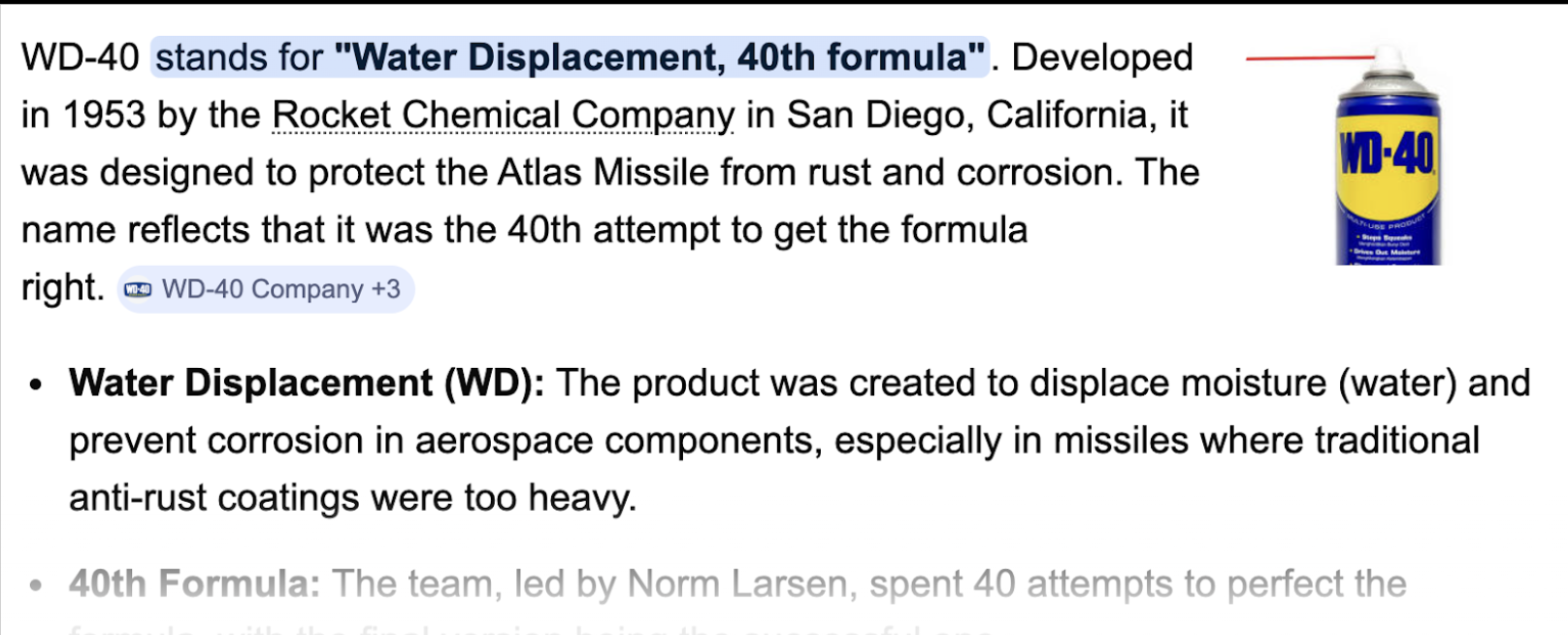
WD-40 is one of the most recognised product names in the world. But the name itself gives buyers no clue about what it does. WD-40 actually stands for “Water Displacement, 40th attempt” – a reference to the 40 tries it took to develop the formula back in 1953. Interesting backstory. But most buyers have never heard it.
So instead, the brand built meaning through decades of packaging, advertising, and word of mouth. The product became so familiar that the name no longer needed to explain itself. As a result, WD-40 works – but only because the company committed to making it work over a very long time.
For most businesses, that kind of long game is not an option. Therefore, starting with a name that gives buyers something to hold onto from day one is the smarter, lower-risk choice.
See also: