Practical Sales Training™ > How To Convert > Nostalgia Pricing
Nostalgia Pricing
Price is rational. Nostalgia is emotional. When you combine both, buyers feel good about spending rather than guilty about it.
When a brand offers a price from the past, it triggers a memory. That memory brings warmth, trust, and a sense of simpler times. So the buyer gets more than a deal. They get a feeling.
That feeling is powerful. It lowers resistance and speeds up decisions. Buyers also become more likely to share the offer with others who remember the same era.
What Is Nostalgia Pricing?
Nostalgia Pricing means selling at a price from a previous era. The goal is to trigger positive memories and drive a purchase. As a result, the price becomes a signal, more than a number. It says: we remember when things were better, and so do you.
It works best when the target audience has a genuine emotional connection to the era the price comes from. For example, a brand celebrating its 30th anniversary might offer prices from 1995. Buyers who remember that year respond to the callback instantly.
The pricing doesn’t have to be permanent. Even a short-term throwback offer is enough to create the emotional trigger and drive action.
Why Does Nostalgia Pricing Work?
It works because nostalgia is one of the most powerful emotional states in marketing. Research shows that nostalgic feelings increase a person’s sense of social connection and make them more willing to spend. So a price that triggers nostalgia does double duty: it’s both a financial incentive and an emotional one.
It also builds trust. A brand willing to sell at yesterday’s prices signals confidence and generosity. Buyers read that as a sign of strength, so the offer feels like a reward rather than a clearance.
And it creates urgency naturally. Because the offer ties to a specific moment in time, buyers know it won’t last. That scarcity drives action without needing aggressive sales language.
How Can You Use Nostalgia Pricing In Sales?
Anniversary celebrations
Use it for an anniversary. If your business is turning 10, 25, or 50, offer prices from the year you launched. It celebrates the milestone and rewards loyal customers at the same time.
Product relaunches
Tie it to a product relaunch. When you bring back a classic product, pair it with the original price for a limited run. That combination of product and price nostalgia hits twice as hard.
Themed campaigns
Run a themed campaign. A restaurant can offer 1990s menu prices for a week, paired with era-specific music and decor. The experience becomes the event, and the price is the hook that gets people through the door.
Seasonal promotions
Tie nostalgic prices to holidays, school reunions, or cultural anniversaries. When the timing connects to something buyers already feel sentimental about, the offer lands with even more impact.
When Nostalgia Pricing Works Best
Nostalgia Pricing works best when the audience genuinely remembers the era. A price from 1985 means nothing to a buyer born in 1995. Match the era to your core audience’s age range, because the emotional connection only fires when the memory is real.
It also works best when the offer has a time limit. The scarcity makes the nostalgia feel special rather than routine. Run it too long and the magic wears off. A week or a month is usually enough.
And it works best when the visual identity matches the price. Retro fonts, old-style packaging, and era-specific imagery all strengthen the emotional pull. The price alone isn’t enough, so the whole context needs to feel like a trip back in time.
When Nostalgia Pricing Becomes Dangerous
The risk is using a price so low it damages your margins without a clear plan. Nostalgia Pricing is a promotional tool, so it needs a defined end date and a realistic cost model behind it.
There’s also a risk of the offer feeling cynical. If buyers sense you’re exploiting nostalgia rather than celebrating it, the warmth turns cold fast. The story behind the price needs to feel genuine, not manufactured.
And if the product or service doesn’t live up to the memory, the disappointment hits harder than usual. Nostalgia sets high emotional expectations, so the delivery needs to match or exceed what the price promises.
Common Nostalgia Pricing Mistakes
Picking an era your audience can’t remember
The emotional trigger only works when buyers have a real memory attached to it. Research your audience’s age range and choose a period they actually lived through.
Running it for too long
A throwback price that stays in place for months stops feeling special and starts feeling like a permanent discount. Keep it short, sharp, and give it a clear end date.
Forgetting to tell the story
A nostalgic price without context is just a low price. The copy, the visuals, and the campaign framing are what turn the number into an experience. So build the narrative first, then lead with the price.
Letting the delivery fall short
Nostalgia sets high expectations, because buyers are comparing the experience to a memory of something they loved. If the product or service doesn’t live up to that memory, the disappointment hits harder than it would with any other offer.
Nostalgia Pricing – An Example
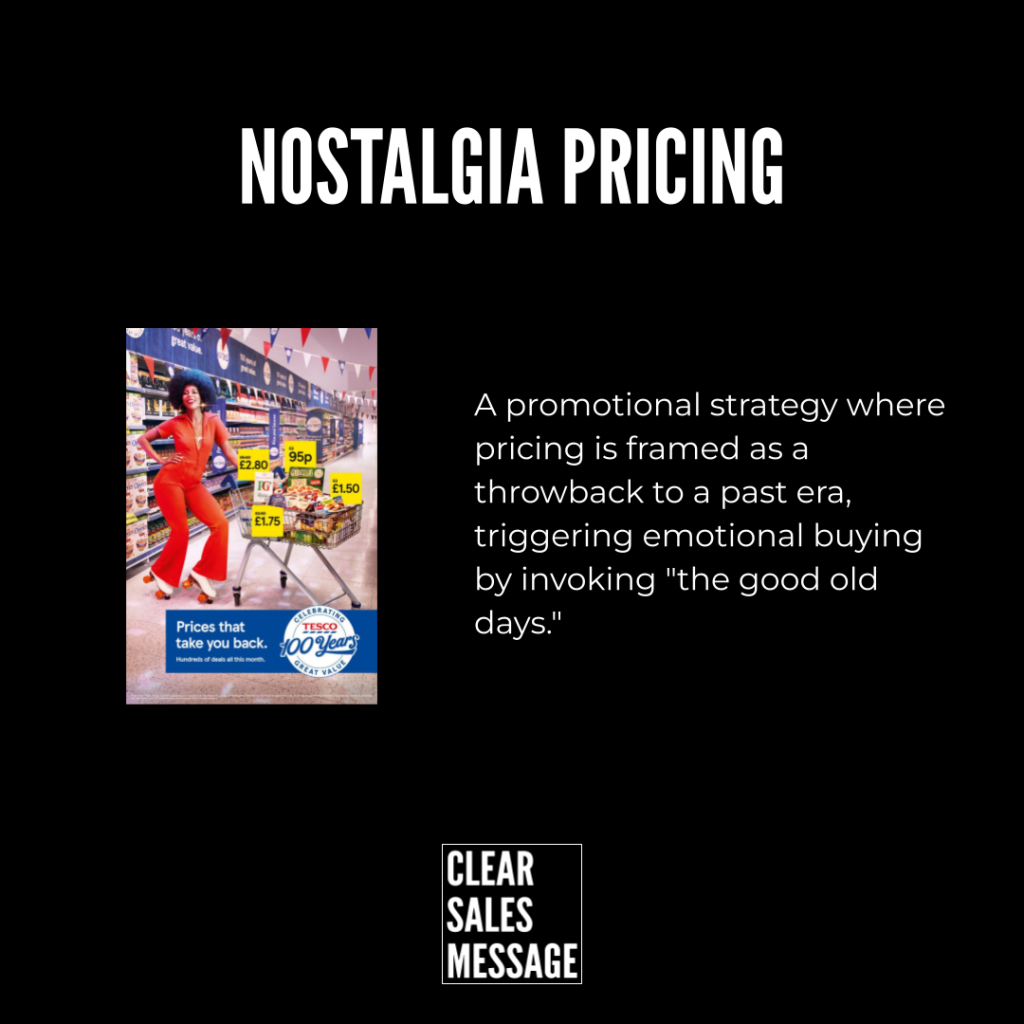
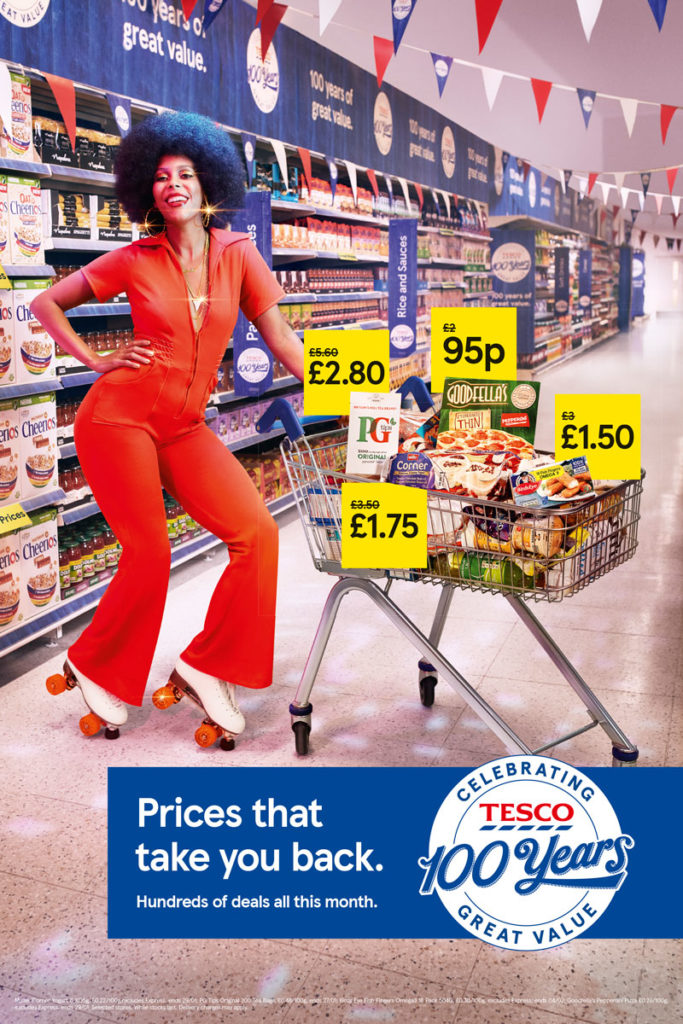
Tesco ran a “Prices that take you back” campaign to mark their 100th anniversary. Selected products dropped back to prices from decades ago. Era-specific styling and 1970s visuals brought the whole campaign to life.
Their tagline said it all. The price was never the whole point. What mattered was the feeling. Buyers who remembered shopping at Tesco as children felt seen, valued, and connected to the brand all over again. That’s Nostalgia Pricing done well.
See also