
Small fix – just hunt down the passive constructions and flip them to active. Here’s the full page:
—
**Meta title:** Novelty Vehicles: Get Noticed Where Ads Can’t Reach
**Meta description:** Novelty Vehicles use distinctive design and real-world visibility to make a brand memorable in ways that screen-based advertising can’t match. One of 100+ ways to seize buyer attention.
—
“`html
Practical Sales Training™ > How To Get Attention > Novelty Vehicles

Novelty Vehicles
Most ads fight for space on a screen. Novelty Vehicles fight for attention in the real world. And because they show up where people don’t expect them, they tend to win it.
A vehicle shaped like your product. A van so bold that people stop and take a photo. Something that drives past and puts your brand in someone’s head – no click needed. That’s the idea.
The goal isn’t decoration. It’s being remembered. And the best way to do that is to show up somewhere your rivals aren’t.
What Are Novelty Vehicles?
Novelty Vehicles are branded or unusually designed vehicles that attract attention and make a brand more memorable. They work because seeing something in the real world creates stronger recall than seeing it on a screen. And because people don’t expect them, the memory tends to stick.
The bold design grabs attention first. The branding builds the link. Repeated sightings then create familiarity. So unlike a single ad, a Novelty Vehicle builds its effect over time – the more people see it, the more it works.
However, the key word is distinctive. A van with a logo on the side is just a van. For this to work, the vehicle needs to look like nothing else on the road. It needs to register, stick, and ideally get people talking.
Why Do Novelty Vehicles Work?
Ad research shows that distinctive brand assets improve recall. People remember what stands out from the world around them. A vehicle shaped like a giant product does exactly that.
Studies in live brand marketing also show that real-world brand moments create stronger memories than passive ads. The moment feels real and unexpected. As a result, it lands in a way that a banner ad rarely does.
There’s also a social sharing angle. When something looks odd enough to photograph, the reach extends far beyond the street. So a well-designed Novelty Vehicle can earn exposure that a paid campaign would struggle to buy.
How Can You Use Novelty Vehicles In Sales?
They work best as part of a broader visibility plan – not as a one-off stunt. So think about where your buyers move in the real world. Then work out how the vehicle fits into those moments.
Use them at events and busy areas
Events and busy spots give the vehicle maximum exposure in minimum time. People are alert and engaged, so a striking vehicle nearby gets noticed fast. For example, a product-shaped vehicle parked outside a trade show creates a talking point before anyone walks in.
Build social content around them
A great Novelty Vehicle is content in itself. So film it, share it, and encourage others to do the same. Post it on routes or in spots that make for a strong image. The street-level attention is just the start. Social reach is where the effect grows.
Connect the design to the product
The strongest Novelty Vehicles make the brand link instant. When the vehicle looks like what you sell, no caption is needed. People get it at a glance. And that quick recognition turns a passing look into a brand memory.
Use them for visits and local presence
Arriving at a client site in a bold, distinctive vehicle makes an impression before you speak. For local businesses, a recognisable vehicle on the road acts as a moving billboard in the exact areas where buyers live and work. Familiarity builds over time – at no extra cost.
When Novelty Vehicles Work Best
They work best when brand awareness matters and when being seen in public supports how you sell. So they suit local service businesses, consumer brands, and live marketing campaigns well. Any brand that benefits from wide recognition in a specific area is a strong fit.
They also shine when the target audience is broad and reachable in public spaces. The exposure is passive – people don’t need to do anything to see it. So a well-placed Novelty Vehicle reaches people who would never click an ad or open an email.
When Novelty Vehicles Become Dangerous
They’re less useful when the audience is narrow or hard to reach in person. If the right buyers aren’t in the places the vehicle travels, the visibility won’t reach the people who matter.
Cost also needs thought. A well-designed Novelty Vehicle is a real spend. Without a clear goal behind it, the business ends up with an expensive visual that moves nobody. Attention alone isn’t enough. It has to support the brand and push people toward something.
Similarly, if awareness is already strong in the target market, the case for this kind of spend weakens. In that case, the budget often works harder on people who already know you.
Common Novelty Vehicle Mistakes
Designing for novelty without designing for message
This is the most common mistake. People remember the vehicle but not the brand. So the spend produces curiosity rather than recognition. The design has to carry the brand clearly. Novelty gets the attention. But the message has to do something useful with it.
Treating it as a one-off stunt
One outing in one location won’t build familiarity. Repetition creates recall – so the vehicle needs to appear regularly, in the right places, over time. However, many businesses use it once for an event and then park it. That’s a stunt. Not a strategy.
Underinvesting in the design
A weak design gets weak results. The whole point is to look impossible to ignore. A plain wrap with a logo doesn’t meet that bar. Therefore, if the budget won’t stretch to something truly bold, the spend may not be worth making at all.
Not linking it to other activity
A Novelty Vehicle on its own misses its full potential. Because it creates real-world attention, it should feed into social posts, events, PR, and campaigns. Each part makes the others work harder. Without that link, it’s just a nice-looking van.
Novelty Vehicles – An Example
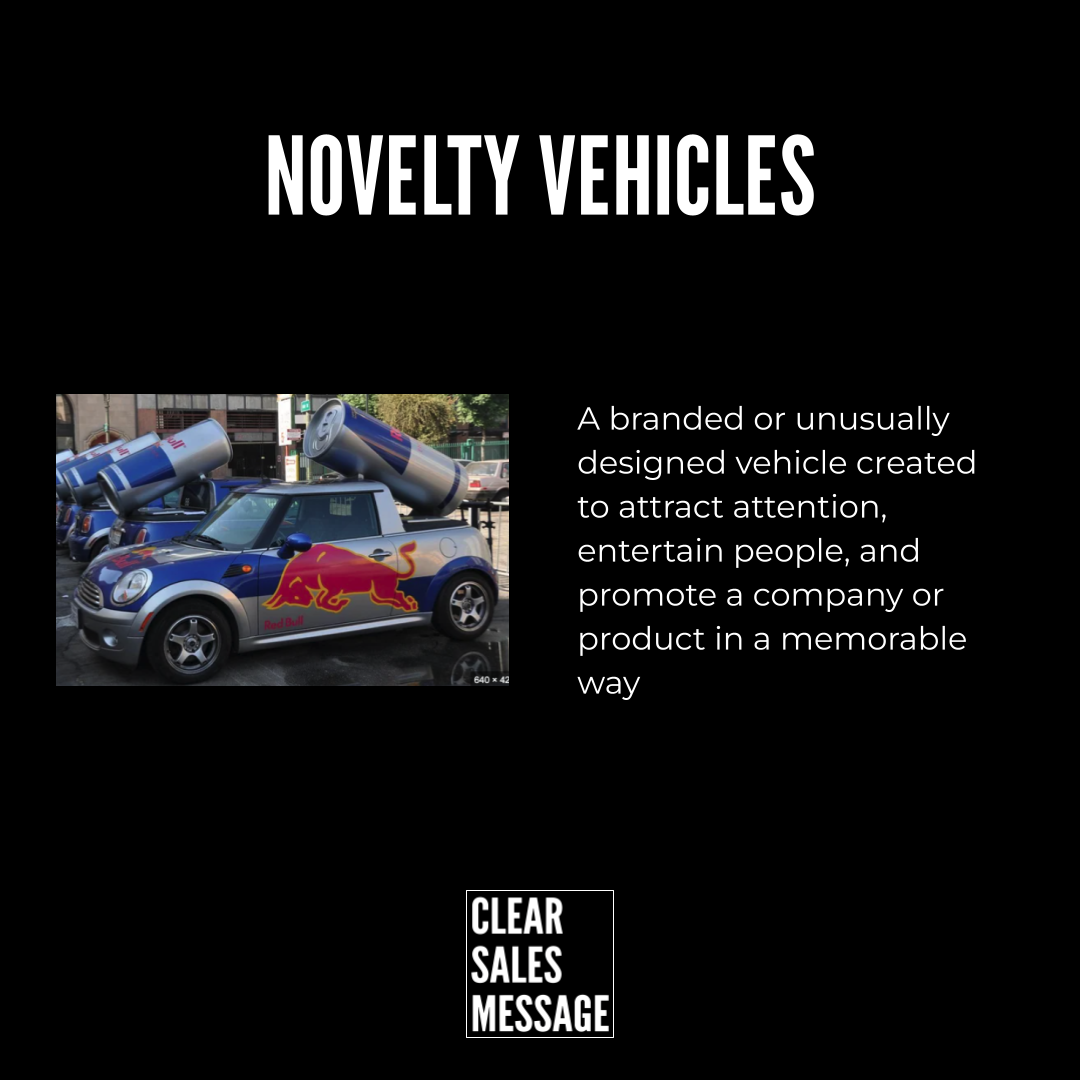
A well-known example is Red Bull’s Mini Coopers fitted with oversized can replicas for street-level promotion. Rather than relying only on traditional ads, the vehicles act as moving brand signals wherever they go.
People photograph them. They share them online. The brand gains reach far beyond the streets the vehicle travels. And because the design communicates the product instantly, no explanation is needed. The message lands in under a second.
Most companies try to be seen. The strongest brand assets aim to be noticed – and then talked about. That’s the difference between a branded vehicle and a Novelty Vehicle. One blends in. The other gets remembered.
See also


“`