Practical Sales Training™ > How To Convert > Price Drop

Price Drop
What Is It
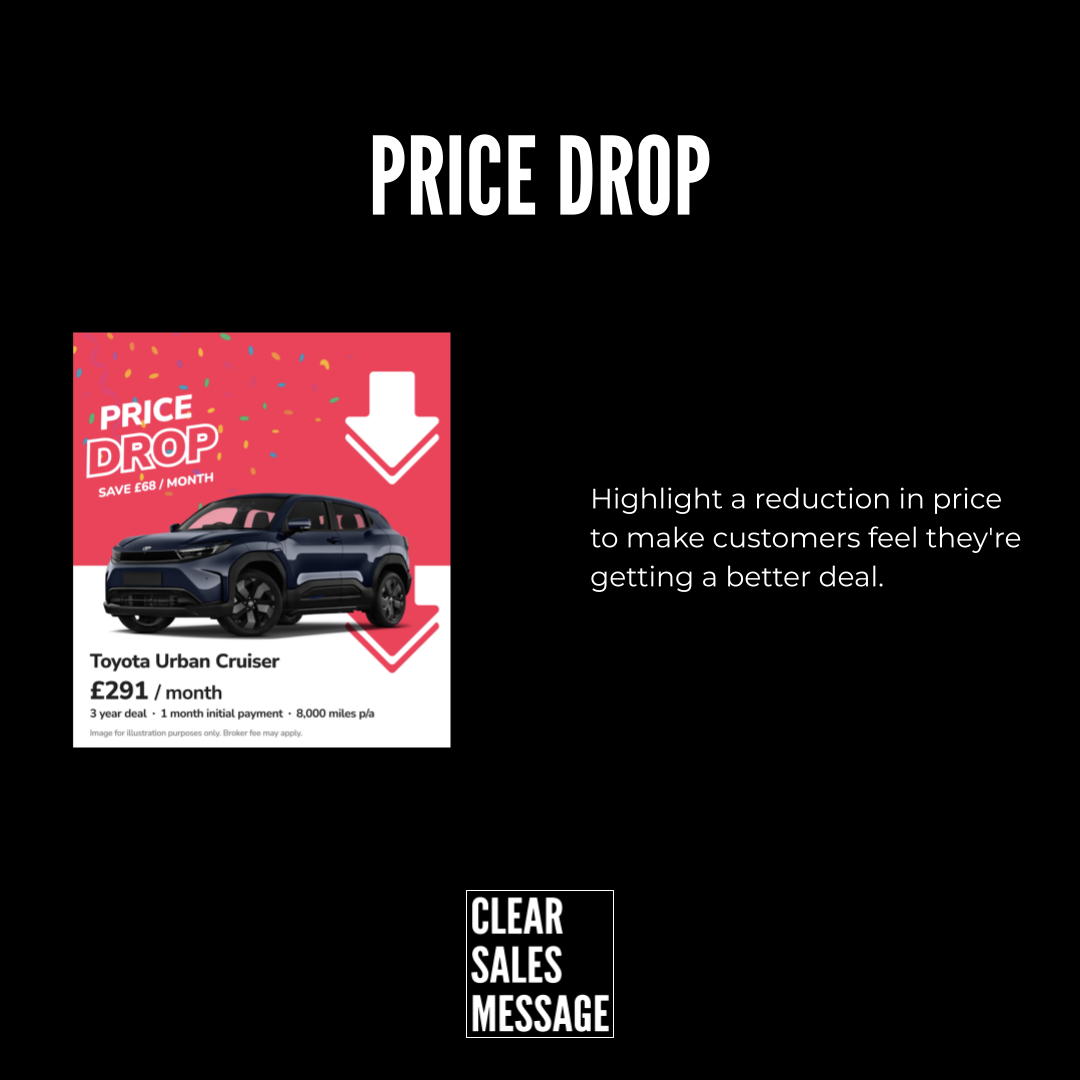
A Price Drop highlights a reduction in price, rather than just stating the new figure on its own. You show what changed, “save £68 a month,” not just “£291 a month.”
The comparison is the whole point. Without it, a good price just looks like a price. With it, a good price looks like a deal that’s actually happening right now.
Why Does It Work
Buyers judge value by comparison, not in isolation. Showing the drop gives them an instant reference point, so they don’t have to work out for themselves whether £291 a month is actually good.
It also taps into a fear of missing the moment. A static price feels like it’ll be there tomorrow. A price that has just dropped feels like something that could just as easily go back up, which nudges people to act sooner rather than later.
Visually, movement grabs attention in a way a flat number never does. An arrow, a “just dropped” banner or bold drop language reads as an event worth stopping for, not just another listing scrolling past.
How Can You Use It
Show The Saving Number, Not Just The New Price
“Save £68 a month” is easier to process at a glance than working out the difference between two prices yourself. Lead with the saving, then let the new price follow as confirmation, rather than the other way round.
Time-Stamp The Drop
A price drop with no sense of when it happened can look like it’s been sitting there for months. Add a subtle signal of recency, a date, a “just dropped” label, or simply refresh it often enough that it still feels current when someone sees it.
Pair It With A Real Reason
Give buyers a believable cause behind the drop, end of quarter stock, a manufacturer incentive, a genuine clearance. A drop that comes with a reason feels like an honest event. A drop with no explanation just feels like the price was never really £359 in the first place.
When It Works Best
This works best on considered purchases where price naturally varies, cars, furniture, electronics, and anywhere buyers are already used to tracking or comparing prices over time. It also suits fast scrolling channels like social ads, where visual contrast has to earn attention in a second or two.
When It Becomes Dangerous
It becomes a serious problem if the “before” price was inflated purely to manufacture a bigger looking drop. Beyond the obvious trust damage, that kind of pricing can land a business in genuine legal trouble in the UK, not just a bad review.
It also weakens over time if drops happen constantly. Once buyers learn a “real” price never actually applies, they simply wait for the next drop instead of buying now, and the technique stops creating urgency altogether.
Common Mistakes
Inflating The Before Price To Fake A Bigger Drop
If the original price was never genuinely charged, the saving isn’t real either. Buyers increasingly check this themselves, and a caught-out fake drop damages trust far more than a modest, honest one ever would.
Running Constant Drops Until Nobody Trusts The Full Price
If every single listing always has a drop attached, the full price stops meaning anything. Reserve the drop for genuine, occasional changes so it still signals something real when it appears.
Making The Drop The Only Reason To Buy
A saving grabs attention, but it shouldn’t be the entire pitch. Keep the actual product benefits visible alongside the drop, or you’ll attract buyers who only ever respond to the next discount, never the product itself.
Price Drop – An Example
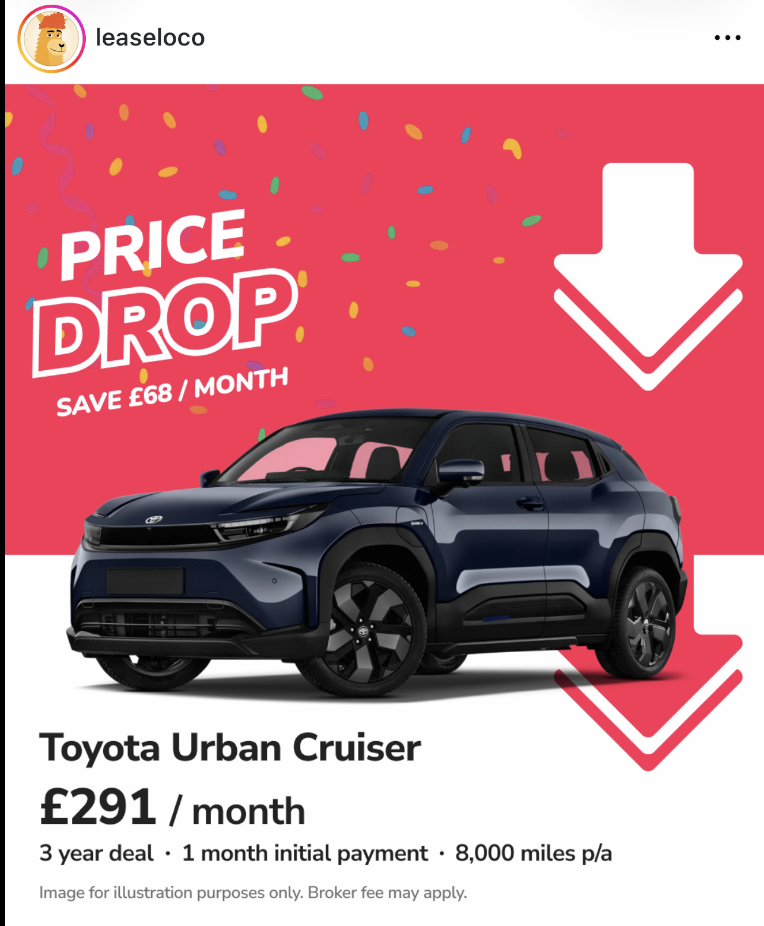
This car leasing ad leads with “Price Drop” and “Save £68 / month” in bold, before the buyer even reaches the actual price of £291 a month for the Toyota Urban Cruiser. The saving is the headline. The new price simply confirms it.
See also: