Practical Sales Training™ > How To Get Attention > Reverse Graffiti

Reverse Graffiti
Most adverts add something. Reverse graffiti takes something away. Specifically, it removes dirt, and what’s left behind is your message.
It’s one of the most eye-catching attention tools available because it works with the environment rather than against it. People stop because it looks different. It feels raw and real in a way that a poster or banner simply doesn’t.
For brands, it’s also a smart move. Because no paint or chemicals are applied, it often sidesteps the legal issues that come with traditional graffiti. So you get the impact without the risk.
What Is Reverse Graffiti?
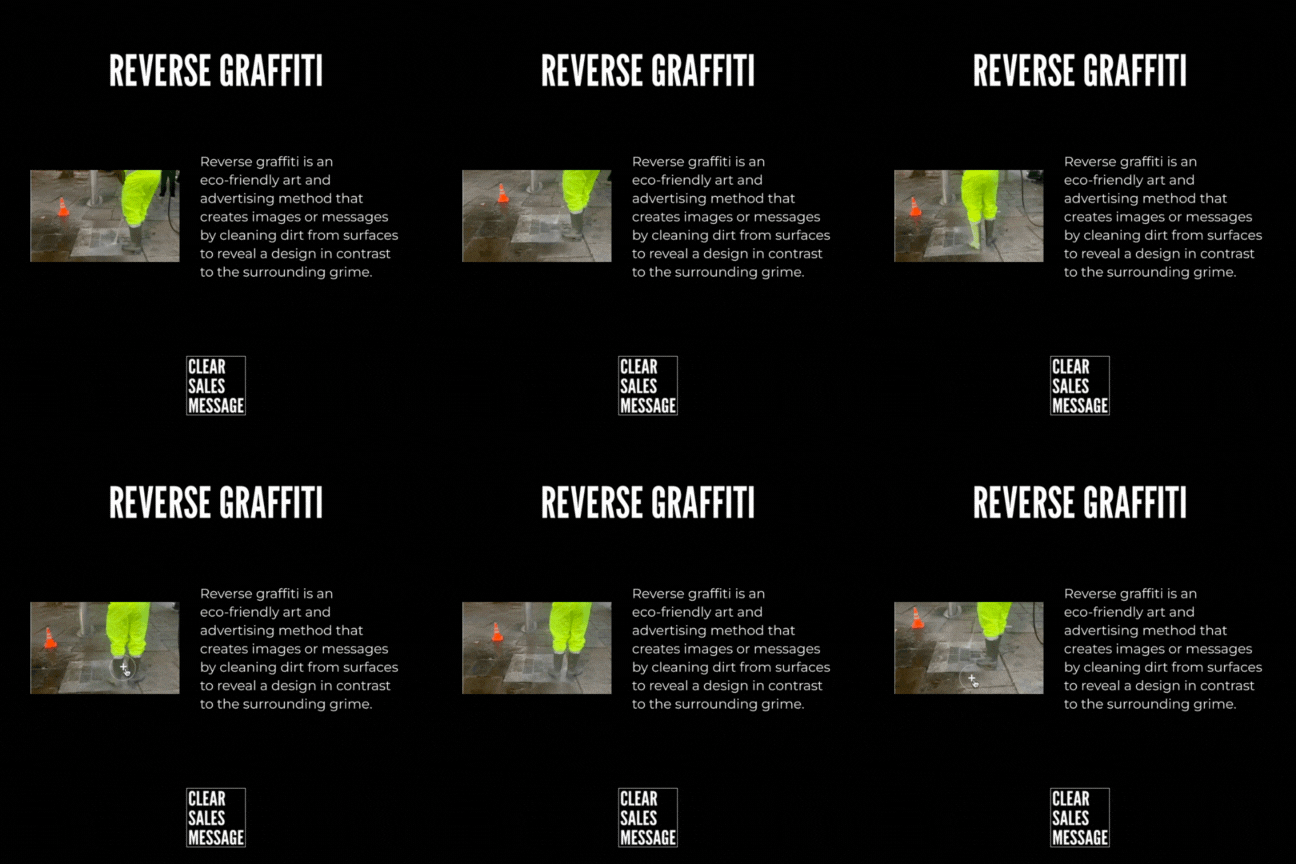
Reverse graffiti, also known as clean tagging or green graffiti, is a street art and advertising method. Instead of spraying paint onto a surface, you clean specific areas so your design appears as a contrast to the dirt around it.
The surface does the work. A dirty wall, a grimy pavement, or a dusty underpass becomes your canvas. The dirtier the surface, the sharper the result.
Because it involves no paint, ink, or added chemicals, it’s also one of the more eco-friendly ways to get your message seen in a public space.
Why Does Reverse Graffiti Work?
It works because it’s unexpected. People are trained to ignore posters and billboards. But a clean image pressure-washed into a dirty pavement? That stops them.
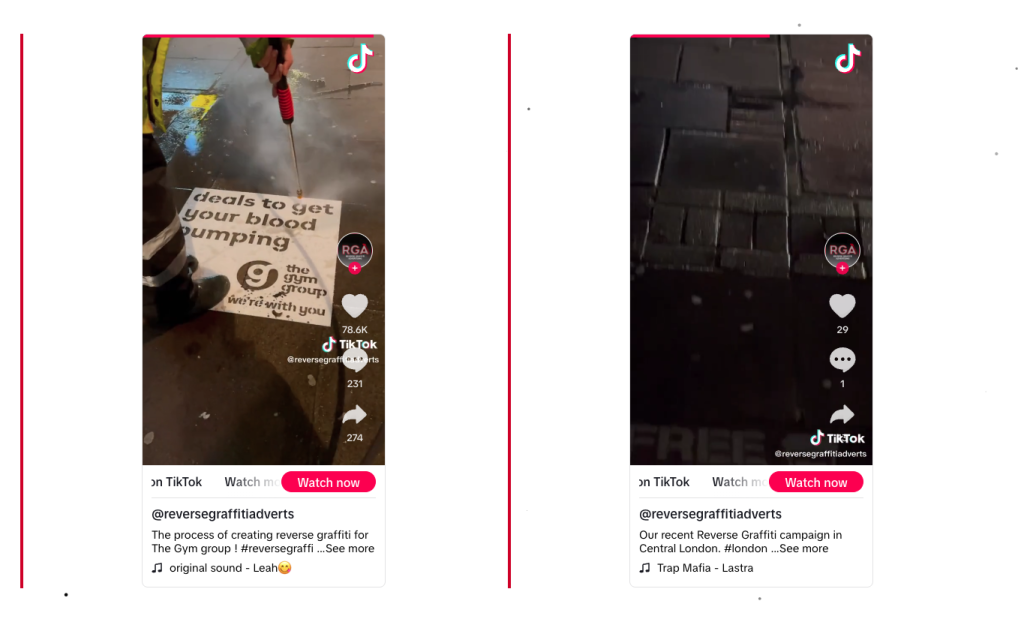
There’s also a curiosity factor. The technique itself is interesting, so people engage with it even before they read the message. In fact, the process of making it is often just as shareable as the result, as the TikTok videos below show.
Similarly, because it reads as an act of cleaning rather than advertising, it tends to feel less intrusive. Buyers are more open to a message that doesn’t feel like a hard sell.
How Can You Use Reverse Graffiti In Sales?
Brand Awareness
Place your logo, tagline, or web address on high-footfall pavements near your target audience. Because it’s temporary, you can rotate locations to keep it fresh.
Event Promotion
Advertise a launch, open day, or exhibition right where your audience walks. A message on the pavement outside a venue is hard to miss and even harder to forget.
Directional Signage
Guide people to your stand, shop, or event with arrows and symbols cleaned into the ground. It’s practical and on-brand at the same time.
Public Awareness
Share a message, safety notice, or campaign without adding waste. It’s a good fit for brands where sustainability is part of the story.
When Reverse Graffiti Works Best
It works best in urban areas with high foot traffic and genuinely dirty surfaces. Train stations, busy shopping streets, car parks, and building exteriors all work well. The dirtier the surface, the stronger the contrast, so the result looks more striking.
It also works best when the message is short and bold. This isn’t the place for a paragraph. A logo, a URL, a single line. That’s all you need.
Timing matters too. Because designs fade as surfaces get cleaned or worn, placing them ahead of a specific event or launch gives you maximum impact before they disappear.
When Reverse Graffiti Becomes Dangerous
The legal position varies by location. However, some councils and property owners still treat it as damage, even when no paint is involved. Always check before you go ahead.
It can also backfire if the surface is in a sensitive location. Cleaning a message into a historic building or a space people care about can feel disrespectful rather than clever.
And because it fades, you have no control over when it disappears. So if you need guaranteed longevity, this isn’t the right tool.
Common Reverse Graffiti Mistakes
Choosing the wrong surface
A clean surface gives you almost no contrast, so the design won’t show up. Check the surface before you cut a stencil. The dirtier, the better.
Making the message too complex
Intricate stencils are hard to cut and harder to clean accurately. Keep the design simple. Bold shapes and short text work best at street level.
Not checking permissions
Even though no paint is involved, some locations still require permission. Skipping this step can result in a fine or forced removal, which undermines the whole campaign.
Ignoring the process as content
The making of reverse graffiti is often more shareable than the finished result. Film it. Because the pressure washing process is visually compelling, it tends to perform well on social media.
Reverse Graffiti – An Example
The Gym Group used reverse graffiti to promote their gyms on busy pavements. A stencil was pressure-washed into dirty concrete, leaving a bold brand message that pedestrians walked past and stopped to look at.
Below you can see the process in action, and a campaign in Central London:
See also
- 100+ ways to seize buyer attention
- 100+ ways to be more memorable
- Stunt Marketing
- Projection Advertising