
Practical Sales Training™ > How People Work > Sell The Destination

Sell The Destination
Nobody wants to buy a keyring. But a lot of people want quiet, tidy keys that do not jangle around in their pocket. The product is the keyring. The destination is the feeling of having things under control.
Most sellers lead with the product. They describe what it is, what it does, and how it works. But buyers are not thinking about any of that. They are thinking about what they want to be different. They are focused on the destination.
When you lead with the destination, you speak the buyer’s language. You show them that you understand what they are trying to achieve. And that is the moment the conversation shifts from selling to connecting.
What Does Sell The Destination Mean?
Sell The Destination means leading your sales communication with the outcome, the end result, or the change the buyer is looking for, rather than with the details of what you offer. The destination is what the buyer wants to feel, have, or achieve. The journey is your product or service and how it works.
Most sales copy is written from the inside out. The seller knows their product well, so they describe it in detail. Features, specifications, processes, methodologies. But buyers do not care about any of that until they believe the outcome is worth having. So leading with the destination puts the most important thing first.
This is not about hiding what you sell. It is about sequencing. Lead with what the buyer cares about. Then, once they are engaged, show them how you deliver it.
Why Does Sell The Destination Work?
It works because buyers are naturally self-focused. They are thinking about their own needs, their own problems, and their own goals. When your message reflects that, it feels relevant. When it does not, it feels like noise.
There is also an attention economy at play. Buyers are busy and their attention is limited. A message that immediately speaks to what they want to achieve will earn more engagement than one that starts by explaining what you do. Because the destination is what the buyer is already thinking about, meeting them there is the fastest way to get heard.
Selling the destination also builds emotional engagement. Features are rational. Outcomes are emotional. A buyer who can picture the end state, who can feel what it would be like to have solved the problem, is far more motivated to act than one who has read a list of specifications. Because emotion drives decisions far more than logic does, the destination creates desire in a way that the journey rarely can.
Finally, it simplifies your message. When you lead with the outcome, you cut through the complexity of your offering and give the buyer one clear thing to focus on. That clarity makes your message easier to understand, easier to repeat, and easier to act on.
How Can You Sell The Destination In Sales?
Start every sales communication by asking what the buyer is trying to achieve. Not what you want to tell them, but what they want to be different. Here are the most effective ways to put this into practice.
Lead With the Outcome, Not the Offer
Open every message, email, or conversation with the destination rather than the product. Instead of “we offer a cloud-based project management tool,” try “your team will never miss a deadline again.” Because the buyer cares about missed deadlines far more than they care about the tool, leading with the problem and the destination grabs attention where the product description would not.
Ask What Success Looks Like
In any sales conversation, before you describe what you do, ask the buyer what they are trying to achieve. What would success look like to them? What would be different if the problem was solved? Because buyers are far more engaged when they have described their own destination, starting with their answer rather than your pitch creates a much stronger foundation for the conversation that follows.
Rewrite Your Headlines and Taglines
Look at your current marketing copy and ask whether each headline describes the product or the destination. If it describes the product, rewrite it around the outcome. “Fast broadband” is the journey. “Never buffer again” is the destination. Because the destination speaks to a feeling the buyer already has, it lands far harder than a product description.
Describe What Life Looks Like After
Paint a picture of the buyer’s world once the problem is solved. What are they no longer dealing with? What can they do that they could not before? How does it feel? Because the destination is a future state the buyer wants to reach, making it vivid and specific increases motivation to act. The clearer the picture, the more the buyer wants to get there.
Examples of Destinations to Sell
Destinations are not always about gaining something. Sometimes they are about removing something. Here are the main categories worth considering for your own offer.
- Feeling a certain way
- Not feeling a certain way
- Speeding something up to save time, money, or stress
- Removing something that causes time, money, or stress
- Accessing new chances or opportunities
- Improving what you already have to feel proud or more confident about it
When Sell The Destination Works Best
Sell The Destination works best when the outcome your buyer wants is emotionally meaningful. The stronger the desire for the end state, the more powerful the approach. Because the destination taps into what the buyer already wants, it works best when you know your buyer well enough to describe that destination accurately and specifically.
It also works well in crowded markets where many sellers offer similar things. When the product is the same, the destination is what sets you apart. Because buyers will choose the seller who best understands what they are trying to achieve, leading with the outcome creates a connection that a feature comparison cannot.
Similarly, it works well early in the sales process. When a buyer is still deciding whether to engage, a message about the destination gives them a reason to listen. The product details can come later. First, they need to believe that the outcome is worth pursuing.
When Sell The Destination Becomes Dangerous
The risk is promising a destination your product cannot deliver. If you lead with an outcome that sounds compelling but falls short in practice, buyers feel misled. Because the destination sets an expectation, failing to meet it causes more damage than a modest promise that was kept. So only sell destinations you can genuinely deliver.
There is also a risk of being too vague. “Feel more confident” or “save time” are destinations, but they are weak ones because they could apply to almost anything. The more specific the destination, the stronger the message. So push for precision. What exactly changes? By how much? In what situation?
Common Sell The Destination Mistakes
Leading With the Product
The most common mistake is opening with what you sell rather than what the buyer gets. This happens because sellers know their product well and want to explain it. But the buyer is not ready to hear about the product yet. They need to care about the destination first. So flip the order. Destination first, product second. Every time.
Describing a Generic Destination
A vague destination creates no desire. “Better results” or “improved performance” are not destinations. They are category headings. Get specific. “Cut your monthly admin from six hours to one” is a destination. “Arrive at every meeting looking prepared” is a destination. Because specificity makes the outcome feel real and achievable, it creates far more motivation than a broad promise.
Forgetting to Connect the Destination to the Offer
Leading with the destination is the opening move. But you still need to show the buyer how you get them there. Some sellers focus so much on the outcome that they never make the connection clear. Because the buyer also needs to believe your product can actually deliver the destination, do not skip the link between the two. Lead with the destination, then show the route.
Using the Same Destination for Every Buyer
Different buyers want different destinations, even when buying the same product. A buyer focused on saving time needs to hear a different message from one focused on reducing risk. So listen before you pitch. Because the right destination for one buyer may mean nothing to another, tailor the outcome you lead with to the person in front of you.
Sell The Destination – An Example
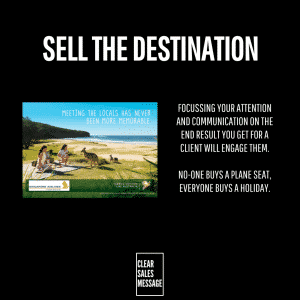
This ad does not ask you whether you want to buy a key organiser. Instead, it leads with the problem the buyer already feels and the outcome they want. The product is how they get there. But the destination is what earns the attention.

Because the message leads with something the buyer already wants to be rid of, it speaks directly to the destination rather than the product. That is the whole principle in one headline. Lead with where the buyer wants to go. Let the product be the route that gets them there.
See Also