
Practical Sales Training™ > How To Convert > Strategic Partnerships

Strategic Partnerships
Some of the best new business does not come from cold outreach. Instead, it comes from a warm introduction by someone your buyer already trusts. Strategic Partnerships make that happen by design.
The idea is simple. Find a business whose clients overlap with yours, then agree on a way to share that audience. Both sides win, and so do the buyers who get introduced to something useful at exactly the right moment.
A Strategic Partnership is an agreement between two complementary businesses. They share exposure, referrals, or audience access for mutual benefit.
What Are Strategic Partnerships?
Think about what happens before, during, or after a buyer uses your product or service. Which other businesses do they rely on at that same stage? A buyer who needs your offer likely needs those other things too. That connection is also where a Strategic Partnership starts.
When a partner recommends you, the trust they have built with their audience transfers to you. That is the key mechanism. A cold introduction from a stranger carries little weight. But a recommendation from a trusted supplier carries a great deal.
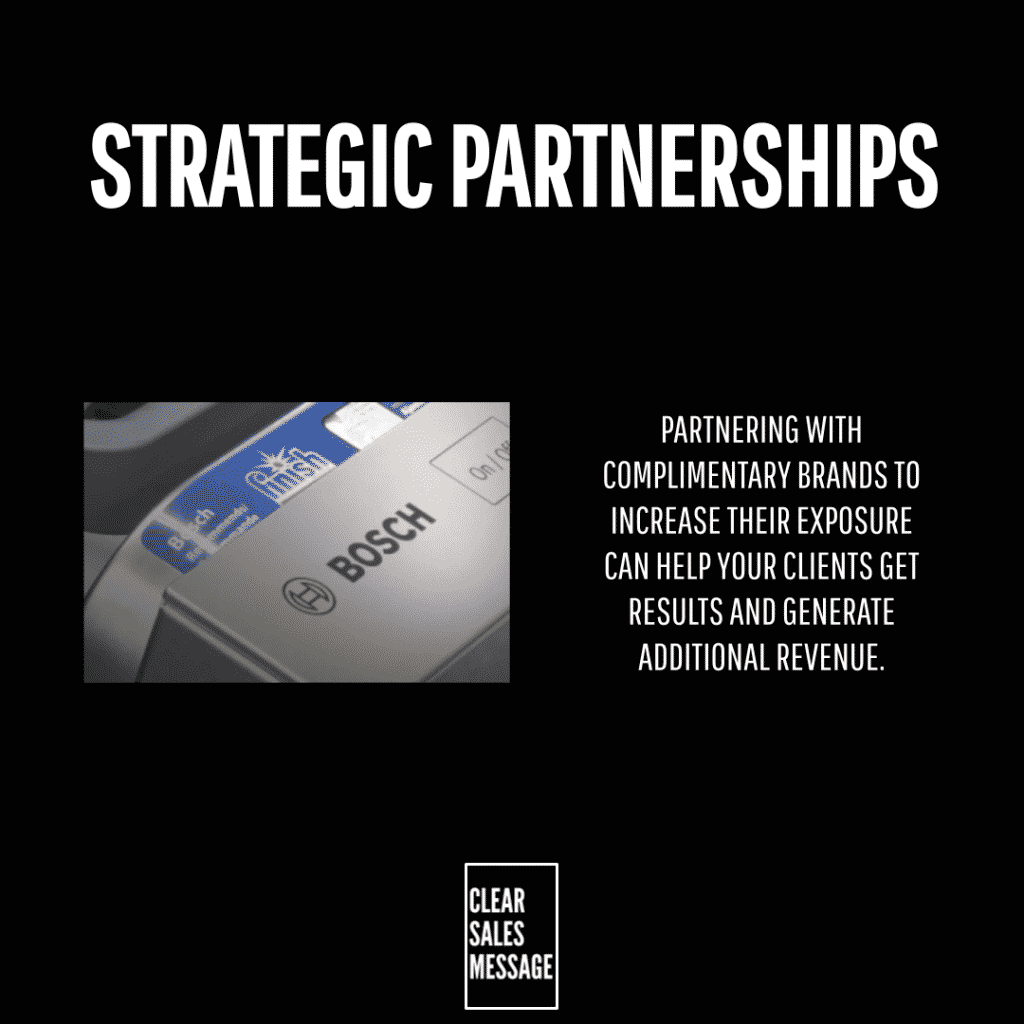
There is also a timing advantage. A good Strategic Partnership puts you in front of a buyer at exactly the right moment. My dishwasher has a Finish logo on the inside of the door. So every time I load it, I see the brand. Finish have paid for that placement. Because the product needs Finish to work well, the timing is perfect. That is not random advertising. It is well-timed exposure to the right audience, in the right context.
Why Do Strategic Partnerships Work?
Cold advertising puts your message in front of people who may or may not care right now. A Strategic Partnership puts it in front of people who are already in the buying mindset for something closely related. Because the context does the qualifying work, the introduction lands far more effectively.
There is also a credibility transfer. When a business your buyer already trusts recommends you, some of that trust moves to you before the buyer has even looked at your offer. That is worth far more than any amount of paid reach because it removes the first layer of doubt instantly.
You do not always need to pay for a partnership. Many work on a simple exchange of value. One business refers clients to the other, and they return the favour. No money changes hands. Both audiences benefit too.
How Can You Use Strategic Partnerships In Sales?
Start by listing your clients and what else they buy. Think about the full picture of their needs, not just the part you cover. Then identify businesses that serve those other needs well. The best partners serve the same audience without competing with you directly.
Find the Right Overlap
Look for businesses where the audience fit is obvious. A gym and a health food store. A solicitor and a removal firm. A web designer and a copywriter. When the client of one is a natural prospect for the other, the referral feels like a useful suggestion rather than a sales pitch. Because buyers expect their trusted suppliers to know good people, a well-matched introduction lands well.
Lead With the Mutual Benefit
Once you have a target in mind, the approach matters. Lead with what their clients gain, not just what you gain. They weigh the risk to their name as much as the upside. So make it easy to say yes. Bring a clear idea of how the arrangement could work, and be ready to adjust it based on what matters most to them.
Agree on a Simple Structure
Keep the arrangement clear and easy to act on. A discount voucher, a welcome pack, a warm email introduction, or a direct referral all work well. The simpler the mechanism, the more likely both sides are to use it. Complexity kills partnerships before they start.
When Strategic Partnerships Work Best
Strategic Partnerships work best when the audiences genuinely overlap and the timing is right. Finish and dishwasher brands share an obvious audience. A gym and a health food store share the same type of buyer. The closer the fit, the more naturally the referral lands.
They also work well when one partner has a natural trigger point in the buyer relationship. A solicitor handling a house sale can naturally refer a removal firm. Similarly, a personal trainer finishing a programme can suggest a nutritionist. Because the need follows naturally from the moment, the introduction feels helpful, not forced.
They also work well for businesses that rely on trust and recommendation rather than high-volume advertising. Professional services, local businesses, and high-ticket offers all benefit because a warm introduction often outperforms a hundred cold contacts.
When Strategic Partnerships Become Dangerous
The main risk is a poor audience fit. If the partner’s clients are not really your buyers, referrals will be weak or will not convert. So do your homework before you commit. A bad partnership also wastes the goodwill you have built with your own clients if the referral feels irrelevant.
There is also a risk of imbalance. If one side generates far more referrals than the other, the deal will not last. Build in a way to measure the flow of introductions. Both sides need to feel the value, so review the arrangement regularly.
Common Strategic Partnership Mistakes
Treating It as a One-Off Deal
The most common mistake is agreeing a partnership and then forgetting about it. Partnerships need energy to stay alive. Stay in touch with your partner and share updates. When nobody nurtures it, a partnership quickly goes quiet. Set a regular check-in so neither side lets it drift.
Partnering With a Business You Cannot Vouch For
A second error is partnering with a business whose quality you cannot vouch for. If you refer clients to a partner and they let them down, you take some of the blame. So only partner with businesses you would happily recommend to your best clients, because at some point you will.
Making the Mechanism Too Complicated
A partnership that requires too many steps to activate rarely gets used. Keep it simple enough that both sides can act on it without thinking too hard. When the process is effortless, referrals happen naturally and regularly rather than as an occasional effort.
Strategic Partnerships – An Example
A gym forms an agreement with a local health food store. New gym members get a welcome pack with a discount for the store. Store customers, in turn, get a free day pass to the gym. Both businesses serve the same type of buyer and both make a useful introduction at the right moment.
The gym gains potential new members. New buyers also walk through the store’s door. Neither had to spend money on cold advertising to reach them.
That is the logic of a Strategic Partnership. Find the overlap. Agree on the exchange. Get in front of the right buyer at the right time, with a warm introduction already in place.
See Also