
Practical Sales Training™ > How To Connect With Your Buyer > The Anticipation Effect

The Anticipation Effect
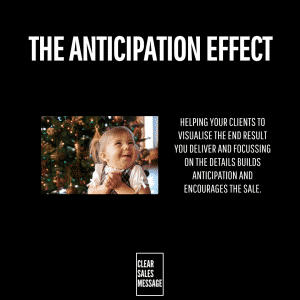
People do not buy products. They buy outcomes – the feeling of having achieved something or solved something. The Anticipation Effect uses that truth to move buyers forward.
When you help a buyer picture what success will look and feel like, something shifts. They stop evaluating your offer and start wanting the result it represents. That shift is one of the most powerful things you can create in a sales conversation.
The Anticipation Effect means helping buyers focus on the end result. You paint a vivid picture of how things will look once they have got what they are after.
What Is The Anticipation Effect?
Buyers are outcome-focused. They do not care about your process, your method, or your credentials. What they want is to know what life looks like on the other side. When you direct their attention to that outcome and make it feel close, the desire to get there grows.
There is also a pull that comes from anticipation itself. The feeling of being on the way to something you want is a reward in its own right. So when you create genuine anticipation around a result, buyers start to feel good before they have even bought. That positive feeling becomes linked to you and your offer.
It also works at a transactional level. Tell a buyer they are close to a reward. Free shipping, a bonus, a threshold. That creates a pull towards the final step. The gap feels small. Closing it feels satisfying.
Why Does The Anticipation Effect Work?
Buyers make decisions with emotion and justify them with logic. When a buyer can feel what the outcome will be like, they have already started the emotional journey of getting there. That emotional investment makes the logical case for buying feel straightforward, not effortful.
Anticipation is also a form of ownership. Research shows that when people vividly imagine having something, they begin to feel attached to it before they have bought it. Because the imagined version of the outcome feels almost real, giving it up feels like a loss. And buyers go a long way to avoid a loss.
It also works because the brain cannot easily distinguish between a vivid imagined experience and a real one. When you paint the destination in rich detail, the buyer’s brain starts processing it as real. That creates a genuine emotional pull towards making it happen.
How Can You Use The Anticipation Effect?
Use it in sales conversations. In an early conversation with a potential buyer, ask questions that get them to paint the picture themselves. What would the perfect outcome look like? How will we know we have succeeded? When they say it out loud, their commitment to it deepens.
Reflect It Back
Once a buyer has described their ideal outcome, use their language to show how your offer gets them there. Sell the destination, not the journey. Do not talk about what you will do. Talk about what it will be like when it is done. That shift in framing changes everything.
Use It in Your Copy
In an email, on a landing page, in a proposal. Start with the outcome. Show the buyer what they will have, how they will feel, what others will notice. Make the result feel vivid and close. Then explain how your offer delivers it. Lead with where they are going, not how you will get them there.
Use Milestones and Thresholds
Progress bars, loyalty thresholds, and distance-to-reward mechanics all use the Anticipation Effect. When a buyer can see how close they are to something good, the pull to close that gap is strong. Because the reward feels almost within reach, the next step feels easy.
When The Anticipation Effect Works Best
The Anticipation Effect works best when the buyer already wants to solve the problem. Something needs to change. They just have not committed to a direction yet. When you paint the destination clearly, you give them a reason to move. The anticipation becomes the motivation.
It also works well in subscription or repeat purchase contexts. When a buyer knows something good gets closer with each purchase or renewal, anticipation drives continued engagement. Free shipping thresholds, loyalty rewards, progress bars. Each one is the Anticipation Effect in its most simple form.
It is also particularly effective at the proposal stage. When a buyer is weighing up options, the one that makes the destination feel most real and most appealing wins. So rather than defending your price or your process, describe the outcome in vivid terms. Let them feel it before they choose.
When The Anticipation Effect Becomes Dangerous
The main risk is overpromising. When you paint such a vivid picture that the real result cannot match it, trust collapses. The Anticipation Effect only works when the excitement it creates is honest. Build genuine anticipation around a real result, not a fantasy version of one.
There is also a risk of relying on anticipation as a substitute for substance. If the product or service is weak, no amount of vivid outcome painting will save it long term. Buyers who experience high anticipation and then feel let down feel the gap even more sharply. Use this effect to amplify a good offer, not to dress up a poor one.
Common Anticipation Effect Mistakes
Selling the Journey Instead of the Destination
The most common mistake is selling the process rather than the destination. We use a five-step method. Our team works closely with you. We have a proven system. None of that answers the buyer’s real question: what will my life look like when this is done? Lead with the destination. The journey can follow.
Ignoring the Answers to Outcome Questions
A second mistake is asking outcome questions and then moving on without using the answers. When a buyer describes what success looks like, they hand you the most important thing in the conversation. Write it down. Reflect it back. Make it the centre of everything that follows.
Creating Anticipation Around the Wrong Thing
A third mistake is building anticipation around a feature rather than a benefit. Getting excited about a new module or a platform update is not the same as making a buyer feel the outcome they care about. Always anchor the anticipation to the result the buyer wants, not the thing you are releasing.
The Anticipation Effect – An Example
The Hydro website shows a bar at the top of the page: only £17.01 away from free shipping. That one line creates a real pull. The buyer knows what is at stake. Closing that gap feels almost compulsory. Amazon does something similar with a countdown timer: order in the next few minutes for delivery tomorrow. Both are the Anticipation Effect – creating a feeling that something good is close and that one small action will get you there.

The destination is what sells. Make it clear, make it vivid, and make it feel close.
See Also