Practical Sales Training™ > How To Keep Your Clients Happy > The Disclaimer Effect

The Disclaimer Effect
What Is It
The disclaimer effect is what happens when you openly say what your product, service or advice can’t do. Instead of only listing the good bits, you name a limit or a condition out loud.
It sounds like it would scare people off. It usually does the opposite. A buyer who hears a limitation trusts the claims that come with it far more than a pitch with no downsides at all.
Why Does It Work
Nobody believes perfection. Every product has a weak point, and buyers know it. So when a business hides every flaw, people assume there’s more being hidden than shown.
A disclaimer breaks that pattern. It signals you’re not just selling. You’re being straight with them. That honesty becomes proof, and proof is worth more than polish.
How Can You Use It
Name A Real Limitation
Pick something true, not invented. Maybe your product isn’t right for beginners, or your service takes longer than a rushed competitor. Say it plainly instead of burying it in small print.
Place It Near Your Strongest Claim
A disclaimer works best sitting right next to your boldest promise. The contrast makes the promise feel earned instead of assumed. Readers notice the honesty first, then trust the claim that follows it.
Keep The Tone Matter Of Fact
Don’t apologise for the limitation. State it plainly, the same way you’d state a fact. Confidence in how you say it matters as much as what you’re actually admitting.
When It Works Best
This works best when trust is the main thing standing between a buyer and a purchase. High ticket sales, services, and anything where past experience has made people wary of overblown claims all benefit from it.
When It Becomes Dangerous
A disclaimer becomes a problem the moment it hides a real risk instead of a minor limit. If the thing you’re brushing past could actually hurt the buyer, that’s not honesty. That’s cover.
It also fails if you list so many limitations that the pitch collapses under its own caution. One clear admission builds trust. Ten vague ones just sound like doubt.
Common Mistakes
Burying It In Legal Language
A disclaimer written in dense legal wording loses the trust benefit completely. Nobody reads it, and nobody feels the honesty behind it. Say it in plain words instead, where a real person will actually take it in.
Using A Fake Weakness
“Our only flaw is that we care too much” isn’t a disclaimer. It’s a boast in disguise, and buyers spot it instantly. A real disclaimer names something that actually costs you something.
Skipping It Because It Feels Risky
Leaving out every limitation might feel safer, but it isn’t. A pitch with zero downsides reads as suspicious to a sharp buyer. Naming one honestly is usually the safer move.
The Disclaimer Effect – An Example
A Book’s Opening Disclaimer
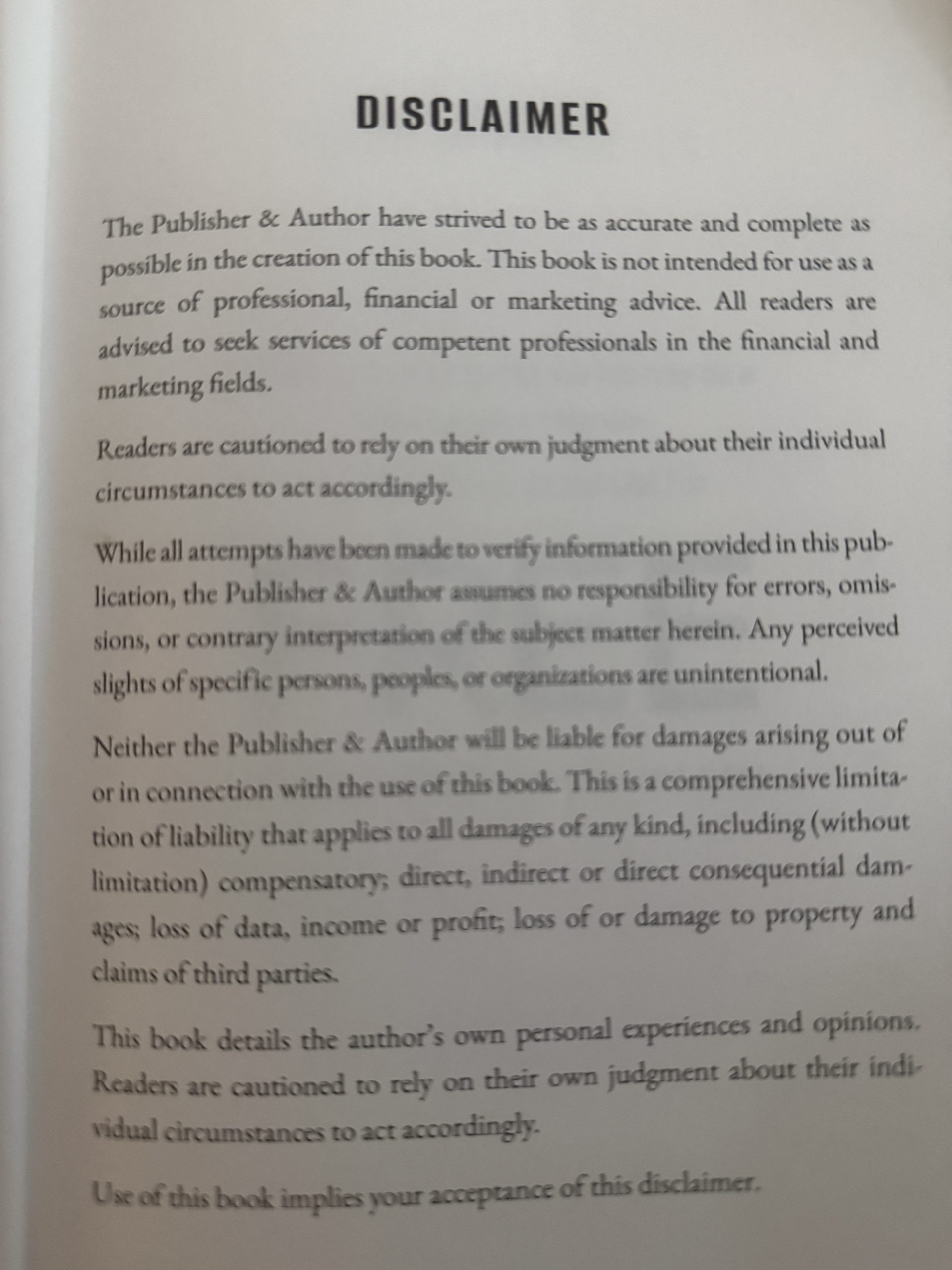
Open the front pages of a business book and you’ll often find a disclaimer before the first chapter even starts. It states plainly that the book reflects personal experience and opinion, and that readers should use their own judgement rather than treat it as guaranteed advice.
That page could easily put a reader off. Instead it does the opposite. By admitting the book won’t work the same for everyone, the author earns more trust in every chapter that follows. The reader assumes the rest of the content is just as straight with them.
See Also