
Practical Sales Training™ > How People Work > The Impulse Effect

The Impulse Effect
What Is It?
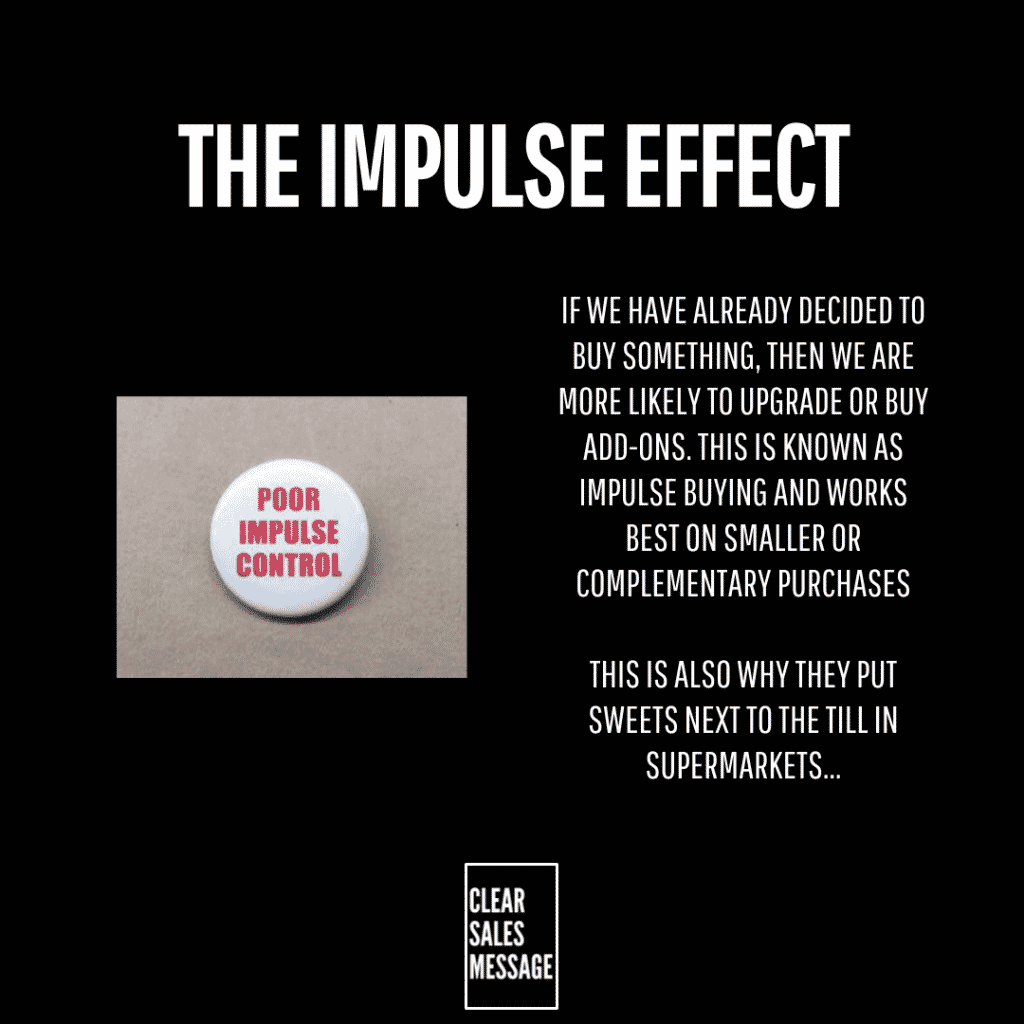
Once someone decides to buy, they’re primed. So a small add-on gets an easier yes than it would on its own.
That’s why supermarkets put sweets next to the till. If you’re already spending £50 on petrol, a 50p Twix isn’t much of a decision. It’s a tiny add-on next to the big one you just made.
Why Does It Work?
Once we commit to buying, our guard drops. So the next decision feels smaller, even when it isn’t.
Buying can also give us a quick dopamine hit. That hit makes the bigger purchase feel better too. We start telling ourselves, “I’m already spending X, so Y won’t make much difference.”
This works best on buyers who chase pleasure or fear missing out. Like most of us, emotion drives them more than logic ever does.
How Can You Use It?
Find The Natural Add-On
Look at what naturally sits alongside your main offer. It could be an accessory, an upgrade or a small extra that fits the purchase your buyer is already making.
Offer It At The Right Moment
Timing matters here. So offer the add-on right after commitment, at the point of sale, not before. That’s the moment your buyer feels most primed to say yes again.
Keep It Genuinely Small
The add-on needs to feel minor next to the main purchase. So price it and frame it that way. A £40 add-on feels easy against a £400 sale. The same £40 feels steep against a £50 one.
When It Works Best
This works best right after a buyer commits to something bigger. That moment of momentum fades fast, so use it while it’s there.
It also works well with genuinely complementary items, like a frame for a photo or a case for a phone. The add-on should feel like it belongs, not like you bolted it on.
When It Becomes Dangerous
The risk is stacking too many add-ons at once. One easy yes feels fine. Five in a row starts to feel like pressure, not convenience.
It also backfires when the add-on doesn’t add real value. Buyers remember being upsold something they didn’t need, and that memory outlasts the extra sale.
Used well, this feels helpful. Used badly, it feels like a trap instead.
Common Mistakes
Offering Too Many Add-Ons
Stacking extras at checkout overwhelms the buyer fast. So keep it to one or two strong options, not a long list.
Pricing It Too High
An add-on only works if it feels small next to the main purchase. Get the price wrong, and it stops feeling like an easy yes.
Offering Something Irrelevant
If the add-on doesn’t connect to the purchase, it feels random. So buyers say yes far less often to something that feels bolted on.
The Impulse Effect – An Example
The Photography Upgrade
A photographer sells a £400 family photo shoot. At checkout, they offer a framed print for £40 or a USB of all the edited images for £25.
The buyer has already committed to the big number. So £40 feels minor by comparison, especially once it adds real emotional or practical value.
They frame it as an easy extra, not a hard sell. That framing makes the difference. The same offer made before the main sale would land completely differently.
The price didn’t change the psychology here. The timing did.
See also
- The Treat Effect
- 50+ ways that people work & make decisions
- 100+ ways to get your buyer to take action