
Practical Sales Training™ > How To Convert > The Loyalty Effect

The Loyalty Effect
What Is It?
The Loyalty Effect uses points and rewards to shape buyer behaviour. So the more someone buys, the more they get back.
It’s a simple idea. But it works because of how we’re wired.
Why Does It Work?
We repeat behaviour that gets rewarded. So when loyalty to a brand pays off, we keep coming back to that brand.
This isn’t complicated psychology. It’s just how habits form.
So a loyalty scheme isn’t really rewarding the purchase itself. It’s rewarding the choice to buy from you again, instead of somewhere else.
How Can You Use It?
Pick A Simple Mechanic
Start with something easy to understand. A stamp card, a points system or a simple discount after so many purchases all work well. So don’t overcomplicate the mechanic before you’ve even launched it.
Make The Reward Worth Chasing
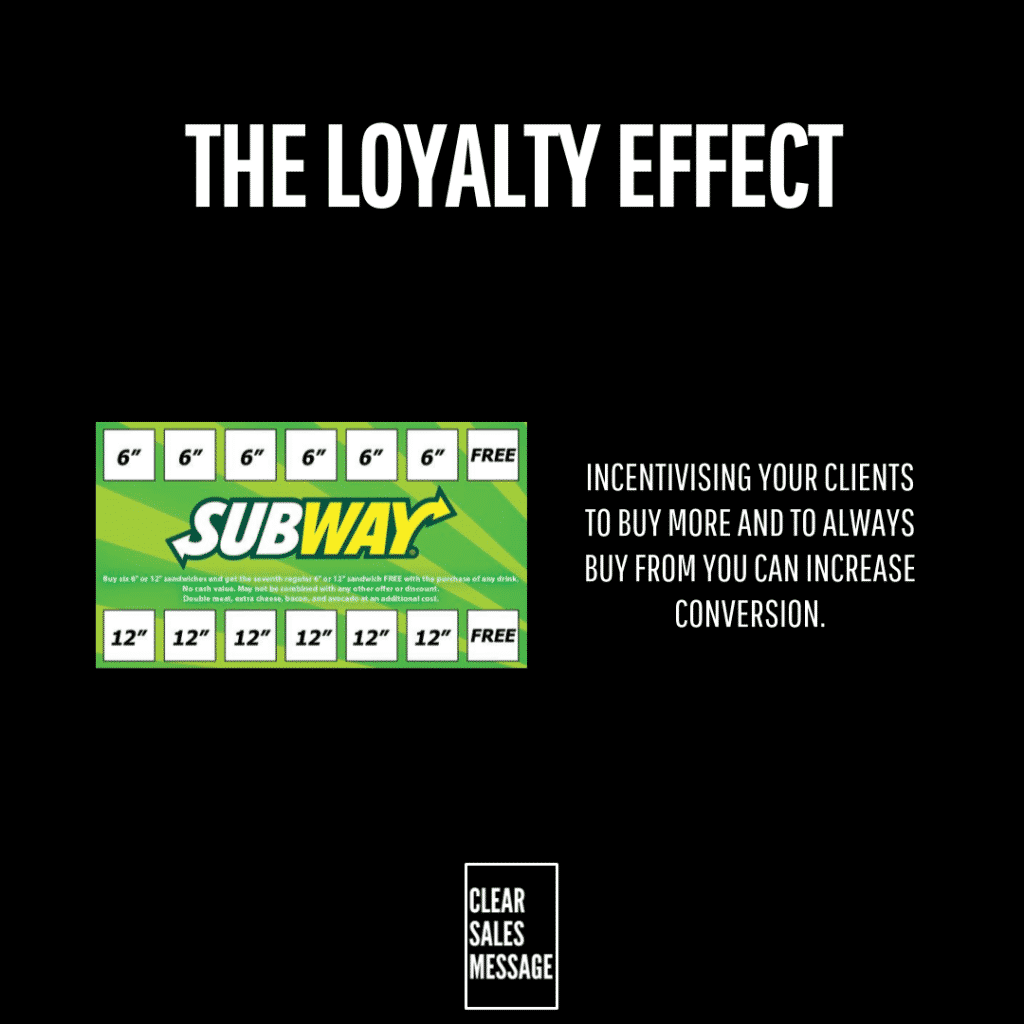
The reward needs to feel worth the effort. So a free coffee after nine purchases works, since the value is clear and the finish line is close enough to matter.
Make Progress Visible
Show the buyer exactly how close they are to the reward. A visible stamp card or points tracker keeps the goal in view. So the closer they get, the harder it is to walk away and start again somewhere else.
When It Works Best
This works best for businesses with frequent, repeat purchases. Coffee shops, gyms and subscription services all fit naturally here.
It also works well when rivals sit close by. So a loyalty scheme gives buyers a real reason to stay, even when a nearer option exists.
When It Becomes Dangerous
The risk is making the reward too small or too far away. If it feels pointless, buyers stop tracking it at all.
An overly complicated scheme causes a similar problem. So if buyers can’t understand the rules instantly, they won’t bother engaging with it.
Used well, this builds real habit and loyalty. Used poorly, it just becomes background noise nobody follows.
Common Mistakes
Setting The Reward Too Far Away
If the reward takes too long to reach, buyers lose interest early. So keep the first milestone close and achievable.
Overcomplicating The Rules
A scheme with confusing tiers or conditions gets ignored fast. So keep the mechanic simple enough to explain in one sentence.
Hiding The Progress
If buyers can’t easily see how close they are, the pull weakens. So make progress visible at every single visit.
The Loyalty Effect – An Example
The Coffee Shop Stamp Card
A local coffee shop gives customers a stamp card: “Buy 9 coffees, get your 10th free.” Every purchase earns a stamp.
Some customers go out of their way to return, even when a closer café sits just down the road. So the reward pulls harder than convenience does.
The buyer feels their loyalty is building toward something real. That taps straight into our desire for progress, since watching a card fill up feels genuinely satisfying.
This same idea scales beyond a paper card too. Digital points, tiered rewards or exclusive perks after a set number of purchases all work on the exact same principle.
See also
- Retention discount
- Ascending Loyalty Reward
- 180+ ways to improve conversion
- 100+ ways to differentiate