Practical Sales Training™ > How People Work > The Perfection Paradox

The Perfection Paradox
What Is It
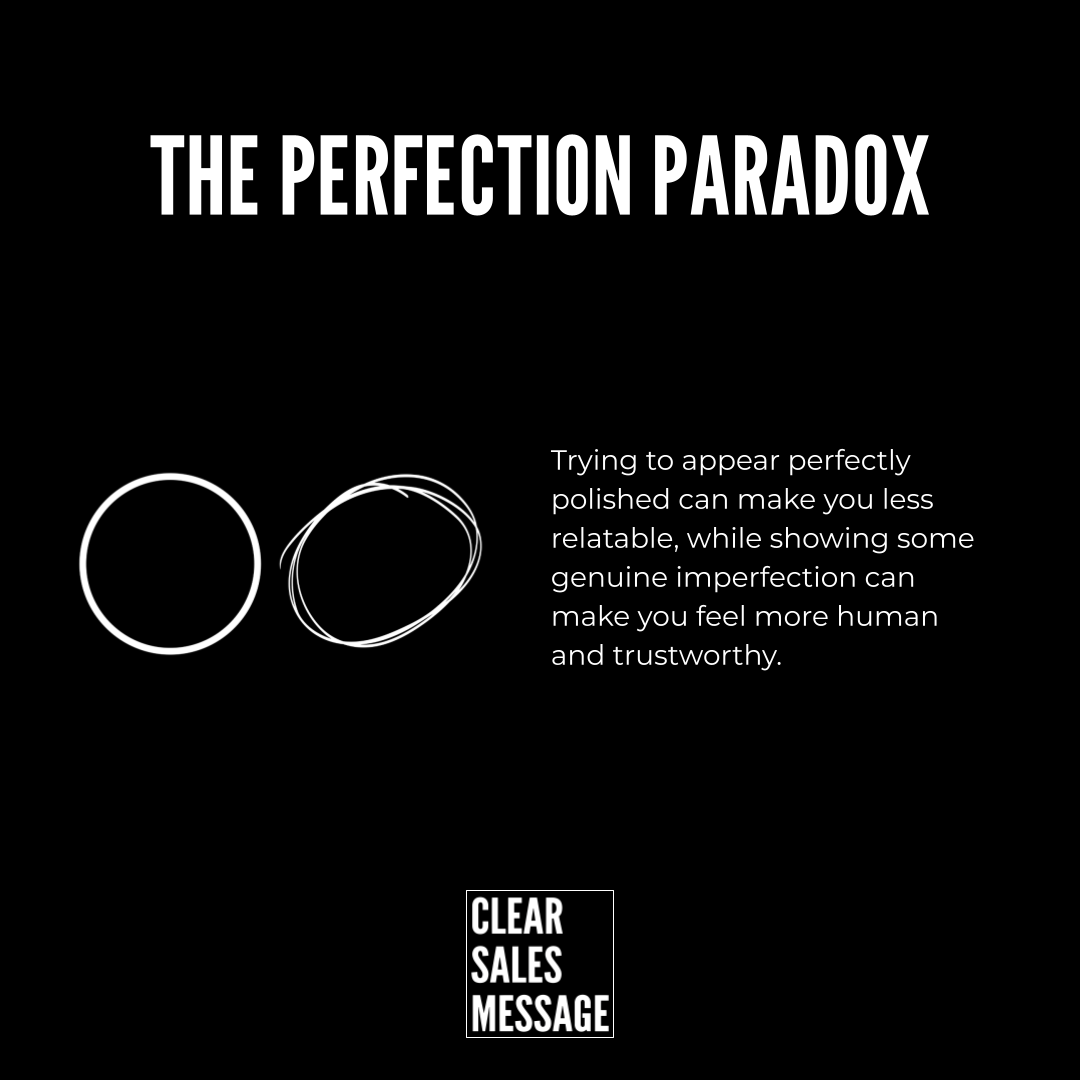
The perfection paradox is simple. The more flawless you try to look, the less real you feel to other people. A small crack in the polish often does more for trust than the polish itself.
This isn’t an excuse to be sloppy. It’s about the gap between “perfect” and “genuine.” Buyers can sense staged perfection, and it quietly puts them on guard rather than winning them over.
Why Does It Work
Nobody actually believes in perfect. So when something looks flawless, part of the brain assumes it’s been manufactured rather than earned. That assumption creates distance instead of connection.
A small flaw breaks that suspicion. It feels human, and human feels honest. So the imperfection actually does more selling than the polish ever could, because it removes the doubt sitting underneath the pitch.
How Can You Use It
Leave One Small Rough Edge
A slightly imperfect line in your copy, a photo that isn’t fully staged, or a video with a small stumble left in. These tiny details tell people what they’re seeing is real rather than produced.
Show The Process, Not Just The Result
A finished, polished result on its own can feel unreachable. Show a bit of the messy middle too, the drafts, the mistakes, the version two. It makes the final result feel earned rather than handed down.
Admit A Small Weakness Deliberately
Mention something genuinely true that isn’t your strongest point. It doesn’t need to be a big flaw. Even a minor one signals honesty, and honesty is what buyers are actually looking for underneath the pitch.
When It Works Best
This works best in personal brands, service businesses, and anywhere trust matters more than specs. Buyers deciding whether to trust a person, not just a product, respond strongly to this.
When It Becomes Dangerous
Faking imperfection is easy to spot and worse than looking too polished in the first place. A staged flaw reads as manipulation the moment someone notices it wasn’t real.
It also fails if the flaw undermines something buyers actually need to trust, like safety or competence. Small and human works. Careless and risky doesn’t.
Common Mistakes
Faking The Flaw
A manufactured imperfection almost always looks manufactured. If it’s not genuinely true, leave it out rather than risk being caught staging honesty.
Choosing The Wrong Flaw To Show
Not every imperfection builds trust. A flaw that touches on safety, reliability, or core competence damages you instead of humanising you. Pick something small and harmless.
Overdoing It
One genuine imperfection feels human. Five feels careless. Keep it small and occasional, not scattered across everything you put out.
The Perfection Paradox – An Example
“We Try Harder”
Avis built one of the most famous ad campaigns in history around a single admission. It wasn’t the biggest car rental company. It was number two, and it said so out loud instead of hiding it.
That one honest weakness became the whole pitch. Being second meant Avis had to work harder to earn each customer, and buyers believed that far more than they’d have believed a claim to be the best. The flaw did the selling that a boast never could have managed.
See Also