Practical Sales Training™ > Selling Communication Basics > The Time To Make Effect

The Time To Make Effect
Buyers rarely have perfect information. They can’t always test a product before buying, audit a methodology before hiring, or verify a claim before trusting it. So instead, they look for signals – and time is one of the most powerful ones available.
When something took years to build, people assume care went into it. They assume problems got solved, edges got smoothed, and lessons got learned. That assumption often forms before the product is ever evaluated on its own merits.
Most sellers focus on what their product does. But how long it took to get there can be just as persuasive – sometimes more so.
What Is The Time To Make Effect?
The Time To Make Effect describes how people interpret development time as evidence of quality, expertise, and care. When buyers learn that a product, system, or method took years to build, they tend to assume that real thought, testing, and refinement went into it.
The time investment itself becomes a credibility signal. Consider these examples:
- A watchmaker describing a movement developed over ten years
- A chef explaining a recipe refined across decades
- A founder saying their framework took eight years to develop
- A software platform built through years of iteration and user feedback
In each case, the time involved suggests care, learning, and improvement. So even before the buyer looks at the product closely, the development time shapes how they feel about its value.
Why Does The Time To Make Effect Work?
Psychological research shows that people use effort and time as shortcuts for judging quality. This is known as the effort heuristic – the assumption that things requiring more time or effort to produce are more valuable or better made.
Source: Effort Heuristic – Cognitive Bias Research
It works because buyers can’t always evaluate quality directly. So when they can’t judge the thing itself, they judge the conditions it grew from. Long development time signals that problems were found and fixed, that knowledge built up, and that the idea got tested against reality – not just theory.
In contrast, something that appears to have appeared quickly can feel less reliable. Even if the product is strong, the perceived lack of development time reduces confidence. That’s why sharing how long something took isn’t just background information – it’s part of the credibility story.
How Can You Use The Time To Make Effect In Sales?
The technique works best when the development story is real and specific. So look for the genuine history behind what you sell – and find natural ways to bring it into how you talk about it.
Share the development journey
Instead of presenting a product or system as something that simply exists, explain how it got there. For example: “This framework has been developed and refined over eight years working with more than 500 B2B founders.” That one sentence communicates both experience and iteration – and it does so without a single claim about quality.
Show the process of refinement
Buyers trust ideas that got better over time. So explain how the product changed, evolved, or improved – not just where it ended up. For example: “This approach started as a simple checklist but has been refined through hundreds of real sales conversations.” Because that kind of history signals real-world testing, not just theory.
Highlight accumulated experience
If your expertise took years to build, say so clearly. Time signals that the insight came from doing, not just thinking. However, keep it specific – “years of experience” on its own is vague. “Eight years and 500 clients” is not. The more concrete the detail, the more credible the claim.
Use time as evidence, not exaggeration
The Time To Make Effect works best when the development story is authentic. Stretching timelines damages trust – especially if a buyer digs in and the numbers don’t add up. Real experience is far more persuasive than inflated history. So be accurate, be specific, and let the truth do the work.
When The Time To Make Effect Works Best
It works best when the buyer can’t easily judge quality on their own. That tends to happen with complex services, expert-led methods, proprietary frameworks, or high-value products where the difference between good and great isn’t obvious from the outside.
It also helps when price needs justifying. Because when a buyer understands the depth of development behind something, a higher price starts to feel reasonable rather than arbitrary. In fact, time is one of the few signals that can shift perceived value without changing the product at all.
When The Time To Make Effect Becomes Dangerous
It fails when the development time gets exaggerated or can’t be backed up. Buyers who sense inflation don’t just discount the claim – they discount everything else you say. So only use development time as a signal when the story is real.
It’s also less useful when speed is the selling point. In some markets, fast development signals agility and innovation rather than quality. So read the context. A buyer who values rapid iteration may see a long development timeline as a red flag, not a badge of honour.
Similarly, don’t lead with time if the development history is weak. A product built in three months can still be excellent. However, in that case, other signals – client results, testing volume, expert input – will do more work than development time.
Common Time To Make Effect Mistakes
Being vague about the timeline
“Years of experience” or “a long time in development” tells the buyer almost nothing. The effect comes from specific numbers – how many years, how many clients, how many iterations. Therefore, pin it down. Vague time claims read as filler. Specific ones read as proof.
Mentioning time without explaining what it produced
Saying something took ten years to build is only half the story. The buyer also needs to understand what that time produced – what got solved, what changed, what got better. So pair the timeline with the outcome. For example: “Ten years of development means the edge cases are already handled.”
Exaggerating or inflating the history
This is the fastest way to destroy the effect. Because buyers who feel misled don’t just lose trust in the claim – they lose trust in the seller. As a result, stick to what’s true and let the real story do the work. Honest development history is always more persuasive than an inflated one.
Burying the development story
Many sellers have a strong development history but never mention it – because it feels like background detail rather than a selling point. However, it isn’t background. It’s evidence. So bring it forward. Put it in the intro, the proposal, the pitch. The buyer needs to hear it early, not find it buried in an about page.
The Time To Make Effect – An Example
Parmigiano Reggiano ages for a minimum of 12 months – and often 24 to 36 months. That ageing time appears on the packaging as a mark of quality. The longer the maturation period, the more valuable and desirable the cheese becomes.
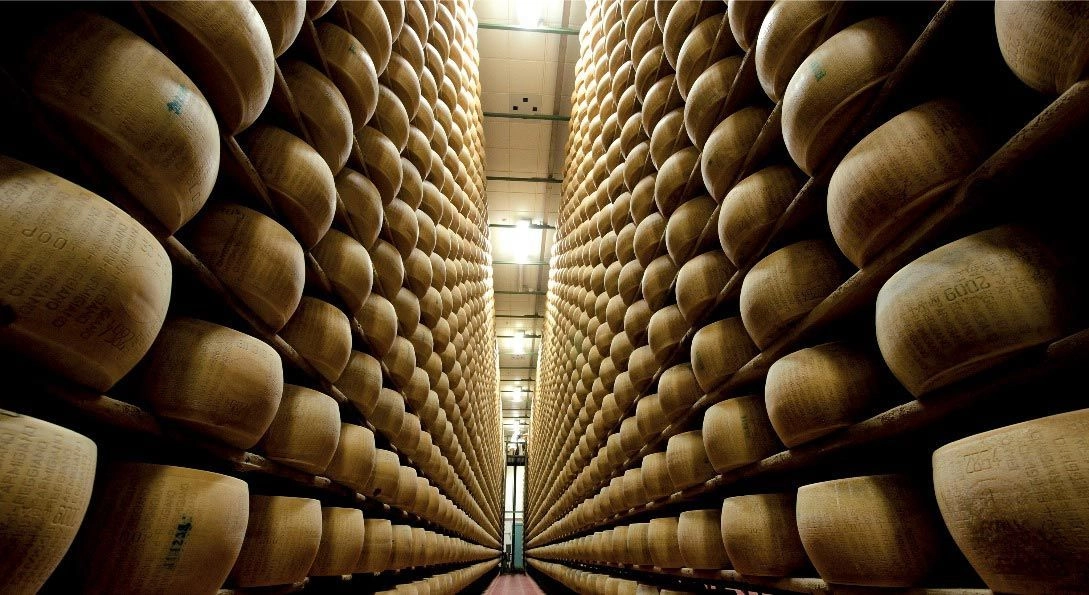
The time signals craftsmanship, patience, and care – which is why buyers pay a premium without needing to understand the chemistry behind it. The number on the label does the persuading.
The same principle applies in sales. A founder who says “this framework took eight years and 500 clients to build” isn’t just sharing history. They’re telling the buyer that the hard lessons are already learned, the rough edges are already smoothed, and the risk of buying something untested is already gone.
Most sellers describe what they offer. The stronger move is to show what it took to get there.
See also