Practical Sales Training™ > How To Connect > The Trade Only Effect
The Trade Only Effect
Walk past a trade counter and you’ll see a sign that says “trade only.” No explanation. No apology. Just a flat line drawn between who can buy and who can’t.
And here’s the strange part. That sign doesn’t put people off. It pulls them in. Because the moment something looks restricted, people assume it must be worth restricting.
This is the Trade Only Effect. It’s a small bit of psychology that does a lot of heavy lifting in sales and marketing, often without anyone noticing it’s even there.
What Is The Trade Only Effect?
The Trade Only Effect is what happens when buyers assume a product or service is better simply because access to it is limited to professionals. The label “trade only” suggests the product is too specialist, too technical, or too high quality for the general public to be trusted with it.
It doesn’t matter if the product is genuinely different from the consumer version. Often it isn’t. But the label alone changes how people see it. Restricted access reads as a stamp of quality, even when no one has checked.
Why Does The Trade Only Effect Work?
People use access as a shortcut for quality. If only experts can buy something, the brain assumes there must be a good reason. So buyers fill that gap with trust they haven’t actually earned through evidence.
There’s also a status angle. Getting hold of something “trade only” makes the buyer feel like an insider. They’ve found a way past the velvet rope. That feeling is powerful, because it flatters the buyer rather than just informing them.
Scarcity plays a part too. Anything labelled “limited access” feels more valuable than something openly available to everyone. The Trade Only Effect borrows from this instinct, even though the product itself hasn’t changed.
How Can You Use The Trade Only Effect In Sales?
Create a professional or members tier
If you sell to both consumers and professionals, separate the offer. Give your trade customers their own range, their own pricing, or their own area. The separation itself adds perceived value, even before anyone compares the products side by side.
Use the language of restriction
Phrases like “trade only,” “by application,” or “available to qualified buyers” do more work than a price tag ever could. They signal exclusivity without you having to say the word “premium” once.
Make access feel earned
If someone has to register, qualify, or prove they’re a trade buyer, that small bit of friction increases how much they value what’s on the other side. It’s not about making things hard for the sake of it. It’s about making access feel like something worth having.
When The Trade Only Effect Works Best
It works best in industries where buyers already feel out of their depth, such as building materials, technical equipment, or anything with a steep learning curve. In those markets, buyers want a shortcut to trust. “Trade only” gives them one instantly.
It also works well when you genuinely do serve professionals differently, with better pricing, bulk options, or specialist support. The label feels honest because it reflects something real, even if the products themselves overlap with the consumer range.
When The Trade Only Effect Becomes Dangerous
It becomes dangerous when there’s no real difference behind the label. If a buyer eventually works out that “trade only” was just a marketing wrapper around an identical product, trust collapses fast. And it doesn’t just damage that one sale. It makes every other claim you make harder to believe.
It also backfires if the restriction feels like a barrier rather than a benefit. If trade buyers struggle to actually access the thing they want, frustration replaces curiosity. The exclusivity needs to feel like a door, not a wall.
Common Trade Only Effect Mistakes
Using the label with no real distinction
Slapping “trade only” on a standard product without changing anything meaningful is a short term trick. It might lift conversions briefly, but it leaves nothing solid behind it once buyers compare notes.
Making access pointlessly hard
A bit of friction builds value. Too much just loses customers. If your verification process feels like a punishment, buyers will simply go elsewhere instead of jumping through hoops.
Forgetting to explain the benefit
The word “trade” alone isn’t enough. Buyers still want to know what they’re actually getting. So pair the restriction with a clear, specific reason it matters, such as better materials, faster turnaround, or technical support most customers never see.
The Trade Only Effect – An Example
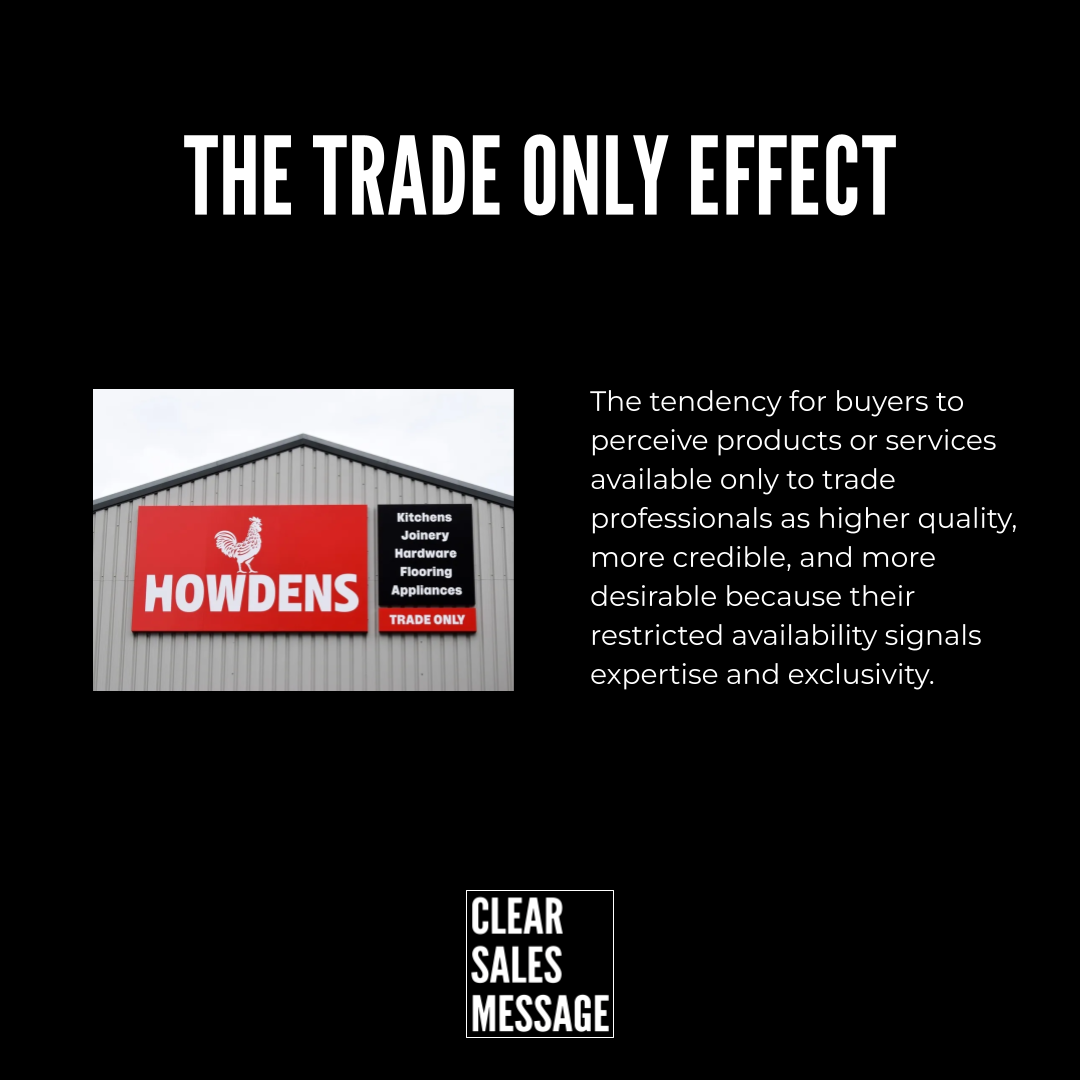
Howdens and the trade only sign
Howdens built an entire business model around this idea. Their depots aren’t open to the public the way a normal shop is. Instead, you need a trade account, and that single rule changes how everyone treats the brand.
Tradespeople feel like insiders rather than customers. Homeowners, meanwhile, often hear “trade only” and assume the kitchens must be a cut above the high street versions, even if they’ve never compared the actual units side by side. The restriction does the persuading before a single sales conversation even happens.
See also: