Practical Sales Training™ > How To Get Attention > The “Unfair” Advantage
The “Unfair” Advantage
What Is It
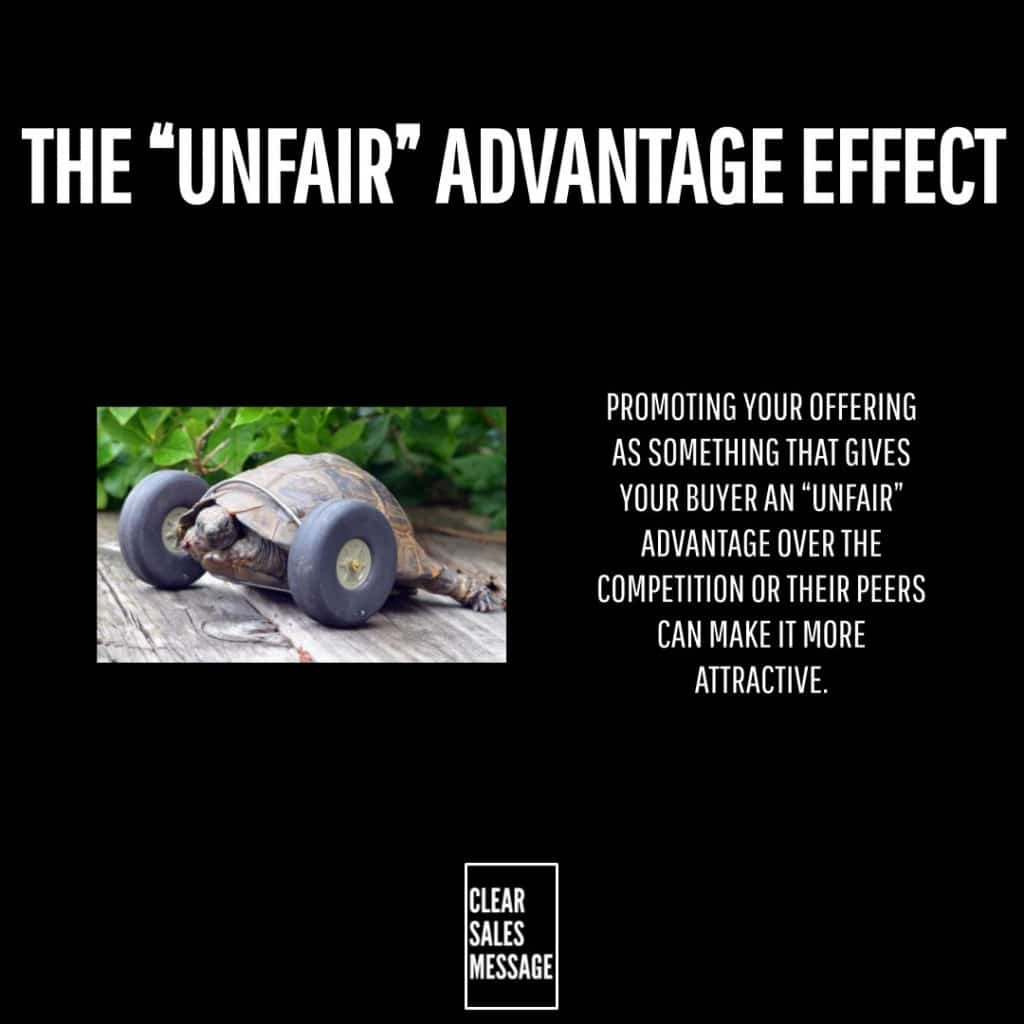
The Unfair Advantage is all about positioning your offering as something that gives an edge over the competition, and something deemed a “secret” or in some way “unfair.” Not just better, off limits to everyone else.
Most businesses claim to be good at what they do. Very few claim their method is something rivals genuinely don’t have access to.
That claim alone changes how a buyer reads everything else you say.
Why Does It Work
It works because we all want to be ahead of our peers and our competitors. The lure of a secret, or a magic pill that gives you an edge others don’t have, is exciting, and it harnesses FOMO.
Nobody wants to be the person who missed the shortcut everyone else found. That fear does a lot of the persuading before the offer even gets explained.
Naming the method also adds weight. A named process feels proprietary, even exclusive, in a way a generic description never could.
How Can You Use It
Find the genuine gap between you and competitors
Think about your offering and what you do. Notice how the competition serve the marketplace, and notice how your results differ from theirs.
Name your process, not just your results
If you get faster, better, or easier results for clients than your competition, understand how you make this possible, your process of working, and use this as your unfair advantage. It articulates how you do what you do, and creates an information gap too.
Build a methodology, not just a claim
We use the C.L.E.A.R methodology to articulate how we work. It’s intriguing, and if it underpins everything you do, surely it can work for you too.
When It Works Best
This works best when there’s a genuine, real gap between your results and your competitors’, not just marketing language dressed up as insight.
It also works best when the method has a clear name attached, since a named process reads as proprietary in a way an unnamed one simply can’t.
When It Becomes Dangerous
It backfires if the “secret” isn’t genuinely different from what competitors already do. A buyer who researches and finds nothing unique feels misled rather than impressed.
It also becomes risky if the results claimed can’t be backed up. An “unfair advantage” that doesn’t deliver damages credibility far more than a modest, honest claim ever would.
Overusing exclusive language across every offer flattens it too, since “secret” and “unfair” lose their power the moment every product claims them.
Common Mistakes
Claiming exclusivity without a genuine difference
Calling something “unfair” when it’s identical to competitors gets exposed the moment a buyer compares options. The gap needs to be real.
Leaving the method unnamed
“Our process” sounds generic. “The Zero-Drag Method” sounds proprietary. Naming your process is what makes it feel like a genuine advantage.
Overpromising results the method can’t deliver
A bold “unfair advantage” claim followed by an average outcome damages trust more than a modest claim that quietly overdelivers.
The Unfair Advantage – An Example
Business Automation Software
A software provider claims:
“Our clients automate 80% of their admin tasks in 14 days or less. Most businesses don’t even know this is possible. We call it the Zero-Drag Method™, our unfair advantage that turns time-sinks into revenue streams.”
Why this works: It positions the result, automating 80% of admin, as exceptional, and implies others don’t have access to this method. Naming the method makes it feel proprietary and exclusive, and the word “unfair” implies insider status, or access to a hack competitors don’t know about.
See also