
Practical Sales Training™ > How To Convert > The With Purchase Effect

The With Purchase Effect
What Is It
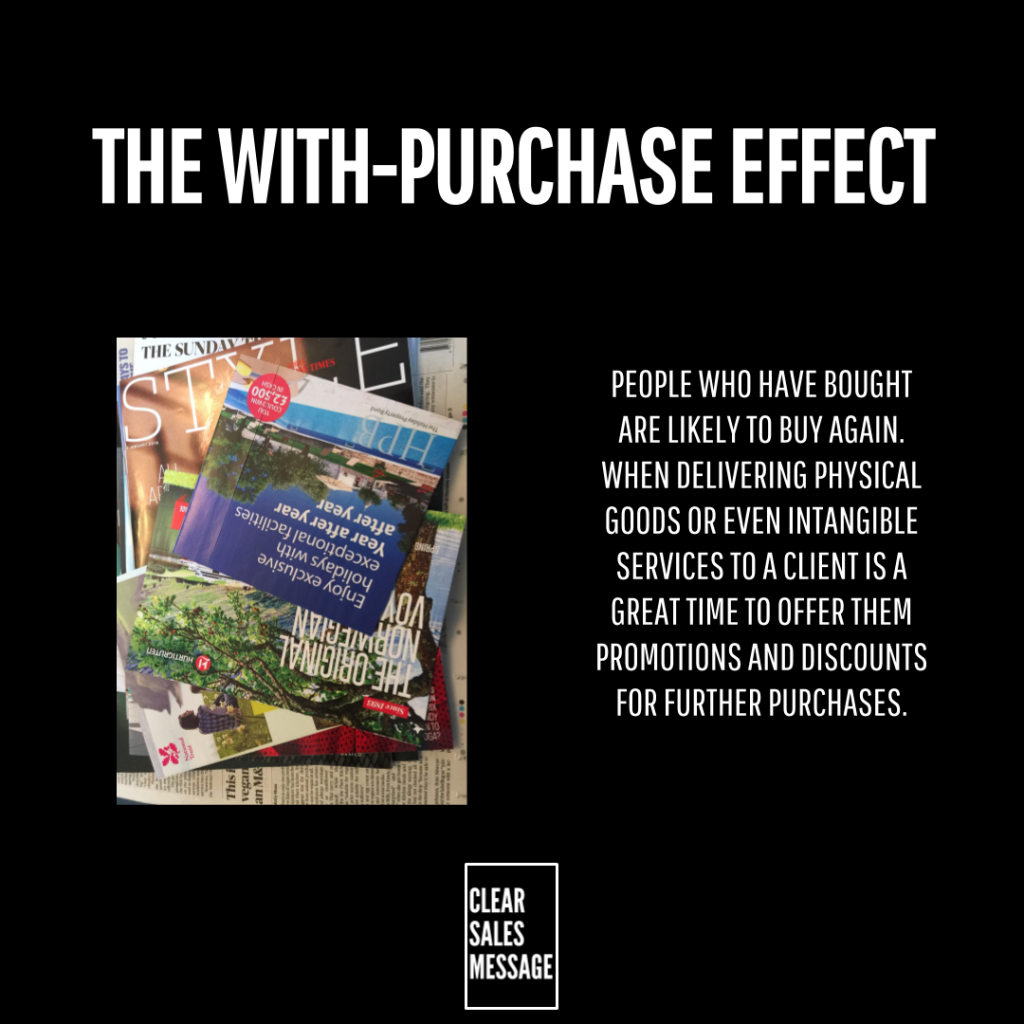
The With-Purchase Effect is about further promotion once a buyer has purchased. It’s the extra promotional material and offers made once somebody has bought.
So it’s not the pitch that wins the sale. It’s the pitch right after.
That timing matters more than most businesses realise.
Why Does It Work
It works because people who buy are more likely to buy again, or buy more. If you’ve just bought a toy, you might want batteries. If you’ve bought a magazine on health, a leaflet about supplements makes sense.
Offering logical upsells right after a purchase can encourage further revenue. The buyer has already said yes once. So saying yes again feels far easier.
There’s a simple reason this works so well. The buyer is still in buying mode. They haven’t switched their attention elsewhere yet.
How Can You Use It
Add offers directly into physical shipments
If you ship physical products, include leaflets, vouchers, and offers with the purchase. Let the box itself keep selling after the sale closes.
Use the confirmation email for digital offerings
If you sell intangible products or services, include offers and codes by email once you’ve confirmed the client’s order. The confirmation email is prime real estate, so use it.
Keep the upsell logically connected
Keep the upsell logically connected to what they just bought. A random offer breaks the flow. A related one feels like genuinely useful advice.
When It Works Best
This works best right after a genuine purchase, while the buyer is still engaged and thinking about your brand.
It also works best when the upsell logically follows the first purchase. A cleanser and a moisturiser make sense together. Two unrelated items don’t.
When It Becomes Dangerous
It backfires if the upsell feels like a hard sell rather than a natural next step. That can sour the goodwill from the purchase they just made.
It also becomes risky if you overload the confirmation with too many offers at once. One clear, relevant upsell beats five scattered ones.
Timing it too aggressively causes its own problem. A pushy offer before the original purchase even ships can feel presumptuous rather than helpful.
Common Mistakes
Offering something unrelated
A random, unrelated upsell wastes the moment. Keep the connection to the first purchase obvious.
Sending too many offers at once
Sending too many offers in one message overwhelms the buyer. Pick your single strongest, most relevant offer instead.
Waiting too long to send it
Delaying the offer for weeks misses the buying mode entirely. Send it while the purchase is still fresh in their mind.
The With Purchase Effect – An Example
A Skincare Brand’s Cleanser Bundle
Hypothetical Example: A skincare brand notices that customers who buy a facial cleanser often purchase a matching moisturiser later. To increase revenue, they include a voucher for 20% off the moisturiser in the package with every cleanser order.
Additionally, the order confirmation email reads:
“Thanks for your purchase! Your cleanser works even better when paired with our hydrating moisturiser. Use code FRESH20 within the next 7 days to save 20%.”
Because the customer has just bought, and is already in buying mode, this logical upsell feels natural. It often results in immediate repeat purchases.
See also