
Practical Sales Training™ > How To Get Attention > Behavioural Messaging

Behavioural Messaging
Most messages target no one in particular. They go out to everyone and land with no one. Behavioural messaging is different — because it responds to what a buyer has actually done.
When your message matches the buyer’s action, it feels relevant. It feels timely. And it shows you were paying attention. That is a powerful thing in sales.
So instead of sending the same message to everyone, behavioural messaging lets you speak to what is happening right now — for that buyer, in that moment.
What Is Behavioural Messaging?
Behavioural messaging is the practice of matching your message to the behaviour of your buyer. Instead of a fixed pitch, you adapt what you say based on what someone has just done — clicked a link, visited a page, searched for something, or tried to leave.
It works across channels. You can use it in email, ads, on your website, or even in physical spaces. However, the principle stays the same: the message fits the moment because it reflects the action.
The result is a message that feels personal — even if you built it in advance. Because the buyer thinks: “how did they know?”
Why Does Behavioural Messaging Work?
It works because it shows you understand what your buyer is thinking, feeling or doing. That matters. Buyers engage far more readily when they feel seen.
It also signals expertise. When your message fits the situation perfectly, it suggests you have been here before. You knew this moment was coming. That builds confidence in you as a supplier.
For example, James’s email signature for Clear Sales Message™ uses this idea directly. Click the logo and it takes you to a page that says he knew you would click it — and uses that moment to sell. You can see that page here.
In short, behavioural messaging works because it removes the feeling of being sold to. Instead, the buyer feels understood.
How Can You Use Behavioural Messaging In Sales?
1 – Retargeting ads
These are the adverts that follow you around the internet. They work best when they reference the specific behaviour — for example: “We noticed you registered for the webinar but didn’t join.” That one line shows the buyer you noticed, which is far more compelling than a generic ad.
2 – Abandoned cart
Similar to retargeting, abandoned cart messages use The Follow Up Offer to bring buyers back to finish what they started. Because the message references exactly what they left behind, it feels relevant rather than pushy.
3 – Physical location
Like The Context Effect, some technology lets you reach people who physically visit a place. So if a buyer walks past your competitor’s store, you could serve them a targeted message. Location becomes the trigger.
4 – Clicks on links
Could you build Easter Egg style links into your documents or content? When a buyer clicks through, they land on a page written just for that moment. It feels like a surprise — but you planned it all along.
5 – Searching for content
If you sell bicycle helmets, targeting people who search for bicycles or knee pads puts you in front of “People Like You” buyers. Your message can then say: “Searching for knee pads? Don’t forget a helmet.” The search behaviour tells you what they need next.
6 – Time has passed
Using The Trigger Point, you can set timed messages that go out on specific dates — anniversaries, renewal windows, or days of the year that matter to your buyer. Time itself becomes the behaviour you respond to.
7 – Exit intent
When a buyer goes to leave a website and a pop-up appears — that is behavioural messaging in action. It triggers on the intent to leave, so the message can speak directly to hesitation. Done well, it saves sales that would otherwise walk out the door.
8 – Cancel intent
When a buyer tries to cancel a service and the business offers a retention discount, that is also behavioural messaging. The action — trying to leave — triggers a message to keep them. Because the timing is perfect, it lands far better than a standard renewal email would.
When Behavioural Messaging Works Best
Behavioural messaging works best when the trigger is clear and the response is fast. The closer the message is to the action, the more relevant it feels. A follow-up sent a week after a cart is abandoned is far weaker than one sent within the hour.
It also works best when the message tone matches the moment. A buyer who just tried to cancel is not in the same headspace as one who just signed up. So the message needs to reflect that difference — not just the action, but the feeling behind it.
When Behavioural Messaging Becomes Dangerous
Behavioural messaging can backfire when it feels intrusive. If a buyer does not realise they triggered the message, it can feel like surveillance. That unsettles people — and it damages trust rather than building it.
It also goes wrong when the message does not quite fit. A slightly off response to a behaviour can feel worse than no response at all. Because it suggests you were paying attention but still got it wrong. That is harder to recover from than simply missing the moment.
Common Behavioural Messaging Mistakes
Being too obvious about the tracking
There is a fine line between “we noticed you did X” and making a buyer feel watched. Reference the behaviour where it helps the message — but do not make it the whole point. The goal is relevance, not surveillance.
Using the wrong trigger
Not every action signals buying intent. So firing a sales message every time a buyer does anything is a fast way to feel pushy. Choose triggers that genuinely suggest intent — and make sure the message matches what that intent probably is.
Writing a message that could apply to anyone
Behavioural messaging only works if the message feels specific. However, many businesses set up behavioural triggers and then write generic copy. As a result, they lose the whole effect. The message should only make sense for the buyer who triggered it.
Forgetting to test the timing
Timing is everything. A message sent too soon can feel aggressive. One sent too late loses the moment entirely. Therefore, test your delays — and adjust based on what the data tells you buyers actually respond to.
Behavioural Messaging – An Example
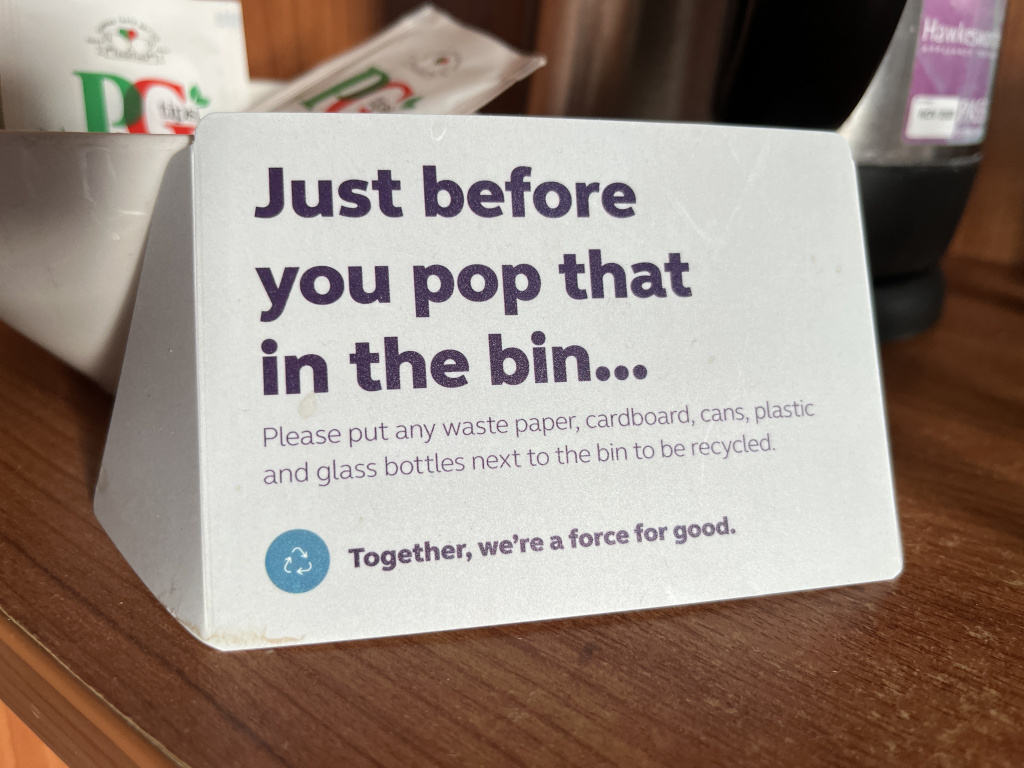
This sign sat next to the kettle in a hotel room. Its job was to remind guests to separate recycling — but only once they had made a drink or snack. The location was the trigger. The message only made sense in that moment, in that spot.
That is behavioural messaging in its simplest form. No technology needed. Just a message placed where the right behaviour is about to happen.
See Also