Practical Sales Training™ > How To Convert > The Yes/No Effect
The Yes/No Effect
One question. Two possible answers. That’s all it takes to find out who’s actually worth your time.
The Yes/No Effect strips out the noise. Instead of guessing who’s interested, you ask, and your buyer tells you straight away.
What Is The Yes/No Effect?
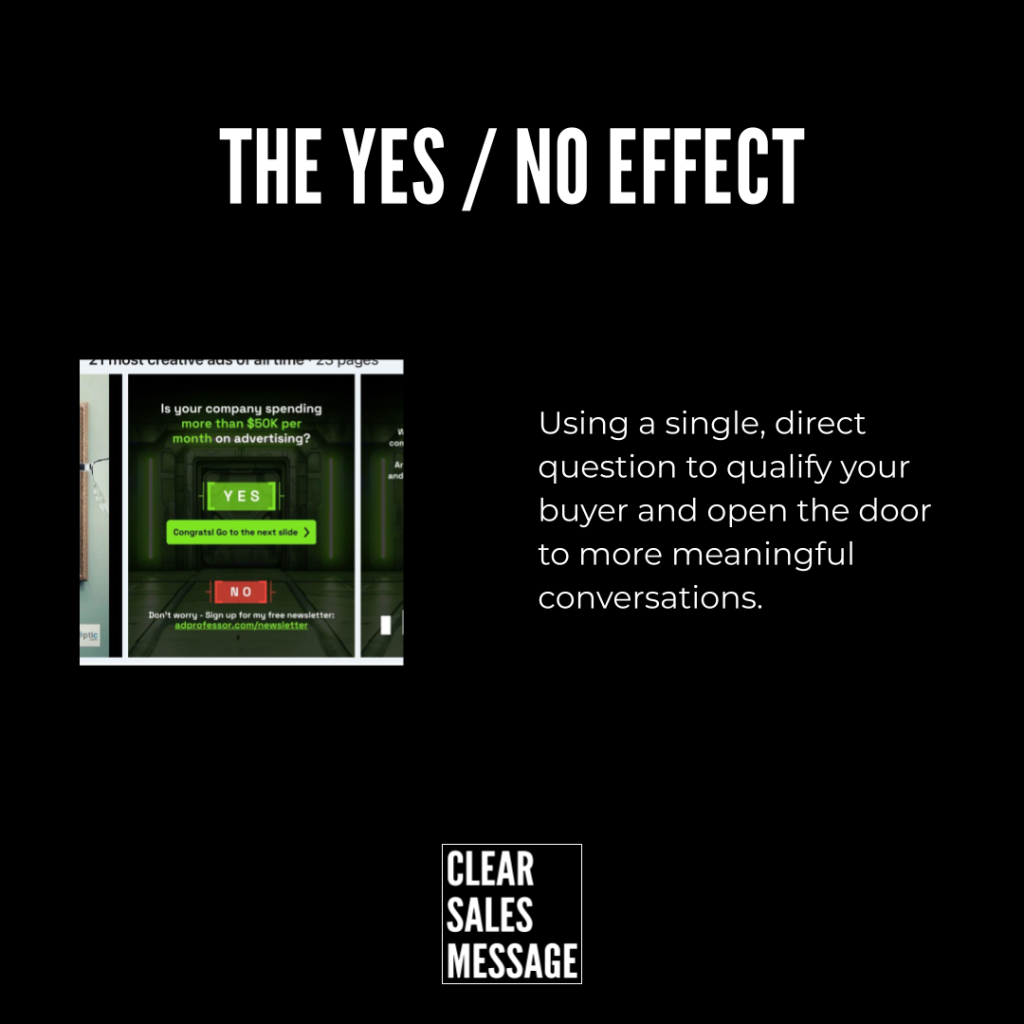
The Yes/No Effect is a sales technique that uses a single, direct question to qualify or disqualify a buyer instantly. A simple question like “Do you need more leads?” cuts through the noise fast. It triggers self-selection, and it shows you exactly who’s ready to buy.
It’s quick. It’s friction-free. And it works because it puts the decision in your buyer’s hands straight away, instead of making them wade through paragraphs to work out if you’re relevant to them.
Why Does It Work?
Binary choices reduce decision fatigue, because the brain finds two clear options far easier to process than five vague ones. A direct question also increases engagement, since it feels personal and relevant rather than generic.
Self-qualification does the filtering for you. Only serious buyers say yes, so you’re not chasing anyone half-interested. Instead of vague content, you present one clear question that helps your buyer answer “is this for me?” almost instantly.
Those who say yes are already warmed up and mentally ready to hear your offer. Those who say no filter themselves out, which saves you time and energy you’d otherwise waste chasing a dead end.
How Can You Use The Yes/No Effect?
At The Start Of A Landing Page Or Email
Open with a direct question to qualify interest before you say anything else. It sets the tone immediately, and it tells the wrong reader to move on before they waste their time.
In Social Media Posts Or Videos
A single yes or no question sparks engagement fast. People love answering something simple, even just in their own head, and that small moment of participation pulls them further into your content.
In Cold Outreach Messages
A direct question filters fast and starts a real conversation. It’s far more effective than a long pitch, since it respects the reader’s time and gets straight to the point.
In Ads
Pre-qualify a click before it costs you anything. A well-placed question filters out the wrong audience before they even reach your landing page, saving your ad spend for people who actually fit.
In Follow-Ups
Re-engage a cold lead with a clear question instead of a generic check-in. “Are you still looking to solve this?” gets a far better response than “just following up.”
When It Works Best
The Yes/No Effect works best right at the top of your message, before you’ve asked for anything else. It also performs well with a warm audience, since they already have some context for the question you’re asking.
It’s especially useful when you’re trying to filter volume fast, like in ads or cold outreach, where wasted attention costs you real money or time.
When It Becomes Dangerous
This technique backfires if your question is too broad. “Do you want more sales?” invites a yes from almost anyone, which defeats the entire purpose of filtering your audience.
It also becomes risky if you ask it repeatedly across every touchpoint. Buyers notice the pattern quickly, and a technique that once felt sharp starts to feel like a script.
Common Mistakes
Asking A Question Everyone Says Yes To
A vague question qualifies nobody. Make your question specific enough that a genuine no is actually possible, or the filtering effect disappears entirely.
Ignoring The People Who Say No
A no isn’t wasted data. It tells you who to stop spending time on, so use it to sharpen your targeting rather than treating it as a failed attempt.
Overcomplicating The Question
A yes or no question loses its power the moment it needs a paragraph of context first. Keep it short enough to answer in a single glance.
The Yes/No Effect – An Example
One Line That Did The Filtering
A coach running cold email outreach used to open every message with a paragraph about her background and results. Replies were rare, and most leads went quiet after the first message.
She swapped that opening for one line instead: “Are you still trying to fix your close rate, or has that sorted itself out?” Replies picked up fast, since the question forced an instant answer rather than a polite skim. The leads who replied yes were already primed for the conversation that followed, and the ones who said no saved her from chasing a conversation that was never going anywhere.
See Also