Practical Sales Training™ > How To Get Attention > Trademarks

Trademarks
What Is It
A trademark is that small symbol you see stuck next to a name or a piece of terminology. It could be ™ for an unregistered mark, or ® once it’s officially registered. Either way, it does something to how the word reads.
Add that symbol and a plain word suddenly looks like property. It stops looking like a generic description and starts looking like something only one company can use.
Why Does It Work
People assume a trademark means something real sits behind it. Research, investment, ownership. So the symbol borrows credibility even before anyone reads the actual name.
It also makes copying feel riskier for competitors. A name with ® next to it signals legal weight, even if the buyer never thinks about the legal side directly. It just feels untouchable, and that feeling rubs off on the whole brand.
How Can You Use It
Name Your Own Process Or Method
Don’t just trademark your company name. Trademark the specific method, framework, or technology inside your offer. A named process feels proprietary in a way that “our approach” never does.
Use It Consistently, Not Just Once
A trademark loses its weight if it only appears on the homepage. Attach it every time the name is used, in emails, in decks, in conversation. Repetition is what makes it feel like an established asset rather than a one off label.
Pick A Name Worth Protecting
The symbol only works if the name underneath it is distinctive. A generic phrase with ™ next to it still reads as generic. Choose something specific enough that owning it actually means something.
When It Works Best
This works best for named methods, technologies, or ingredients that competitors could otherwise copy word for word. It gives buyers a reason to believe your version is the original one, not just another version of the same idea.
When It Becomes Dangerous
Slapping ™ on something with no real substance behind it can look desperate rather than credible. Buyers who look closer and find nothing proprietary underneath will trust you less, not more.
Using ® without actual registration is also a legal risk, not just a style choice. Only use ® once the mark is properly registered.
Common Mistakes
Trademarking A Generic Term
A phrase everyone already uses doesn’t become distinctive just because you added a symbol. Buyers still read it as ordinary language, symbol or not.
Using ® Before Registration
This one isn’t just a style mistake, it can land you in real legal trouble. Stick to ™ until the mark is actually registered, then switch once it’s official.
Dropping It Inconsistently
Using the symbol on your website but never in emails or decks weakens the effect. Consistency is what makes a name feel owned rather than occasionally decorated.
Trademarks – An Example
Everyday Brands Built On Owned Names
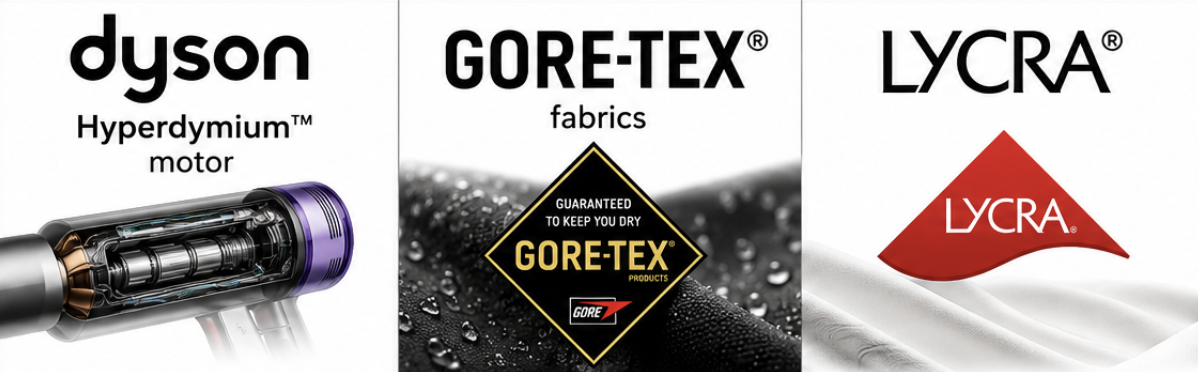
Look at how often you see a ™ or ® symbol without noticing it. Dyson names its own motor technology rather than just calling it “the motor.” GORE-TEX® fabric carries its own registered mark on the product itself, promising it’ll keep you dry before you’ve even touched it. LYCRA® does the same, turning a stretchy fabric into a named ingredient rather than a generic material.
None of these brands need to explain what the symbol means. It’s doing the work quietly, telling you this name belongs to someone, and that someone thinks it’s worth protecting.
See Also