
Practical Sales Training™ > How To Get Attention > The Verified Effect

The Verified Effect
What Is It
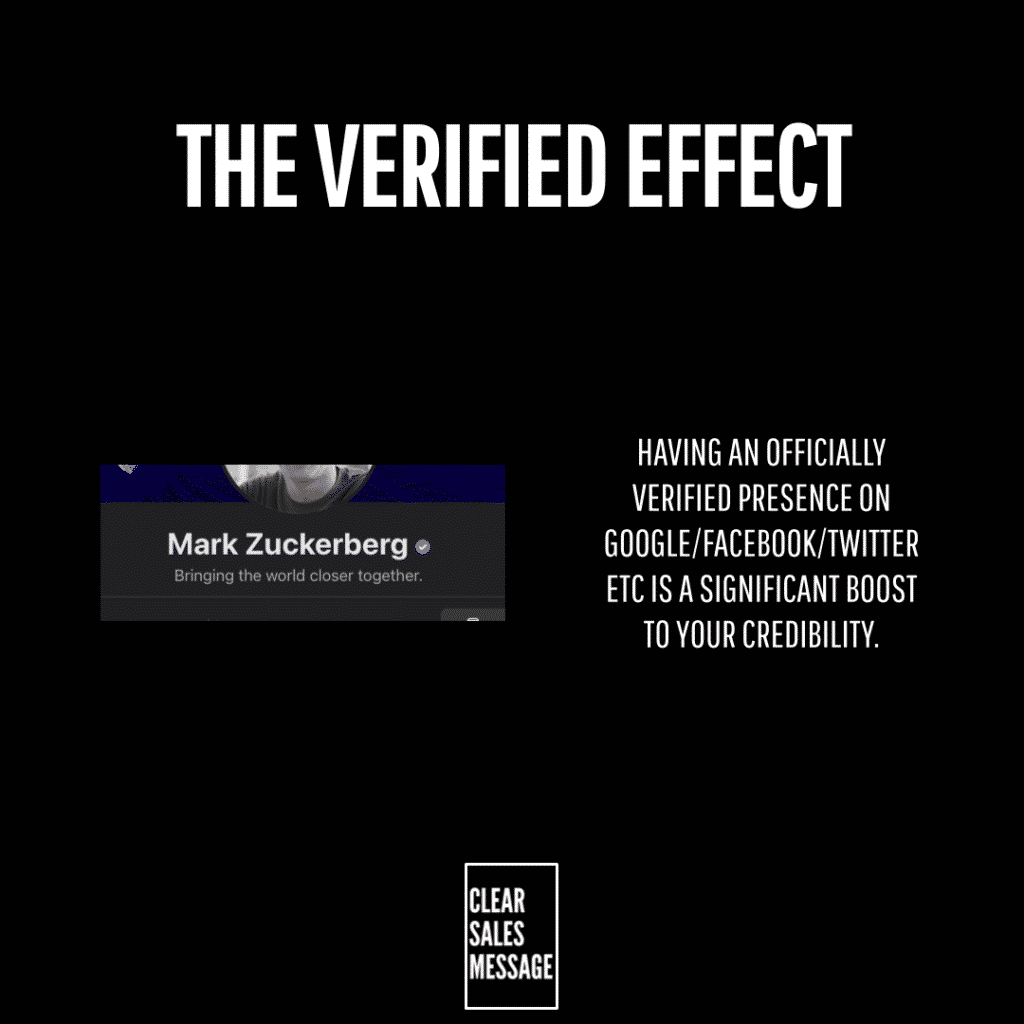
That little blue tick next to your social media profile is a form of social proof. Not a badge you can just apply and receive, at least not everywhere.
It once meant something quite specific, that a platform had checked and confirmed you were genuinely who you claimed to be.
That meaning has shifted in recent years, and it’s worth understanding exactly how before you rely on it.
Why Does It Work
Originally, it worked because knowing what the blue tick meant also told you it wasn’t easy to obtain, and that most people didn’t have it. It also confirmed you were looking at the genuine profile, not a copycat, which is the reason the blue tick existed in the first place.
That’s shifted. On several major platforms, verification can now simply be bought as part of a subscription, rather than earned through a proper identity and notability check.
The badge still carries some weight, since a buyer has chosen to spend money and put their name forward publicly. But it no longer proves the same thing it once did, and it’s worth knowing the difference before you lean on it.
How Can You Use It
Know which kind of verification you’re pursuing
Of all the things I recommend, achieving genuine, earned verification is one of the most difficult, but still worthy of note. Sites like Facebook and Instagram have a verification process where you can apply for the blue tick, though you’ll typically need media coverage and a larger following to be considered notable.
Consider paid verification for what it actually offers now
It’s now possible to pay for verification on most platforms. Since you’re spending money on it, you’ll still stand out from an unverified profile. It’s less compelling than the old, earned version, but it’s still worthy of note as a small trust signal.
Pair it with other proof, not just the badge alone
Since paid verification alone carries less weight than it used to, combine it with genuine reviews, credentials, or media mentions, so the badge is one signal among several, not the only one.
When It Works Best
Genuine, earned verification still works best in platforms or contexts where it hasn’t become purchasable, since scarcity is what gave it real weight in the first place.
Paid verification works best as a small supporting signal, alongside other proof, rather than as your main claim to credibility.
When It Becomes Dangerous
It backfires if you lean on a paid badge as though it carries the same weight as earned verification once did. Buyers who understand the shift may see through it.
It also becomes risky if you imply a level of scrutiny or notability that a paid badge simply doesn’t confirm anymore.
Relying on it as your only trust signal causes its own problem too, since a single badge, on its own, no longer proves as much as it once did.
Common Mistakes
Treating every blue tick as equally meaningful
A badge earned through media coverage and an identity check isn’t the same as one bought through a subscription. Know which one you’re looking at, or presenting.
Overstating what a paid badge proves
Implying deep scrutiny behind a badge that was simply purchased risks being called out publicly the moment someone checks.
Relying on it as your sole proof point
A badge alone carries less weight than it used to. Pair it with genuine reviews, credentials, or coverage for real credibility.
The Verified Effect – An Example
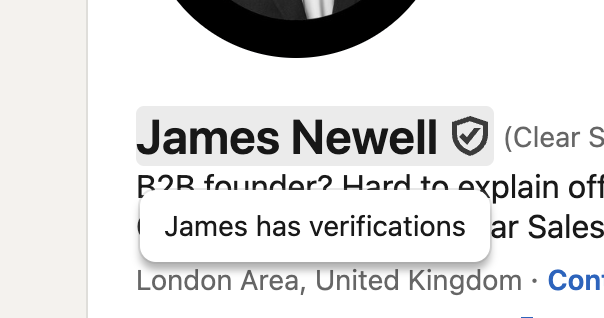
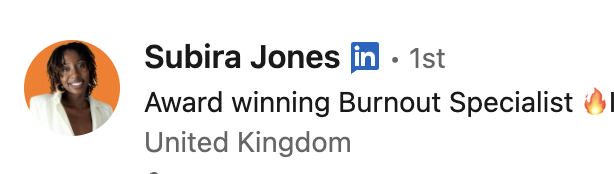
LinkedIn’s Verification Badge
LinkedIn requires identity verification and also endorses people with their blue logo too.
See also