
Practical Sales Training™ > How To Lose The Sale > Unsolicited Advice

Unsolicited Advice
What Is It
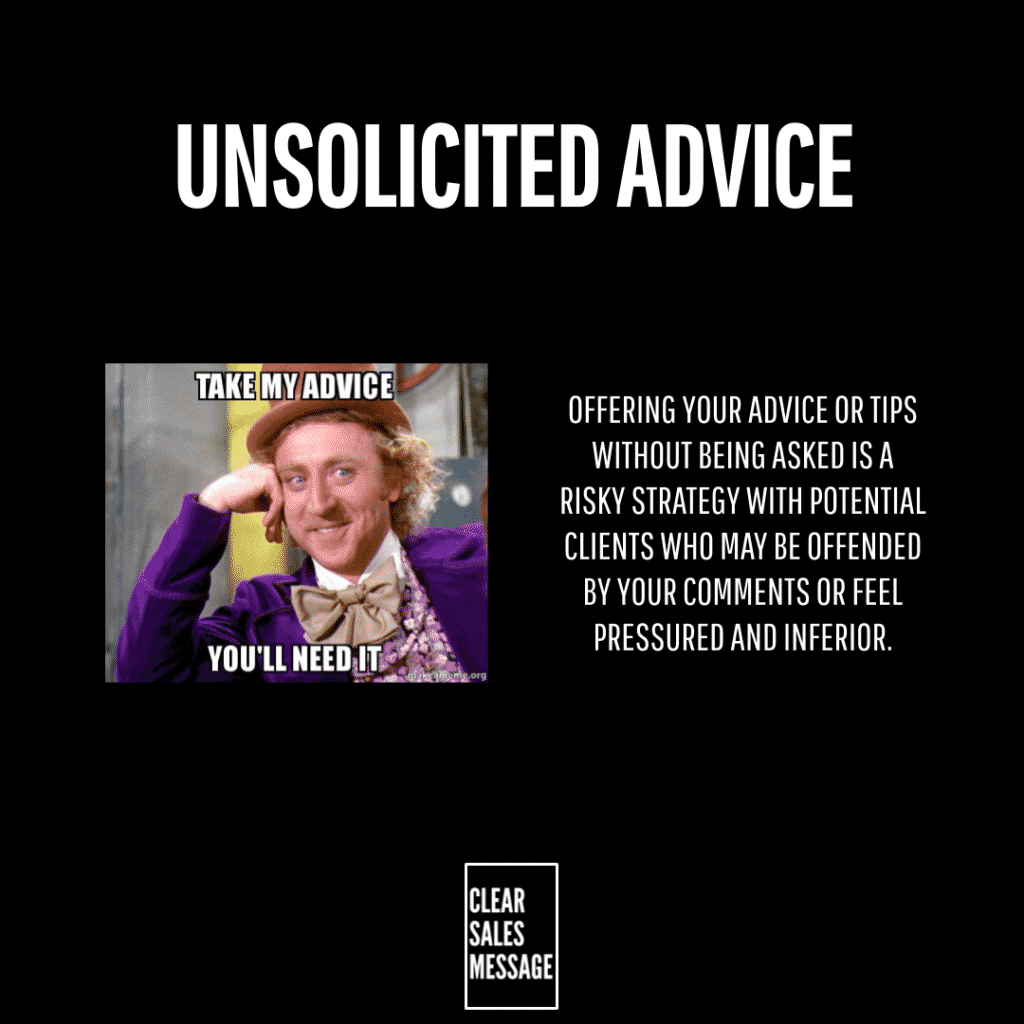
Unsolicited Advice is that moment when someone reaching out to you offers to critique something. Even though you haven’t asked for it.
So it feels like a favour on the surface. Underneath, it lands as an insult.
That gap is exactly why it backfires so often.
Why Does It Work
It works to lose the sale because it borders on being overly critical. It’s also potentially rude, and it applies unnecessary pressure to your buyer.
If someone hasn’t asked for your advice, offering it anyway can sour the interaction. Whether they want it or not.
Why? Because you’re pointing out where things have gone wrong. Then you’re asking for money to fix it.
How Can You Use It
Unsolicited advice is pretty much best avoided. It’s so hard to give it without offending people.
Offer a guide instead of a critique
Rather than directly outreaching and critiquing people, could you instead produce a “best practise” guide to share with your prospects?
Frame it as pitfalls to avoid, not flaws you’ve spotted
Rather than pointing out the flaws, you could offer a “6 common pitfalls to avoid” style resource. It has a similar effect, but leaves the client feeling cared for.
They receive value, instead of feeling offended.
When It Works Best
This works best, if it ever should, when someone has genuinely asked for feedback first. Uninvited critique rarely lands well in any context.
It also works best replaced entirely by a helpful, non critical resource. A guide invites interest. Direct criticism invites defensiveness.
When It Becomes Dangerous
It’s dangerous the moment you point out a flaw nobody asked you to notice. That single moment can undo the entire relationship before it starts.
It gets worse if the criticism feels personal rather than professional. A comment on someone’s website reads very differently to a comment on their judgement.
It also damages your reputation beyond the one interaction. People remember being criticised uninvited far longer than they remember a genuine offer of help.
Common Mistakes
Leading with what’s wrong
Leading with what’s wrong instead of what’s possible puts the buyer on the defensive immediately.
Framing help as criticism
Framing help as criticism, rather than opportunity, turns a potential ally into a reluctant one.
Sending it cold, with no relationship
Sending unsolicited advice cold, with no prior relationship, reads as presumptuous rather than helpful.
Unsolicited Advice – An Example
A Web Designer’s Cold Email
Hypothetical Example: A web designer cold-emails a small business owner with:
“Hi, I noticed your website is slow and poorly designed. I’d love to fix it for you.”
While the intention is to offer help, the business owner feels criticised and defensive. They didn’t ask for this feedback. It comes across as pushy and rude, immediately turning them off from the offer.
Instead, the web designer could take a softer approach:
“Hi, I created a short guide on ‘5 website tweaks that increase sales.’ Would you like me to send it over?”
This approach offers value without offence, building trust rather than resentment.
See also: