
Practical Sales Training™ > How To Convert > Why Click Line

Why Click Line
What Is It
If you want someone to click a button, tell them why. A short line next to the button gives them a reason. That reason often decides whether the click happens at all.
It sounds small. But it rarely is.
Without it, your buyer hesitates. With it, they’ve got permission to move forward.
Why Does It Work
It works because buyers want reassurance. So they’re looking for proof that clicking is the right call, and want to avoid buyers remorse.
Every click carries a small risk of regret. Your click line exists to shrink that risk before it shows up.
Give people a reason, and hesitation drops. That’s the whole mechanic.
How Can You Use It
There are six angles I come back to again and again.
Value / Quality
Value or quality works when your product needs to feel like the safe choice. A line like “our longest lasting X” tells the buyer they won’t need to replace it soon.
Time
Time works when speed removes friction. “It only takes 10 minutes” answers the unspoken question of effort. So it removes doubt before anyone even asks.
Trust
Trust works through numbers people already believe. “Trusted by thousands” borrows confidence from the crowd. So the buyer doesn’t have to be first.
Scarcity
Scarcity works because people fear missing out more than they enjoy gaining something. “Offer ends Friday” turns a maybe into a now.
Novelty
Novelty works when buyers are tired of the old option. “Try the all new X” gives permission to switch, without feeling reckless.
Scope
Scope works when buyers worry your product won’t fit their situation. “From beginner to expert” removes that fear completely.
Pick the angle that matches the objection already in your buyer’s head. Guess wrong, and the line adds noise instead of reassurance.
When It Works Best
This works best right at the point of decision. Think checkout, signup, or download buttons. It also works further up the page. Especially once your buyer is close to acting but hasn’t quite committed.
When It Becomes Dangerous
Every button on the page getting one is where it turns dangerous. Reassurance becomes noise, and buyers stop reading any of it.
It’s also dangerous when the claim is weak or vague. A soft line does nothing. But a dishonest one damages trust fast.
Common Mistakes
Being Vague
Being vague is the most common mistake. “Great value” tells your buyer nothing specific, so it reassures no one.
Copying Competitors Word For Word
Copying a competitor’s click line word for word is another trap. Buyers notice repeated phrasing across sites. So it reads as lazy, rather than confident.
Choosing The Wrong Angle
Choosing the wrong angle also backfires. A scarcity line means nothing to someone who isn’t worried about missing out. So match the angle to the objection, not to whatever sounds punchy.
Why Click Line – An Example
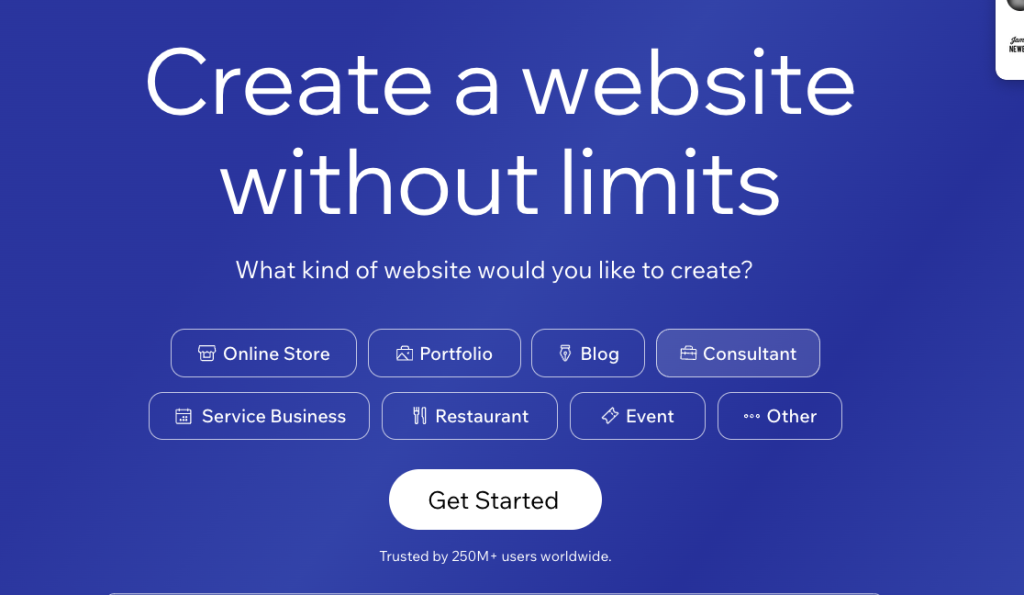
The Wix Trust Line
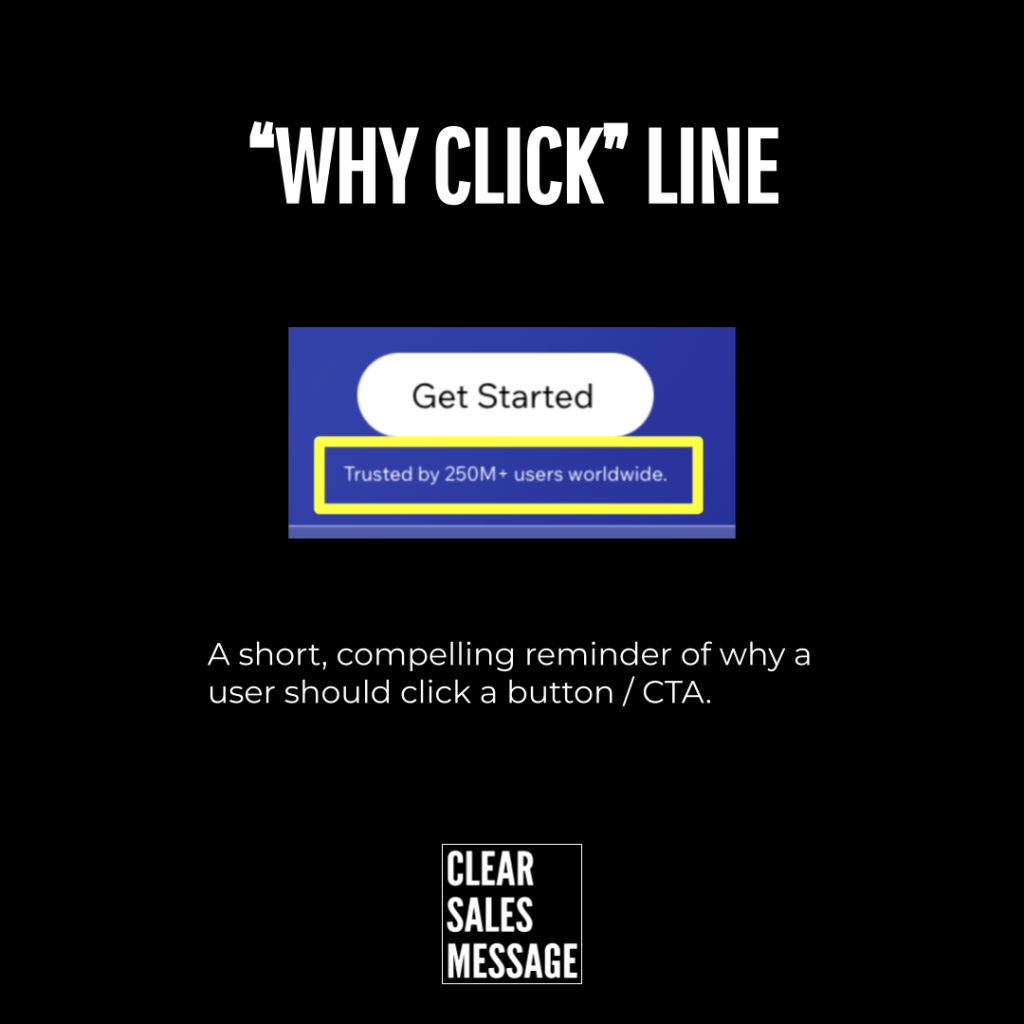
On the Wix website, they lean on trust to reassure new visitors. The line reminds you that over 250 million people already use the platform. So you’re not the first one taking the leap.