Practical Sales Training™ > How To Convert > Win-Back Messaging
Win-Back Messaging
Customers go quiet all the time. Some stop opening your emails. Others just stop logging in. That doesn’t mean they’re gone for good.
Win-back messaging is how you get them back before you lose them completely. It reminds them why they chose you in the first place, and it does it before you write the relationship off.
What Is Win-Back Messaging?
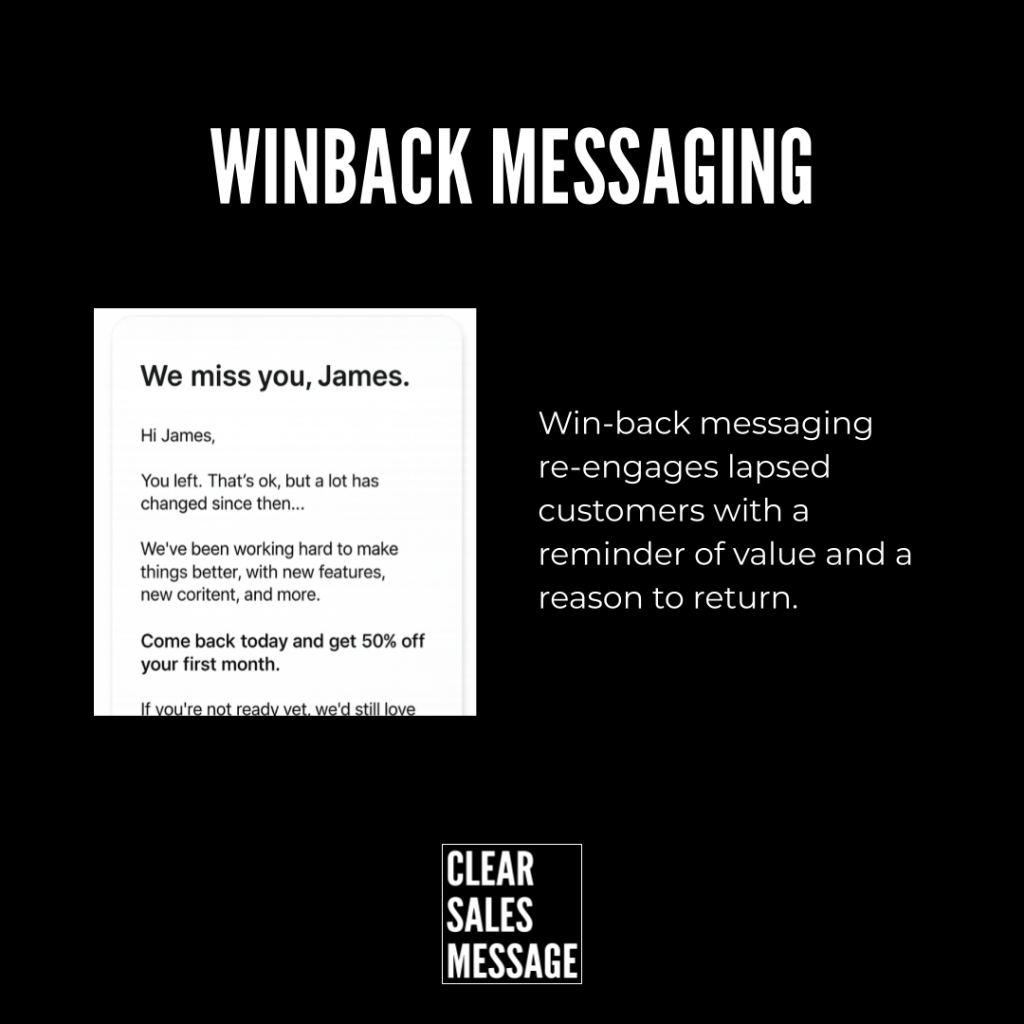
Win-back messaging is a message sent to a customer who has stopped buying or engaging with you. It could be an email, a text, or a notification inside your app. The goal is simple: remind them what they’re missing and give them a reason to come back.
Simple, but it works. Instead of assuming they’re gone forever, you reach out first. That single move can recover revenue you’d otherwise write off.
Why Does It Work?
Silence feels final. So most businesses treat a quiet customer as a lost one and move on. But that’s often the wrong call, because people go quiet for ordinary reasons. Life gets busy. Priorities shift. A better option shows up for a while.
Win-back messaging works because it interrupts that silence before it becomes permanent. It gives the customer a reason to think about you again, right when they’re most likely to respond. As a result, you’re not chasing someone who’s truly done. You’re just reminding someone who forgot.
Timing matters here too. Send it too early and it feels pushy. Leave it too late and the door’s already closed. Most businesses trigger these messages after 30, 60, or 90 days of no activity, since that window still gives the relationship a real chance.
How Can You Use Win-Back Messaging?
You can use win-back messaging at several different points in the customer journey. Here’s where it tends to work best.
After A Subscription Is Cancelled
This is the easiest moment to catch someone, because they’ve just made a decision, not disappeared quietly. A short automated message works well here. For example: “We’ve saved your spot. Come back any time and enjoy 30 percent off your first month back.” It’s low pressure, and it leaves the door open without sounding desperate.
After 30 Or More Days Of Inactivity
This one’s less about a decision and more about drift. The customer probably didn’t mean to stop using your product. So a simple check-in often does the job: “You haven’t logged in for a while. Need help getting started again?” That question does the work, since it removes the awkwardness of coming back.
After A One-Time Purchase
A single purchase doesn’t mean a relationship ended. It might just mean the timing was wrong for a second one. Try something like: “You bought once, but we think you’ll love what we’ve added since.” This works because it treats the first purchase as a starting point, not a one-off.
With A Comeback Offer
Sometimes people need more than a reminder. They need an actual incentive. A line like “Here’s a little nudge. 20 percent off if you come back today” gives them a concrete reason to act now, rather than filing your message away to “think about later.”
When It Works Best
Win-back messaging works best when the relationship was genuinely good before it went quiet. If someone loved your product and simply drifted, a well-timed message can bring them straight back. It also works well when you can offer something new, since “we’ve added this since you left” gives them a fresh reason to look again.
It works especially well on customers who cancelled for practical reasons rather than dissatisfaction. Budget cuts, a change of job, or a temporary need are all situations where a nudge months later can land perfectly.
When It Becomes Dangerous
Win-back messaging turns risky when you use it on someone who left because you let them down. Sending a cheerful “we miss you” to someone who churned over bad service just reopens the wound. In that case, the message reminds them exactly why they left.
It also becomes a problem when you send too many of these messages, too often. Customers start to feel chased rather than valued. And once someone feels chased, they tend to unsubscribe completely, which closes the door for good.
Common Mistakes
Leading With The Discount
Many businesses open with the incentive instead of the reason to return. But a discount without context just feels transactional. Lead with the value first, then let the offer support it, not replace it.
Ignoring Why They Left
If you know a customer left because of a specific issue, a generic win-back message ignores that entirely. It’s worth acknowledging the problem directly, since a customer who feels heard is far more likely to give you a second chance.
Sending Once And Giving Up
One message rarely does the full job. A short, spaced-out sequence tends to perform better than a single attempt, because different customers respond to different nudges at different times.
Win-Back Messaging – An Example
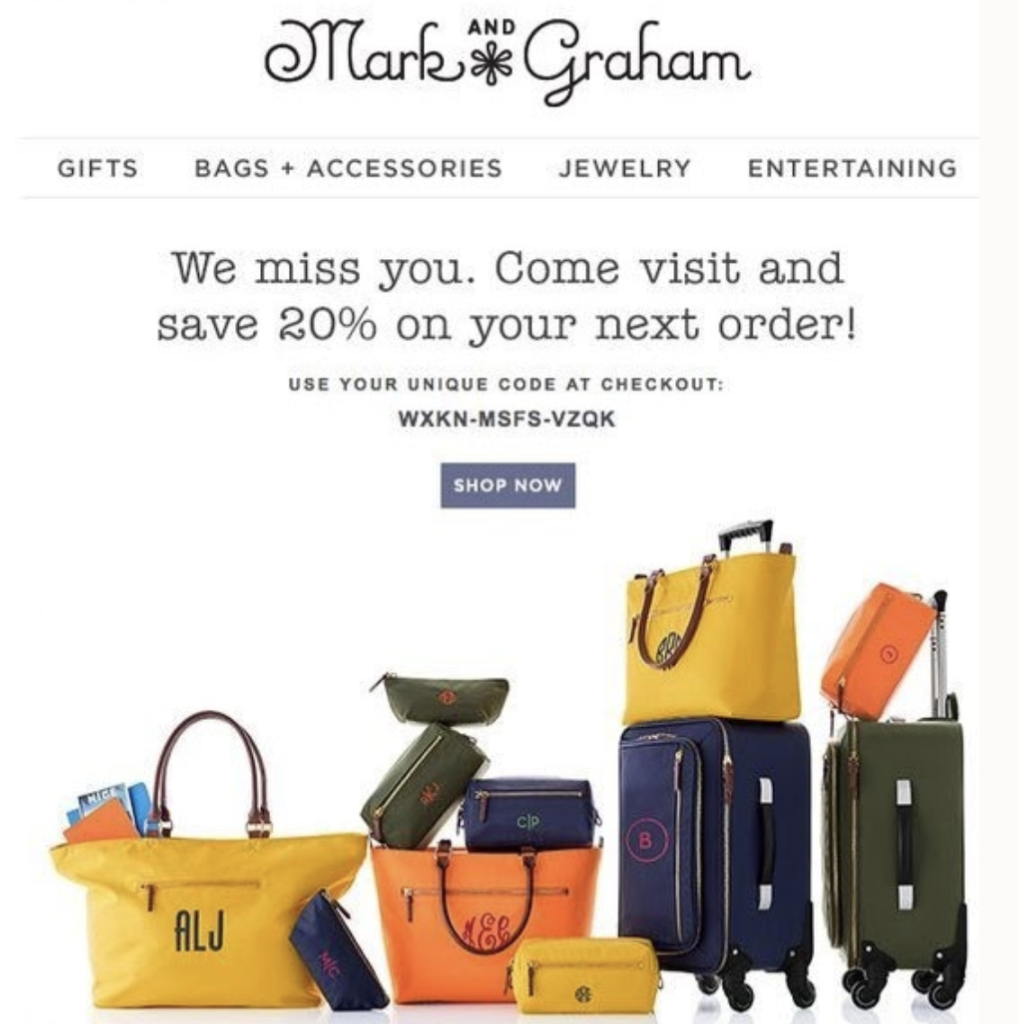
Acknowledge The Absence, Then Offer A Reason Back
The example below acknowledges the customer’s absence directly, rather than pretending it hasn’t happened. It then follows with a clear incentive to return. That combination works because it validates the gap first, so the offer doesn’t feel like it’s coming out of nowhere.
See Also